Challenge No. 08 – Shepherd’s Pie

This dish was suggested by my dad.  He actually suggested either shepherd’s or cottage pie. Both these dishes are very similar and I generally don’t have a preference between the two.  For those of you that don’t know the difference, mainly it is that shepherds pie is made with lamb whilst cottage pie is made with beef.  I therefore opted to make shepherd’s pie as I don’t often cook lamb and it is always a nice treat when I get to have it.

I wanted to do something a little bit more with this dish and when I stumbled across a recipe by Tom Kerridge, it looked ideal.  The recipe can be found here

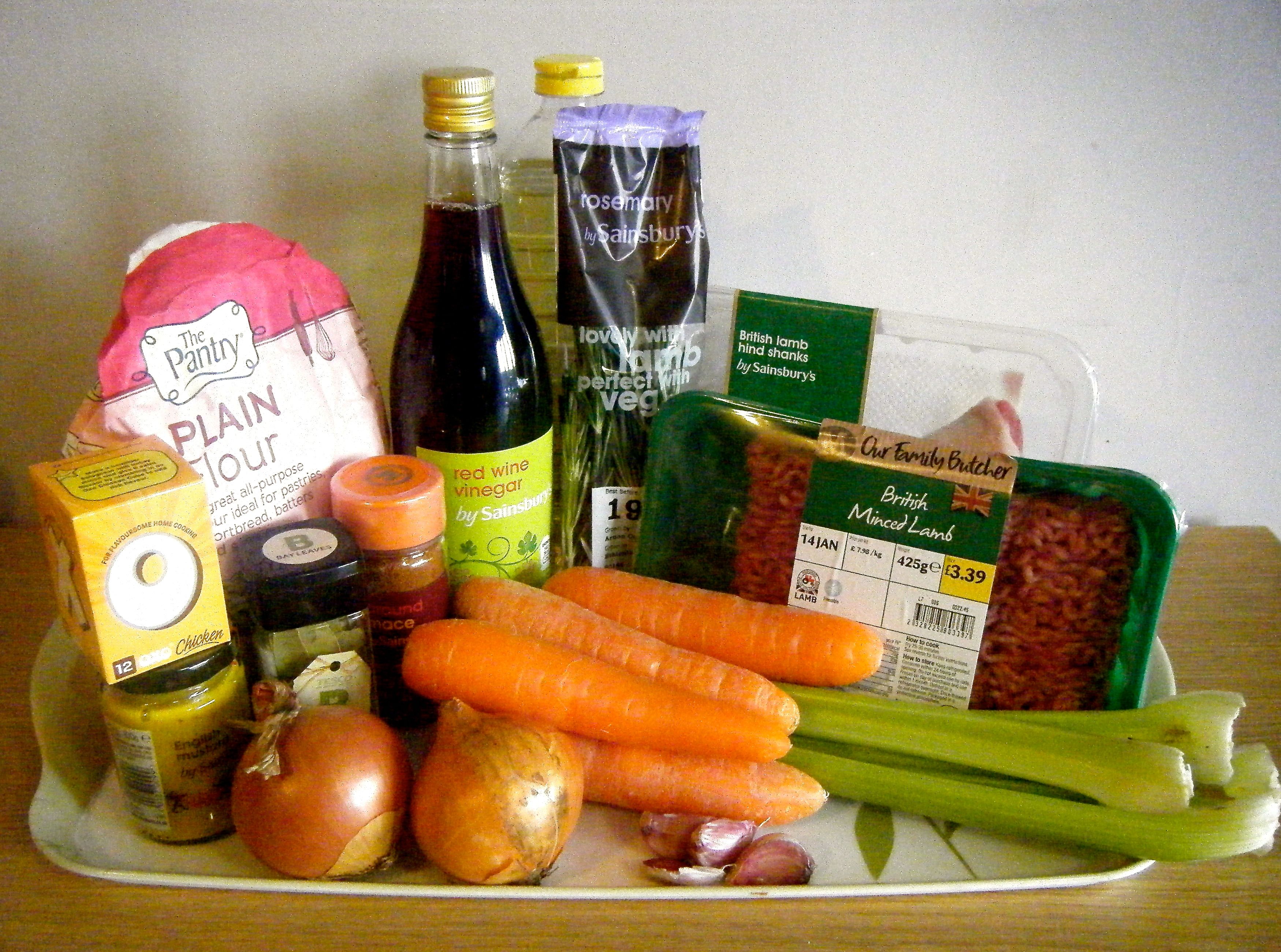
The recipe uses the following ingredients:-

  • 2 lamb shanks
  • 100g plain flour, for dusting (see comments below)
  • Vegetable oil, for frying
  • 4 sticks celery, any tough skins removed and finely diced
  • 4 carrots, finely diced
  • 2 onions, finely diced
  • 4 cloves garlic, grated
  • 4 tsp ground mace
  • 3 fresh bay leaves
  • 600ml brown chicken stock
  • 500g lamb mince
  • 4-5 sprigs of rosemary, tied together with kitchen string
  • 100ml red wine vinegar
  • 2 tbsp English mustard
  • 1.5 kg potatoes, peeled and cut into even chunks of about 4cm
  • 100ml milk
  • 100g butter
  • 75g grated parmesan, or 75g diced goat’s cheese
  • Paprika, to dust

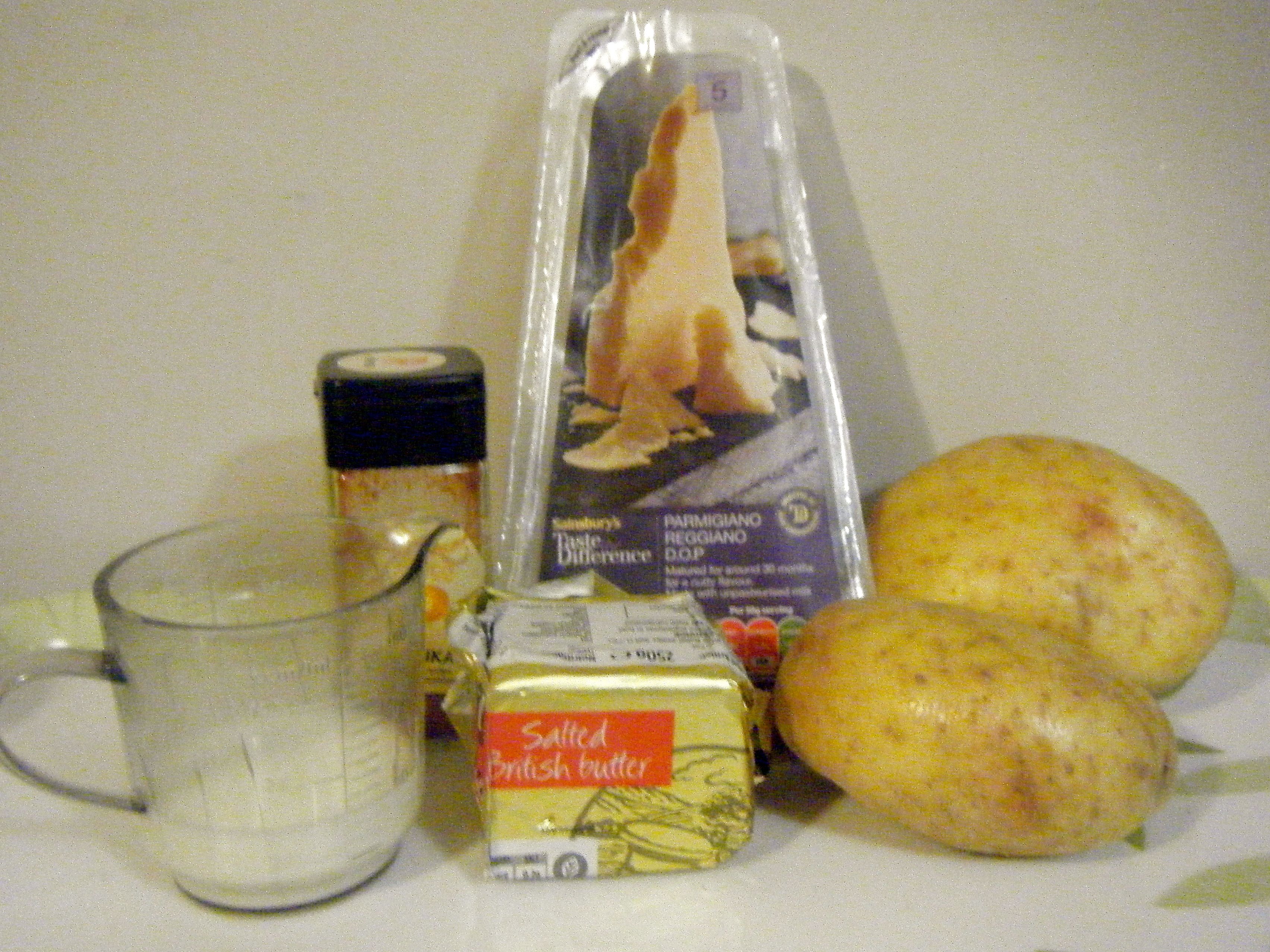
Edited - ingredients 1 Edited - ingredients 2

This recipe takes quite a long time to make with the option to rest it over night.  I decided to make it on a Sunday so we could enjoy it for dinner after work on the Monday.   It was ideal for a lazy Sunday where I could spend the day bobbing in and out of the kitchen. 

Practical Tip: The recipe makes enough to feed 4-6 people and I therefore decided to make the ‘filling’ using the quantities listed above.  However, I reduced the mashed potato topping ingredients to make enough just for me and the other half.  The left over filling went into the freezer to be used another time.

The first stage of the recipe is to braise the lamb shanks.  To do this I coated the lamb shanks in flour and fried them off until browned.  The recipe states that you need 100g plain flour.  I didn’t need anywhere near this amount and just ended up wasting a lot of the flour! I’d recommend trying approximately 25g and you can always add more if needed.

 Edited - browning lambEdited - browning

Whilst the lamb was browning, I prepared one half of the celery, carrots, onion and garlic.

Practical Tip: to finely dice onions, chop off the tunic end, chop the onion in half through the basal plate and peel (see image below to see which parts are which under these silly names!).  Then place the onion half flat side down on the chopping board.  Slice lines which are perpendicular to the basal plate but without slicing through the basal plate itself.  Then slice the onion parallel to the basal plate and voila you will have finely diced onions. 

Screen Shot 2015-01-11 at 15.06.18

Edited - onion

Lines sliced perpendicular to the basal plate

Once the lamb was browned I put it to one side.  I then heated my casserole dish with some oil in and added the chopped vegetables. After these had softened, I added the remaining braising ingredients along with the lamb and when it reached boiling point, I covered the dish and popped it in the oven for 3 and a half hours.

 Edited - chopped vegEdited - braising

When the timer went off, I removed the dish and popped it on the side to rest for an hour.  About half hour in I turned the oven to 200 degrees celsius and roasted the minced lamb for approximately 20 minutes.  Once the minced lamb was nicely browned, I drained it and put this to one side.
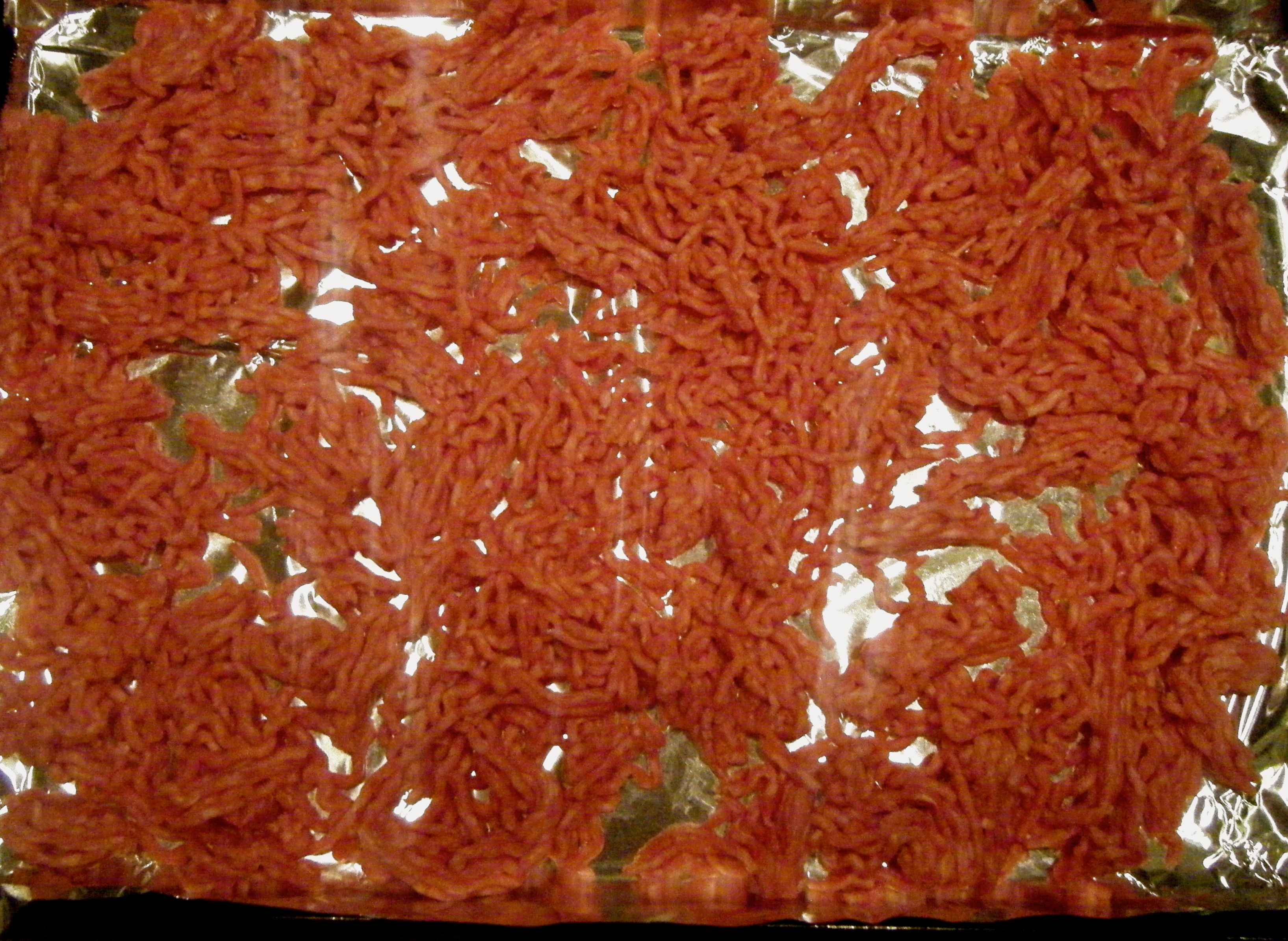
 Edited - lamb ovenEdited - Browned mince

This timed well with the end of the hour resting period for the lamb shanks.  I removed them from the casserole dish, placed them on a chopping board and strained the braising liquid into a glass bowl.

Edited - straining

Now the recipe doesn’t tell you what to do with the vegetables which are strained out of the braising liquid.  Once again, I decided to give my mum a quick ring (I think this may be a reoccurring theme throughout Challenge 52!).  My mum confirmed that the vegetables don’t go back into the final dish but also that you don’t necessarily have to throw them away.  Mum suggested making some gravy but I decided to freeze the mix and when I next have some spare potatoes and vegetables in, I’m going to make some soup.

With my minced meat and braising liquid ready, I shredded the lamb shanks with a fork.  I found that some of the skin from the lamb shank was a bit fatty and I decided to remove this and throw it away with the bones.  I then added the shredded lamb to my mince ready to be used later.

Edited - lamb braised Edited - pulled lamb

By the time I had completed all the above steps, my casserole dish was cool enough to wash.  I also took this opportunity to have a bit of a clean up in the kitchen.  As I’ve previously said, my kitchen is tiny and I was cooking this at the same time as making a homemade bolognese so things had gone from slightly messy to full on bomb site!

With some of the washing up done, I set to work on the next stages of the shepherds pie.  I prepared the second half of my vegetables and heated some oil in my casserole dish.  I cooked the vegetables, added the lamb and rosemary (without the string because I didn’t have any) and then the red wine vinegar.  The recipe said to simmer the mixture until the red wine vinegar had almost entirely evaporated but when I added it, it sank to the bottom of the dish and I couldn’t see it! So I just let it simmer for about 5 minutes before adding the strained braising liquid.
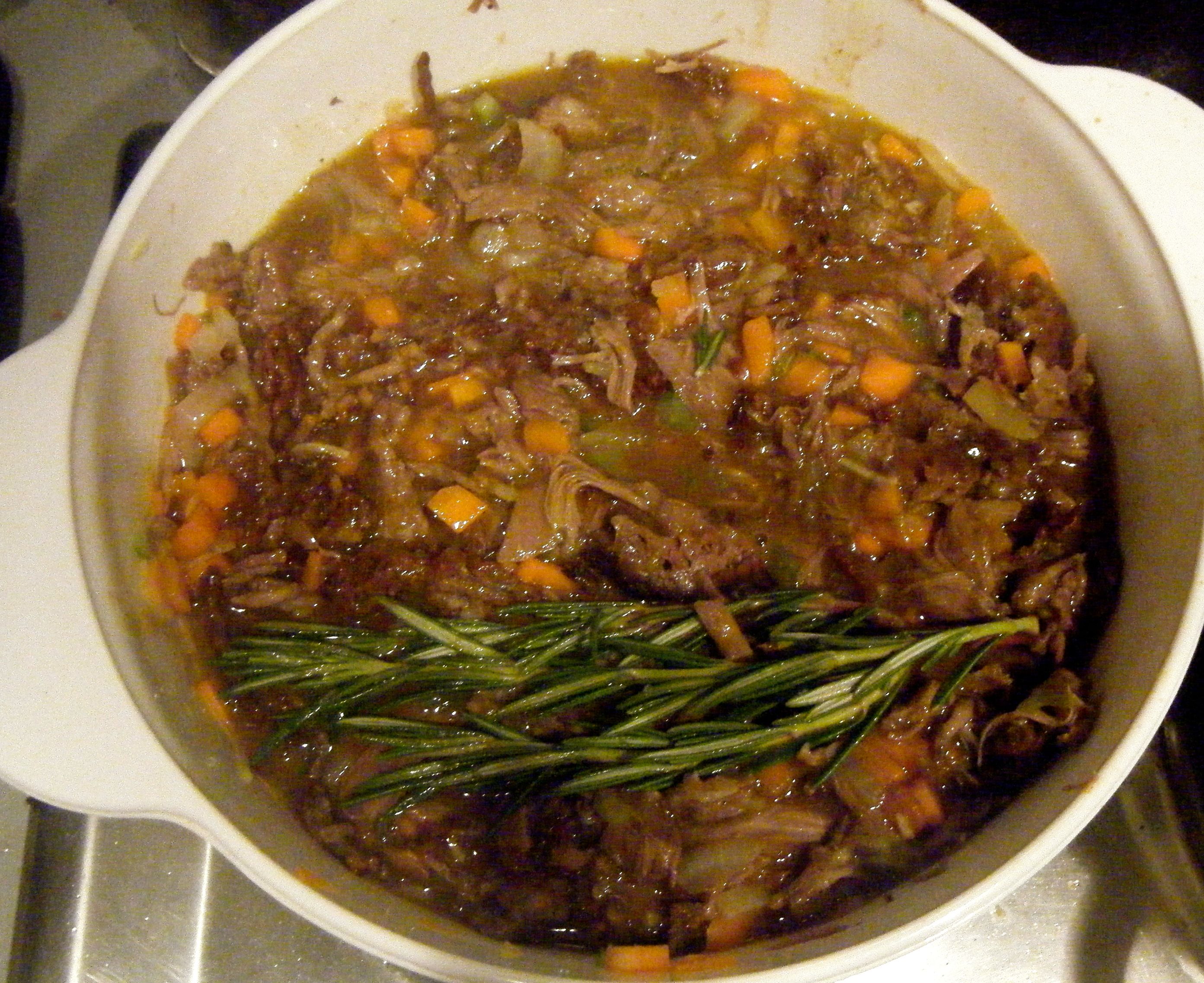
Edited - in the pot

I brought the mixture to the boil and set the timer for one hour, although I kept checking on it during this time.  As I neared the end of the hour, most of the liquid had gone and I made the decision not to leave it for another hour as suggested by the recipe.  I added the mustard, some seasoning, gave it a good stir and left it to cool before putting it in the fridge for the night. 

Practical tip: the recipe says to transfer to an oven proof dish at this stage but I decided to leave it in the casserole dish overnight.  As I was only going to cook a 2 person portion (and freeze the remainder), it seemed an unnecessary step which would only result in even more washing up.

The next evening, I got home from work and pulled out my casserole dish from the fridge to let it come up to room temperature.  I got my potatoes prepared and once my salted water reached boiling point in they went for around 20-25 minutes.

Whilst the potatoes were cooking I transferred my filling into my serving dish and portioned up the leftovers to go in the freezer.

Edited - dish

Once my potatoes were done, I drained them and left then for 5 minutes to dry.

I heated my milk and butter, mashed my potatoes and then combined the two.  I added in a sneaky extra step here.  My boyfriend is not the biggest fan of mash potato.  Apparently his gran (who unfortunately passed away before I got to meet her) set the bar very high and made the BEST mash potatoes.  No matter what I have tried I’ve never managed to meet her standard!  So in an attempt to get one step closer, I decided to blitz the mash with my hand mixer.
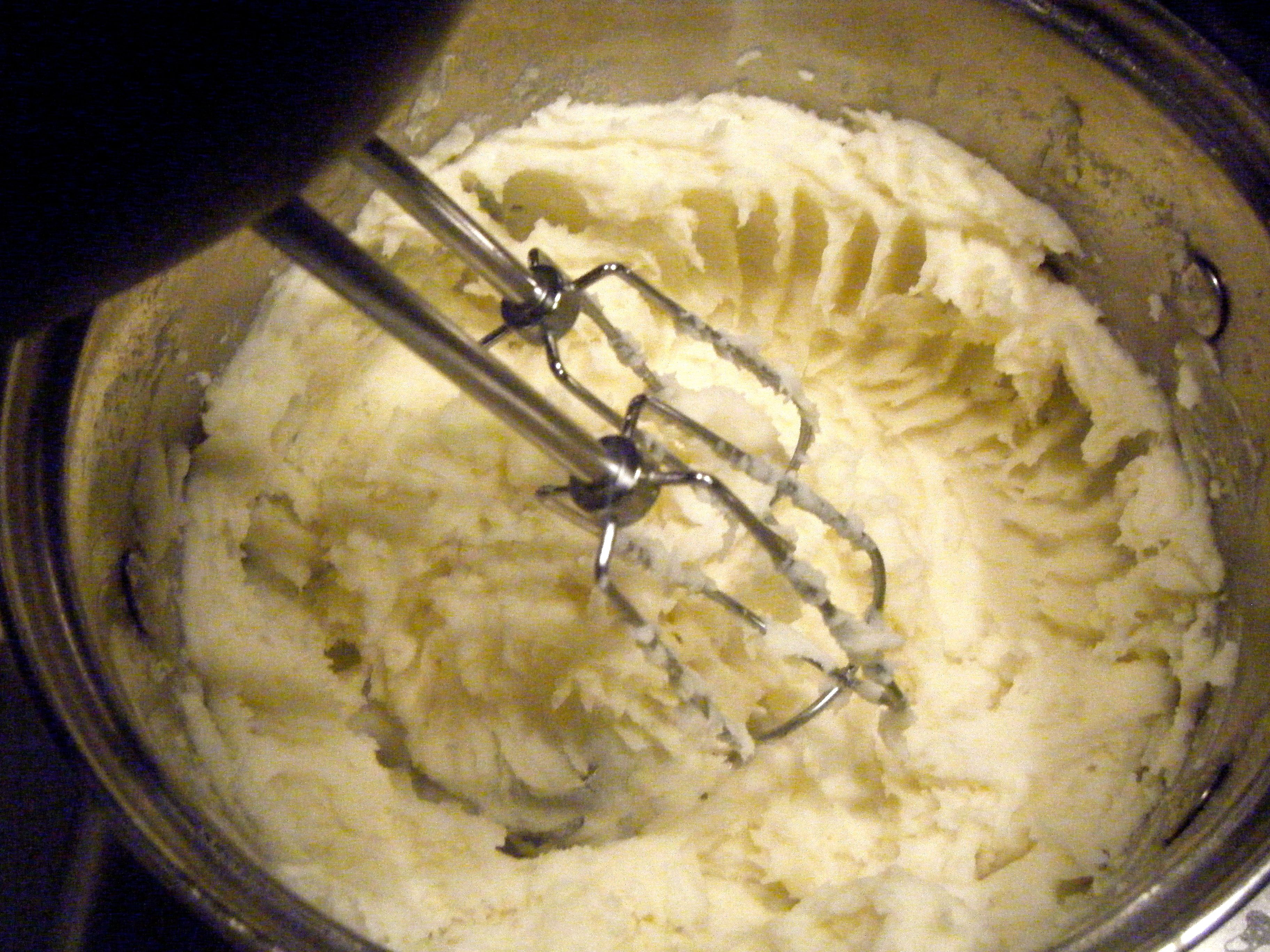
Edited - mash

With the mash ready to go, I decided to be a bit posh and pipe it onto my filling.  I had a bit more mash than necessary so I did a few blobs on top of the lined piping.  However, this all seemed a bit unnecessary as when I added the parmesan and paprika, you could no longer see the piping! Still it was good fun 🙂

Edited - pipped

I popped the finished product into the oven for the final 30 minutes of cooking and then we tucked in. 

Edited - cooked

It was absolutely delicious and so rich in flavour.  The mash potato was even a success 🙂

I will admit this recipe involves a lot of effort but it is so worth it.  The skills involved aren’t very advanced its just takes a bit of time.  However, by making the full batch of filling and freezing the leftovers, I now have a couple of really easy midweek dinners that I can just top with mash and pop in the oven.

Coming up next week, Challenge No. 09 – gluten free date, banana and rum loaf (made without rum but with Disaronno!).  Hope to see you then. 
Challenge No. 7 – Viennese Fingers

So this is one I thought would be nice and easy to make – there are not many ingredients and all the recipes I found looked really simple.  I will however warn you from the outset that in addition to the ingredients listed below, I found it necessary to have on hand a strong Mancunian to assist.  Keep reading to find out more.

The suggestion of viennese fingers was the second one to come from my colleague Alison and they are not something I’ve ever made before.  In fact, I wasn’t too sure what they were.  I googled them and found a recipe which was published by previous Great British Bake Off winner, Jo Wheatley.  The recipe can be found by following this link

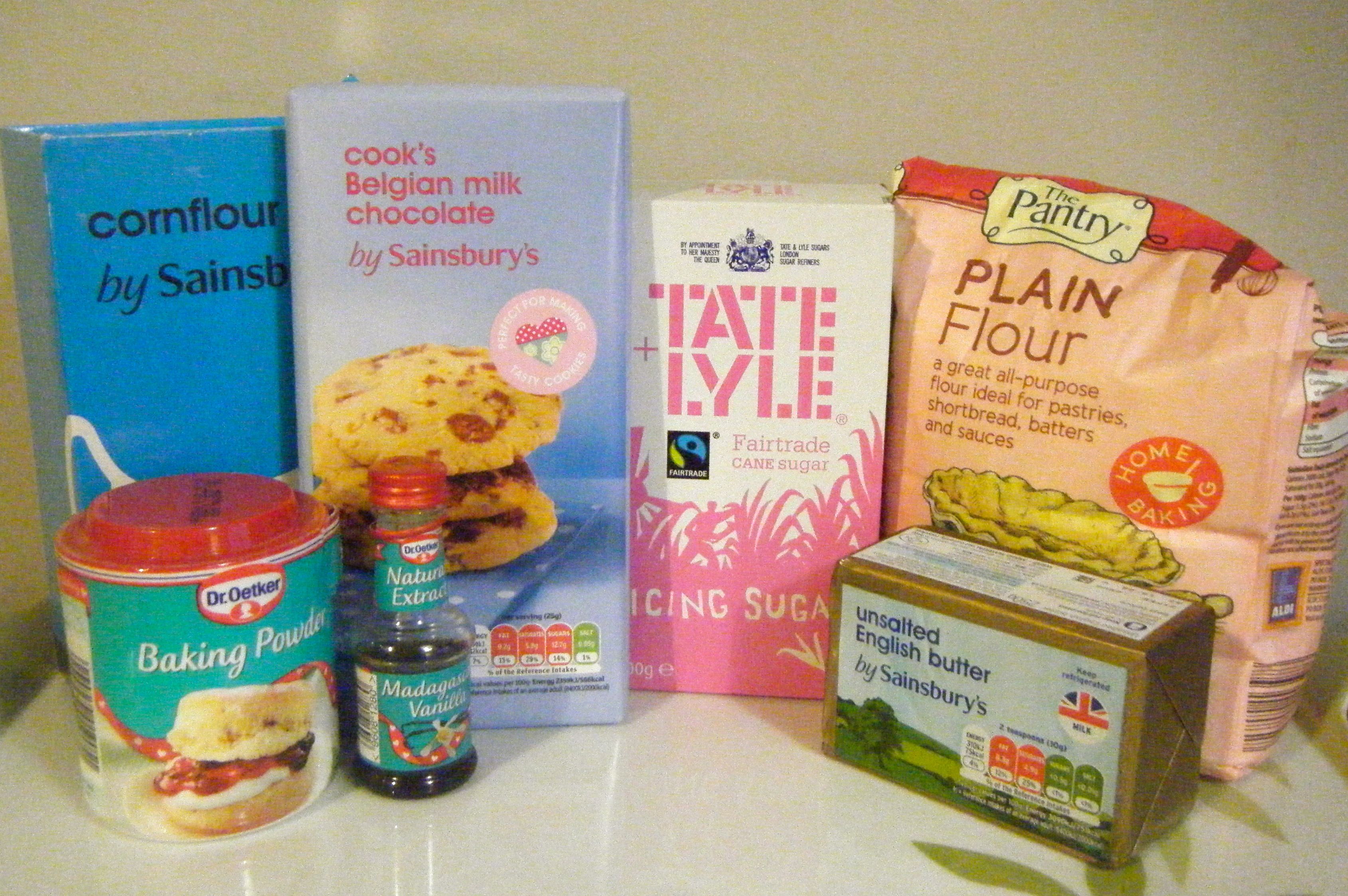
The recipe calls for the following ingredients:-

  • 100g unsalted butter, softened
  • 25g icing sugar
  • 1tsp vanilla extract
  • 100g plain flour
  • 1tsp cornflour
  • 1/4tsp baking powder
  • 100g milk chocolate, chopped

Edited - Ingredients

Practical Tip: in case you missed my Chocolate Fudge Cake – to soften the butter, cut it into cubes and put it in a sandwich bag in a bowl of lukewarm water for between 5 to 10 minutes until soft.  This can be a lot quicker than leaving the butter at room temperature, especially in the winter when your kitchen may not be so warm!

The recipe instructs the use of a free standing mixer, however, I don’t have one of these, so I pulled out my plastic mixing bowl and handheld mixer.  With the butter softened, I beat it until light and fluffy and then added the vanilla extract. 

I then measured out the remaining biscuit ingredients and sieved these into the soft butter and vanilla extract.  I mixed it all together with a wooden spoon (I wasn’t sure about using my mixer but in hindsight I think I could have done) until thoroughly combined and then I put the mix into my piping bag.

Practical Tip: when spooning mixture into a piping bag, I always find it easier to put the bag into a tall glass and turn the top down.

Edited - piping glass

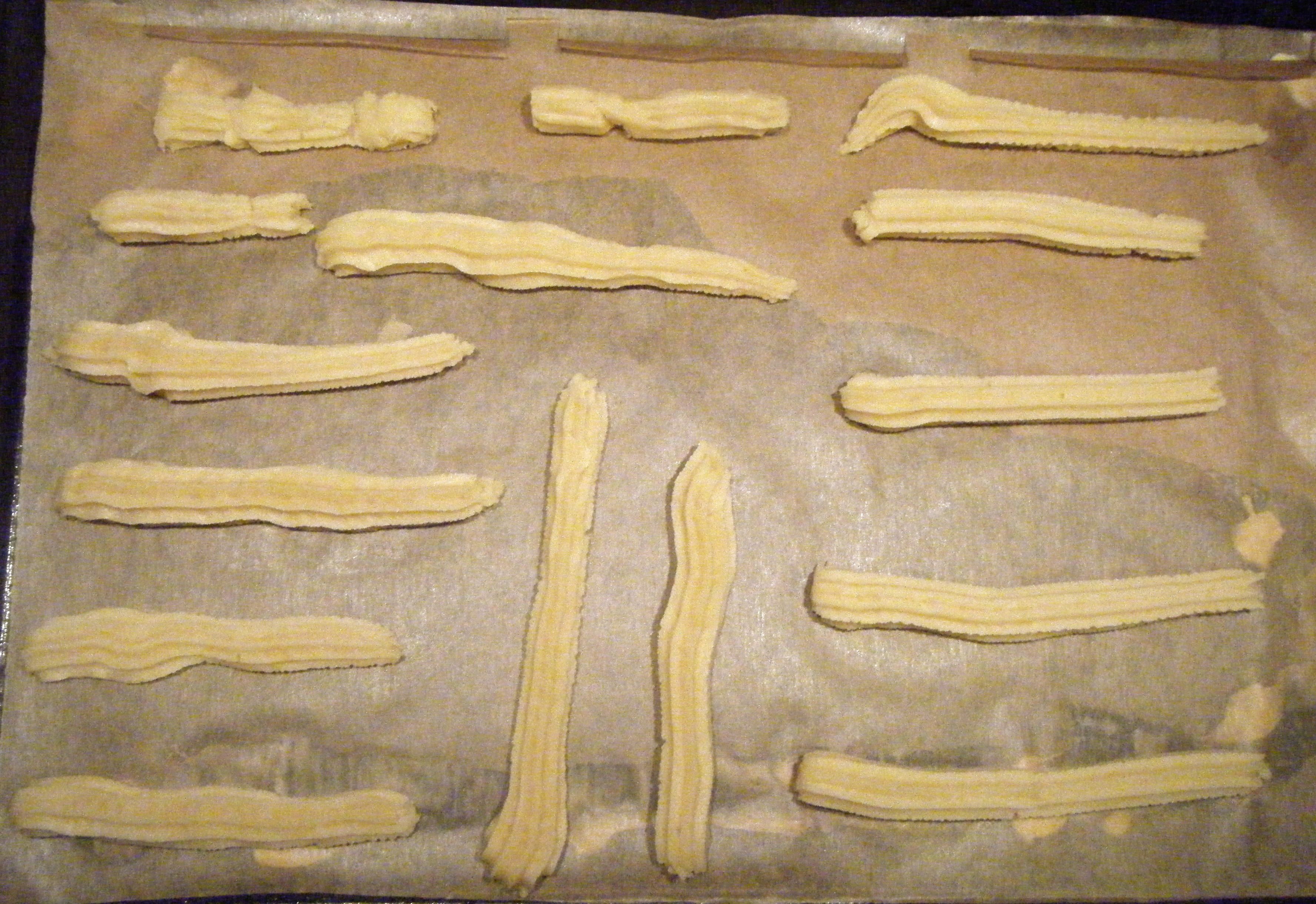
With the piping bag ready I got out my tray and lined it with baking paper.  I drew 10cm lines at the top of the baking paper and cut slits so each line could be clearly seen when it was on the black tray.  Ready to make my perfect 10cm viennese fingers I started to pipe my first line.  Now this is where things didn’t quite go to plan!

The mixture was so tough, I could’t get enough pressure on the piping bag to push it out the nozzle.  Panic time! What to do next? After a few minutes of struggle, I called Dave (my stronger half) to the rescue.  He had a quick go at pushing the mix through and managed to do it.  After a speedy lesson in how to use a piping bag – first time round he just squeezed the middle and a load of mixture shot to the top of the bag rather than out of the nozzle – he finished off the piping for me. Not quite perfect 10cm lines but a lot better than the three pathetic ones I managed.  You can tell from the picture below which ones I pipped!

Edited - piped fingers

Practical Tip: if you haven’t got a strong Mancunian to hand, there may be another way.  A little bit of research (post baking) showed me that a few others have had similar issues with piping the viennese finger mixture.  Some of these suggested kneading the mixture in the bag or warming it in a bowl over some hot water.  Be careful not to over work or heat the dough, just do it enough to make it soft enough for piping. I’ll be trying this next time and I’ll let you know how I get on.

With the fingers piped, into the oven they went. I set the timer for 10 minutes initially and then left them in for another 4 until golden brown.  Once they had cooled on the tray for five minutes I transferred them to a rack to cool completely.

Edited - on the rack

To melt the chocolate the recipe says to either use the microwave or to heat it over a pan of simmering water.  I always prefer to use the pan technique as it is easier to watch and you are therefore less likely to burn the chocolate.  If you use this method, just make sure the bowl with the chocolate in is not touching the water underneath. 

Edited - chocolate pan

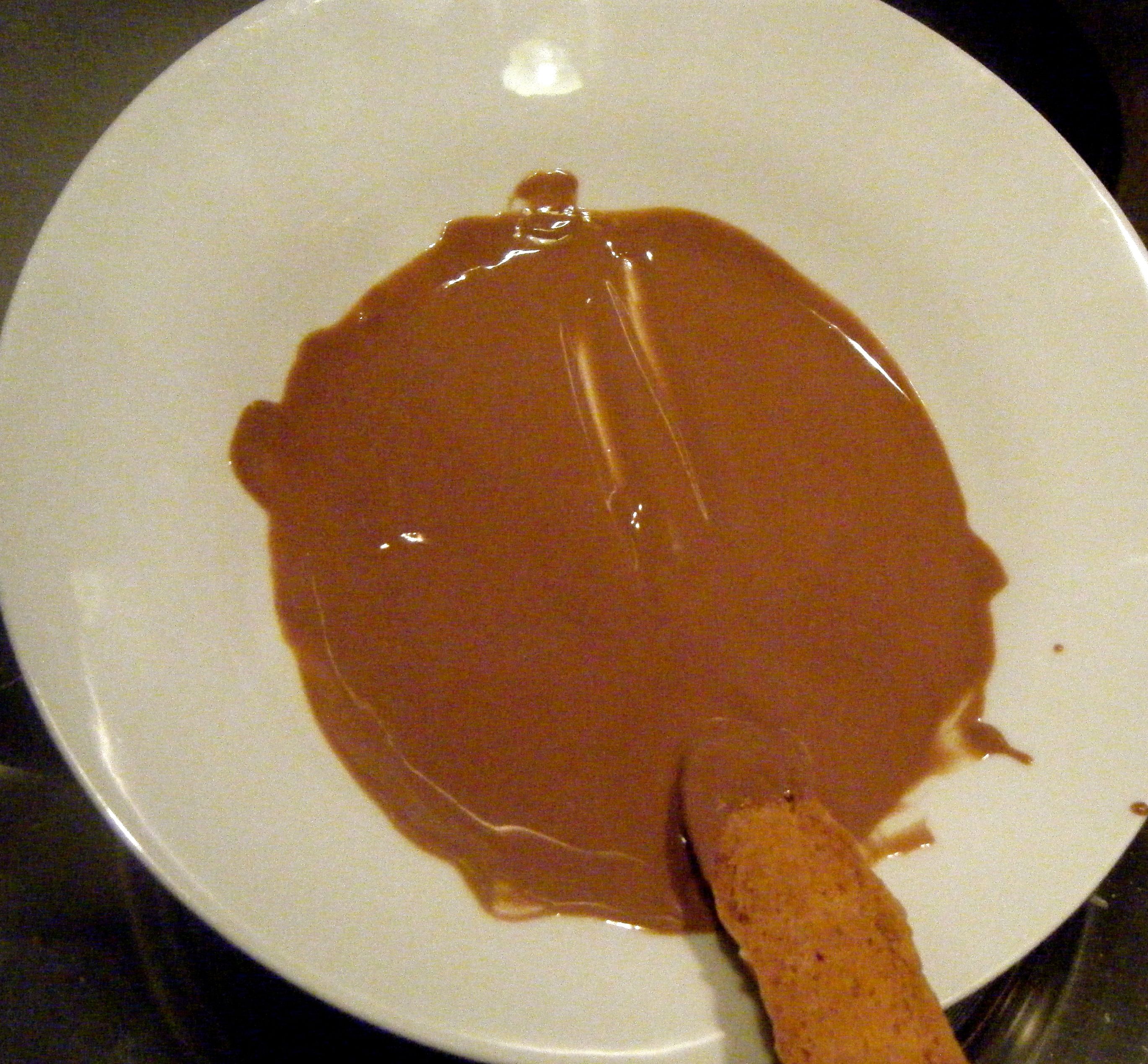
I decided to melt half the chocolate and dip one side of the biscuits first.  Once set, I then melted the other half of the chocolate and dipped the other end.  It took a bit longer to do it like this but it was also probably a lot less messy!

Edited - dipping Edited - half dipped

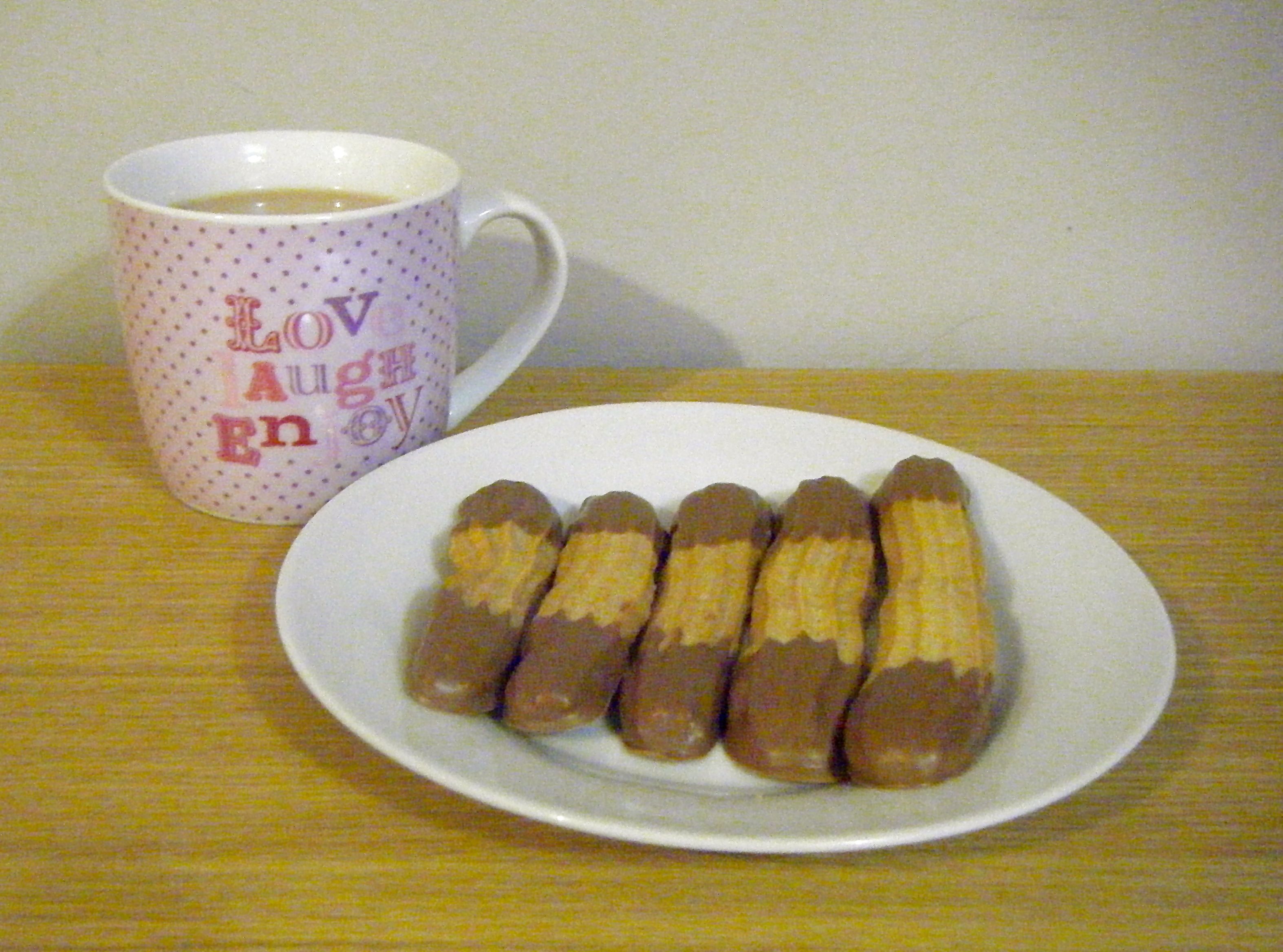
There you have it, my viennese fingers.  They are definitely not as pretty as I would have liked but they tasted delicious.  If you decide to give this recipe a go, be careful, the end product is extremely moorish and great will power will be required to stop you eating the whole batch 🙂

Edited - served up

Coming up next week, Challenge No. 8 – shepherds pie

Challenge No. 6 – Chicken Kievs

I can’t quite believe we’ve made it to Challenge No. 6 already! 2015 is flying by.  Anyway, on with the Challenge 🙂 This dish was suggested by my other half and I think it is a great mid-week dinner.  I’ve made chicken kievs once before but they didn’t really turn out as I had hoped and so, whilst this is not technically a new dish, it is one I had a lot of room to improve on.

I’ve recently watched a cooking program where chef Tom Kerridge made chicken kievs and they looked delicious.  So when I started looking for a recipe for this week, I knew it had to be this one.

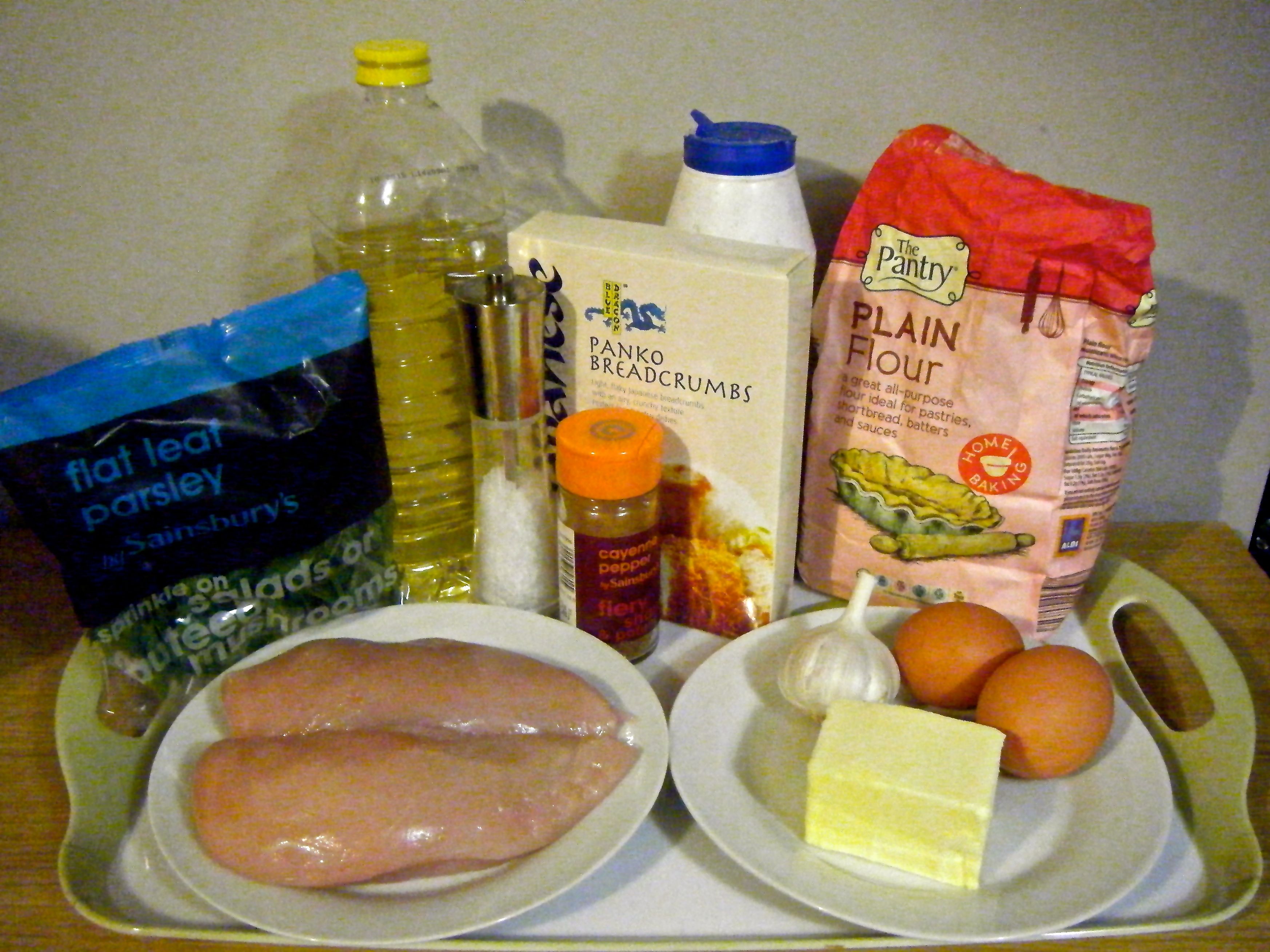
The recipe calls for the following ingredients:-

  • 100g/3½oz butter, softened
  • 2 garlic cloves, peeled and grated
  • 1 tsp table salt
  • ½ tsp cayenne pepper
  • 3 tbsp chopped fresh parsley
  • 2 large skinless chicken breasts
  • 150g/5½oz plain flour*
  • 2 large free-range eggs*
  • 150g/5½oz Japanese panko breadcrumbs*
  • vegetable oil, for shallow frying
  • pinch sea salt flakes

Edited - ingredients

*I found I ended up wasting lots of the flour, eggs and breadcrumbs by using these quantities.  I’d recommend using just 1 egg, 50g flour and 50g breadcrumbs.  If you find you need more, simply add extra to the dipping plates.  You can always add more but you can’t re-use what you’ve put on the plates once the chicken has been dipped in it.

The last time I tried to make chicken kievs, I used chicken breasts bought from a supermarket and I felt they were a bit too small.  Personally, I think you need quite big bits of chicken to make kievs and so, this time, I decided to take a trip to my local butchers.  The result was some humungous bits of chicken and super sized chicken kievs.

With all my ingredients ready to go, I started by combining the butter sauce ingredients and mixed them with my handheld mixer until well combined.

Edited - butter

I then filed a piping bag with the butter sauce and got my chicken prepared.  Now most chicken kiev recipes say to slice the chicken in half (but not all the way through) so as to create a top and bottom which are connected on one side.  You then normally spoon in the butter and fold the top back over to create a chicken parcel.  However, Tom Kerridge recommends a different approach and I thought it was just brilliant. I don’t think the online recipe is overly clear about what needs to be done but the TV program showed it really well and I’ll do my best to explain it here for you! 

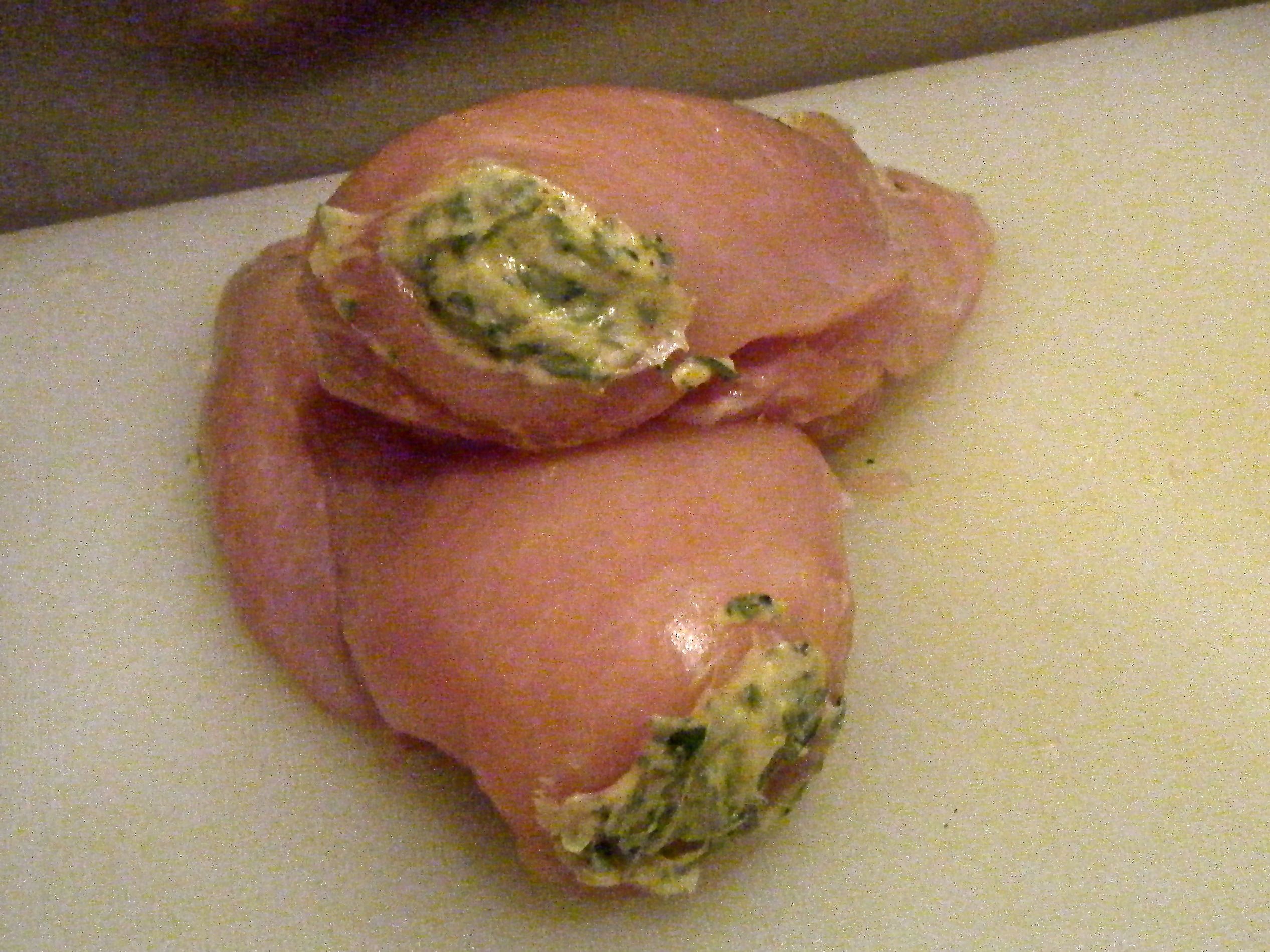
With the the TV program fresh in my mind, I tried to replicate Tom’s approach.  I got my knife and pushed it tip first into the thickest end of the chicken, pushing along the length of the chicken to make a pocket.  Using this approach helps stop the butter just melting and spilling out of the kiev.

Practical Tip: you need to make the pocket as deep as possible but be careful not to push the knife through so that it comes out the other side of the chicken.  The pocket should have only one exposed area, being the point where the tip of the knife went into the chicken.

I then got my piping bag, pushed the nozzle into the split in the end of the chicken and pipped in the butter.  The result was a very strange feeling!  I could feel the chicken breast expanding in my hand as it filled up with butter.  I piped in as much as possible, however, I found the pocket on one of the breasts wasn’t quite deep enough to fill it fully.  I therefore made a second pocket from the other end of the chicken and piped in a bit more.

Edited - filled chicken2 Edited - filled chicken

Once the chicken was filled with the butter, I got my flour, eggs and breadcrumbs ready.  I placed the eggs in a shallow bowl and the flour and breadcrumbs onto a plate.  As I’ve said above, the quantities ended up being a bit too much for just 2 chicken breasts.  I made the mistake of trying to use the full amounts and this ended up being a bit of a waste.  It was also really messy as loads of the breadcrumbs ended up falling off the side of the plate as I tried to cover the chicken!

Edited - coating ingredients

So with my coating ingredients ready. I dipped the chicken breasts in turn into the flour, then the egg and finally the breadcrumbs.  I placed them onto a plate, covered them with cling film and popped them in the fridge and set the timer for 20 minutes.

Edited coated chicken

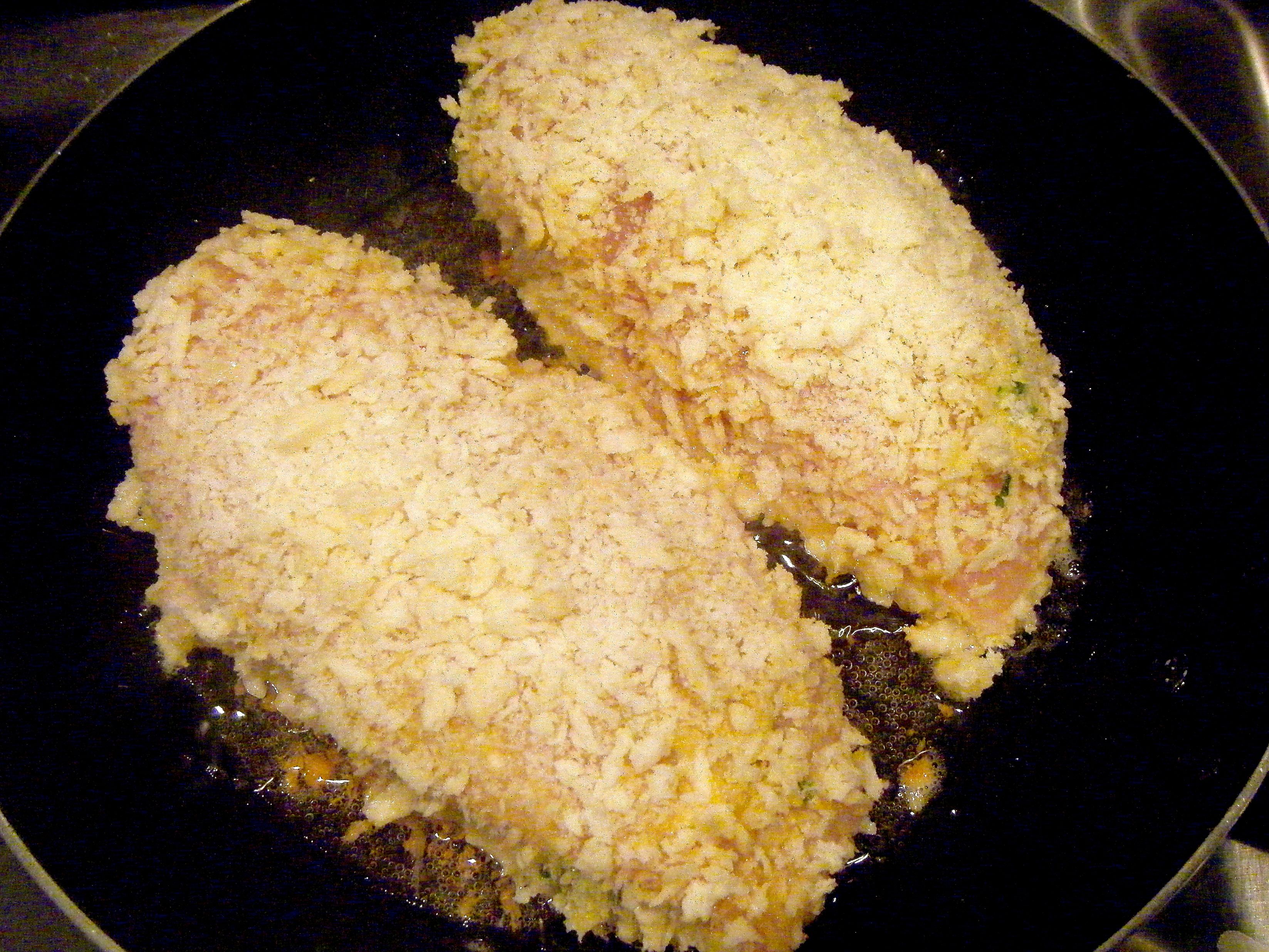
After the 20 minutes was up, I got my frying pan out and heated the oil.  The recipe says to use “a little of the vegetable oil”, however, when I watched it on TV it looked more like the chicken was shallow fried.  I therefore added quite a lot to my pan and got it nice and hot.

Practical Tip: to test whether the oil is hot enough, just drop some of the breadcrumbs into the oil and if they sizzle, the oil is hot enough to fry the chicken. 

 Edited in the pan 1Edited - in the pan 3

I fried the chicken in the oil for 3-4 minutes on each side until golden brown and then popped it in the oven for 15 minutes.  I still found some of the butter ran out of the pocket but it was a lot better than when I used the other technique of creating a chicken parcel.

 Edited - out the oven

Once the chicken was cooked, it was time to serve up.  Now, I had really good intentions of serving my kiev up with salad but I ran out of side space to prepare the salad (terrible excuse I know!) and so I ended up just giving in and having homemade chips which I was already making for my other half.

Edited - on the plate

My boyfriend and I both really liked the flavour and texture (the panko breadcrumbs worked really well!), however, we both said there was actually too much chicken.  I like my kievs to be really buttery and I felt I didn’t quite get the ratio of butter to chicken quite right.  I think this is simply because my butchers chicken breasts were so big –  so big in fact, neither of us could finish them.  Overall I would say my second attempt at chicken kievs was a success and it was definitely a lot better than my first!

Coming up next week, Challenge No. 07 – viennese fingers.