Challenge No. 13 – Candy Floss Cupcakes

See that lovely drawing at the top of the page, the one of the blonde girl holding the cupcake? Well, that was designed by my amazing friend Nic and is his representation of me 🙂 This next recipe was suggested by Nic who, as you can tell, is very creative.  If you want to see some of his other incredible work, check out his Facebook page here. Unsurprisingly, Nic’s creative mind didn’t just suggest any old regular cupcake, nope, he suggested a candy floss cupcake!

I did a quick Google search and found lots of inspiration.  One of my favourites was Harry Potter themed from bakingdom. Nic is a huge Harry Potter fan and so when I found this blog, I thought the idea was just perfect.  Whilst all the websites I found included a recipe, I decided to use my own cupcake recipe and just adapted it in line with what I had read for incorporating candy floss. 

So, to make my version of the candy floss cupcakes, you will need the following:-

  • For the cake
    • 175g softened butter/margarine
    • 175g sugar
    • 1 tsp baking powder
    • 175g self raising flour
    • 3 eggs
    • A drop of vanilla essence
    • 250g candy floss
  • For the topping
    • 550g icing sugar
    • 275g softened butter
    • Milk
    • A few drops of pink food colouring
    • A few drops of green food colouring
    • 250g cotton candy
    • 2 tsp of cream
    • Popping candy (I used chocolate covered because that’s all I could find)

This recipe makes 18 cupcakes. 

Edited - ingredients

First things first, I turned the oven on and gave it plenty of time to reach the required temperature, 180 degrees celsius. 

I started the cake mix by beating my softened butter with a fork until it was light and fluffy.  I then added the caster sugar and continued to beat until completely incorporated. 

 Edited - fluffy butter Edited - sugar and butter

P.S. I made these at my mum’s and she only had an orange mixing bowl which isn’t great for photo’s!  So please excuse the orange tinge on some of the photographs in this post!

Anyway, next up I combined my flour and baking powder in a jug and set this to one side.  I added my eggs one at a time to the butter/sugar mix.

Practical tip: each time you add an egg, put in about 1tsp of the flour and then mix together.  The flour helps to stop the mixture curdling.  
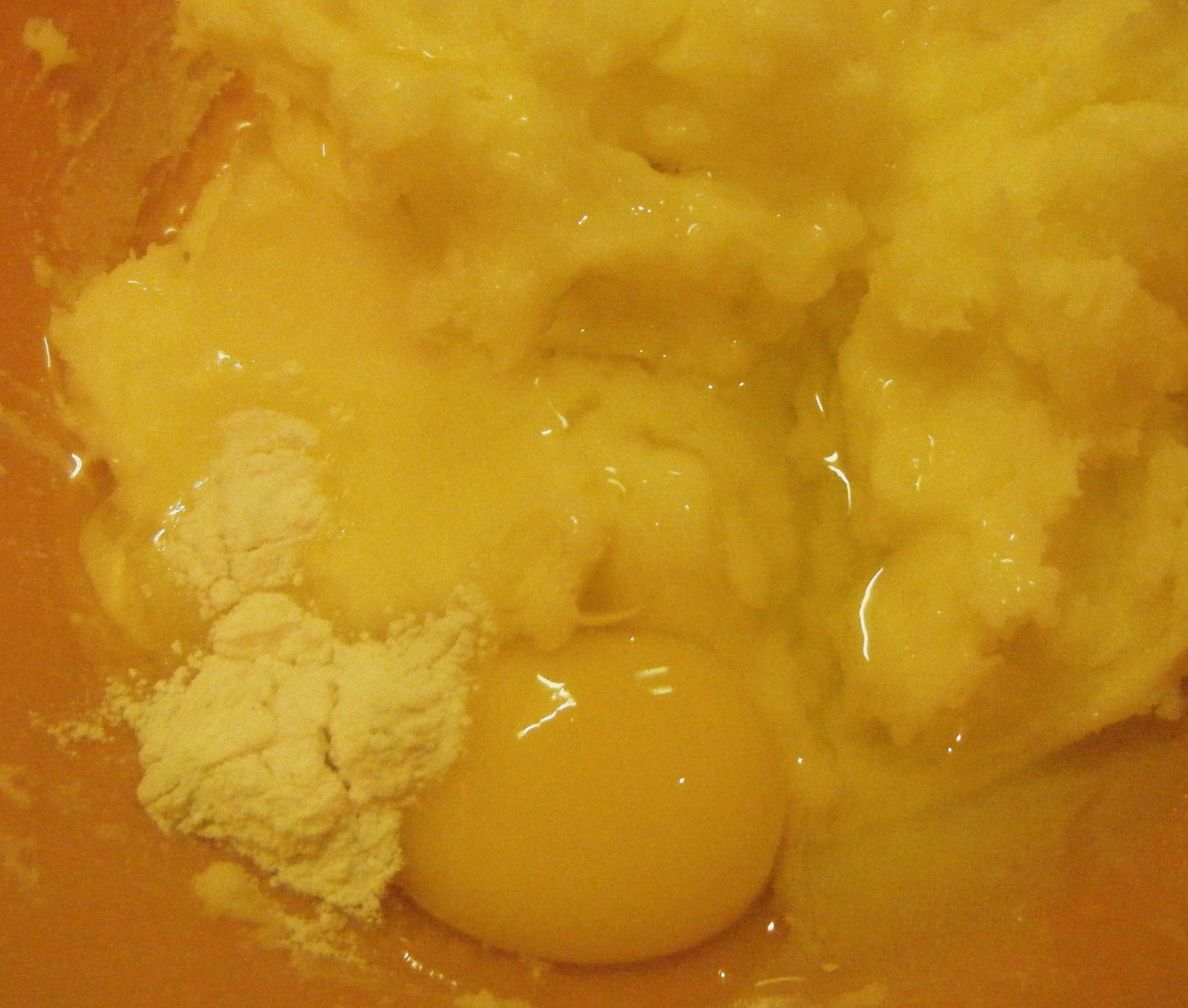
Edited - egg adding

Once all the eggs were added, I sifted in the flour and baking powder and mixed until well combined.  I then added a few drops of vanilla extract and gave it another stir. 

Time for the fun bit.  I took my candy floss and tried to break it up a bit with my fingers.  This was very messy as it kept sticking to me but it definitely helped get a nice even spread throughout the cupcake mix.  Once it was broken up, I stirred it into the cupcake batter. 

Edited - candyfloss Edited - batter and candy floss

I then put about 1 and a half teaspoons of mixture into each cupcake case.  Now, I’m a bit of a perfectionist and when I make cupcakes, I take things one step further and weigh each filled case to make sure they are equal.  As said above, I made these cupcakes at my mum’s house and it turns out her scales aren’t quite as accurate as mine, however, each cupcake case was either 35g or 40g with the mix in. It may seem like a bit of an OCD step but it helps get perfectly even sized and baked cakes 🙂
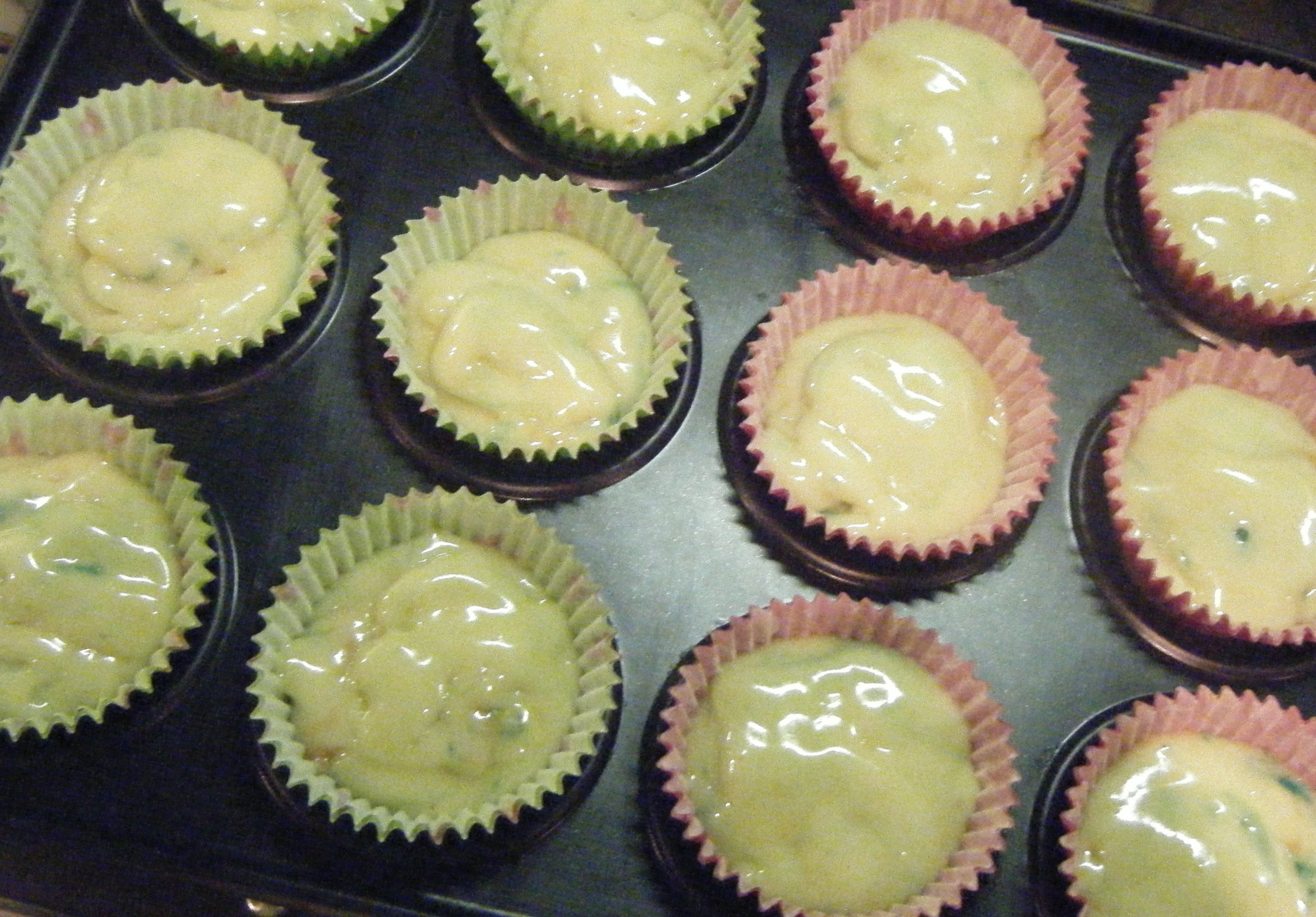
Edited - cupcakes oven ready

With the cakes (just about) equal size, I put them in the oven and set the time for 10 minutes.  When the timer went off, I rotated the trays to help make sure they had an even bake and popped them back in for another 8 minutes.  I then checked the cakes to see if they were done. 

Practical tip: in case you missed Challenge No. 5, to test whether the cakes are cooked, gently press the top of one of the cakes with your finger; if it is done it will be springy to touch and bounce back into place.  You can also take a tooth pick (or cake tester if you have one) and slide it into the centre of one of the cakes; if the cake is done the tester will come out clean.  If you think it’s not quite done return the cakes to the oven but keep an eye on them – 1 minute may be all they need but that 1 minute can make all the difference!
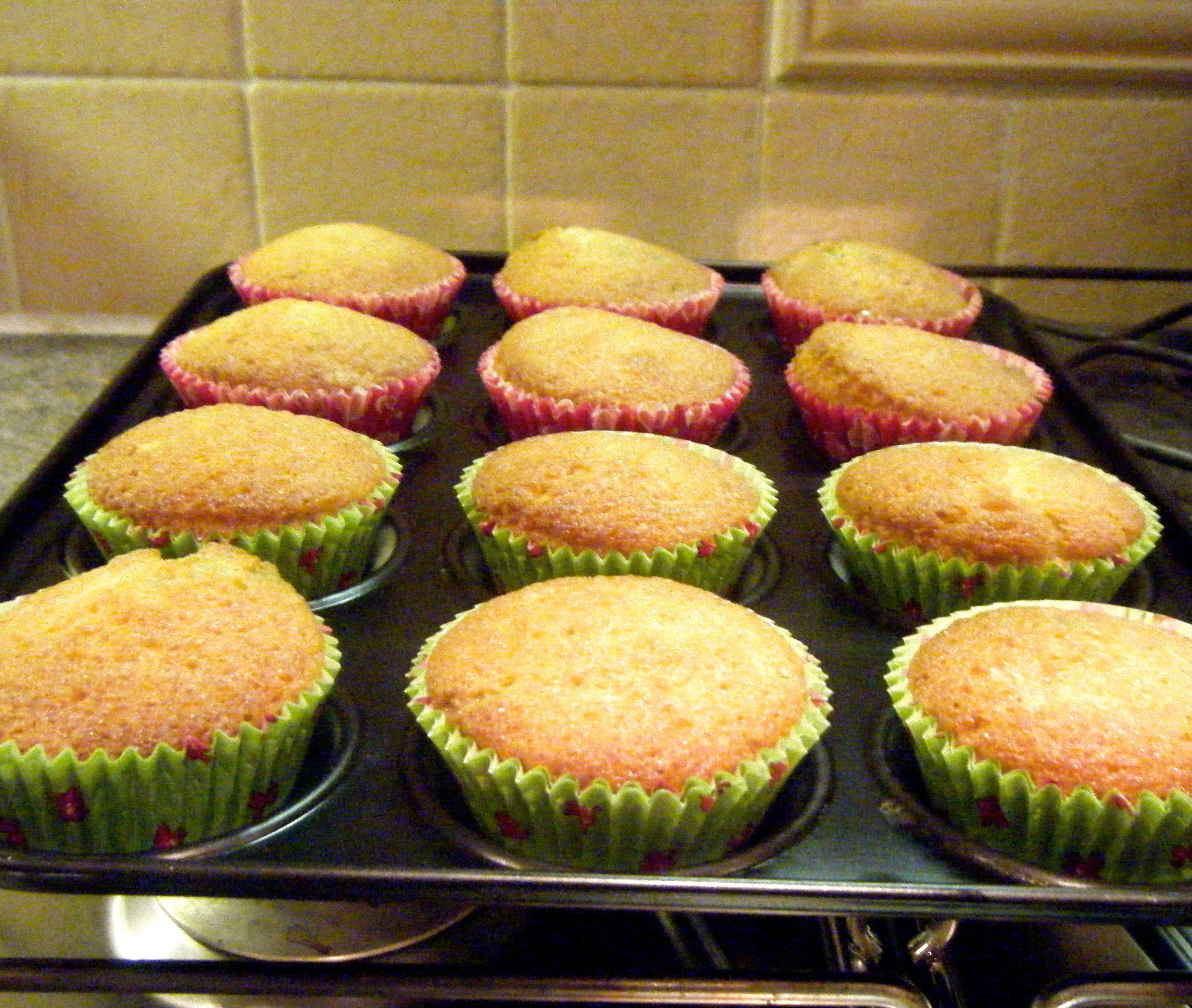
Edited - fresh out the oven

I let the cakes cool on the tray for a few minutes and then transferred them to a cooling rack.  

Edited - coolingThis is where my night changed plans, I had a yummy takeaway Chinese and a few glasses of wine with Dave and my parents.  I then went out to visit some friends for the evening and somehow ended up consuming quite a lot of vodka (I blame my friend Kev!).  Suffice to say, I was a little worse for wear on the Saturday morning.  However, after a trip to see some 12 day old lambs at a local farm and a quick nap, I was (just about!) ready to finish decorating my cakes.

I started by whisking the butter (using a handheld electric whisk) until nice and smooth.  Don’t rush this step – it is one of the most important stages to get the right consistency to be able to pipe your buttercream.  I always try to whisk the butter for a good 5 minutes. 

With the butter whisked, it was time to start adding the icing sugar.  I added a bit at a time, covered the bowl with a clean tea towel and then whisked until combined. I continued adding a bit at a time until all the icing sugar was incorporated.  As I got towards the end, I added a little milk to keep the buttercream from being too stiff. I then split the buttercream between 2 bowls.

In my slightly hungover state, I forgot to take any pictures of the above stages! I realised on the next bit and got the camera back out again.

Next up, I tried to combine the leftover candy floss with the cream.  This is done so it can be added to the buttercream without making the buttercream lumpy.  I however did this wrong 😦 I’d read that you should melt the candy floss with the cream but I didn’t read any more than this.  When I read the word ‘melt’ I instantly thought of heat.  So I put my cream into a small saucepan over a low heat and added the candy floss.  All than happened is that it started to caramelise and went horribly sticky and extra lumpy! I decided to throw it away and leave the candy floss out of the buttercream.
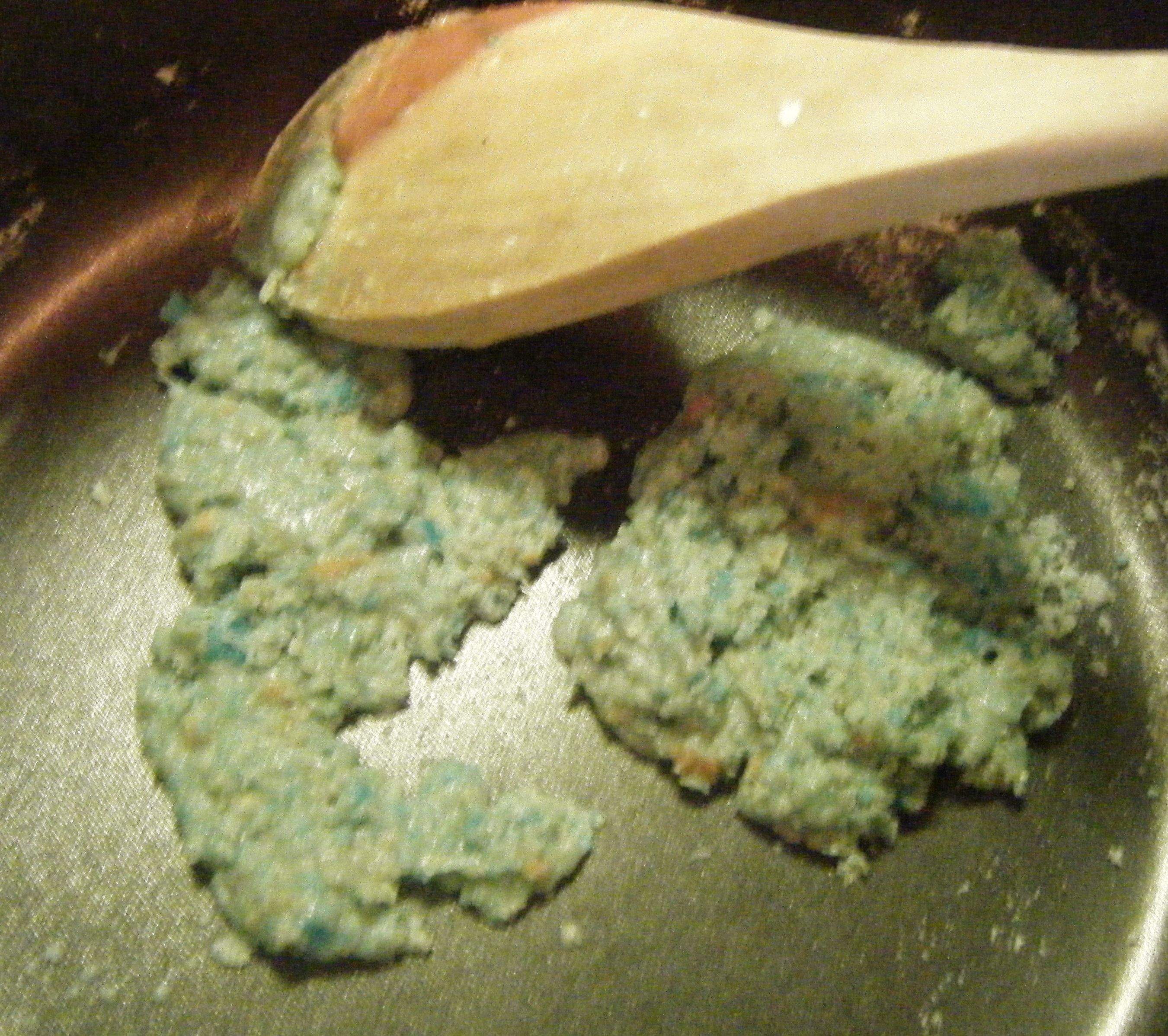
Edited - candyfloss cream

😦 It just didn’t work!

I was making the buttercream at about 2.30pm and that night, when lying in bed at about 1.30am it dawned on me, I didn’t need the heat! The cream alone would ‘melt’ the candy floss and then the liquid could be added to the buttercream.  Lesson learnt for next time and for any of you who may read this and want to give it a go.

Anyway, having given up on the candy floss flavouring, I added a few drops of pink food colouring to one half of the buttercream and gave it a mix with a wooden spoon.  I then took the cupcakes which were in the green cases and used the back of a teaspoon to add a small covering of the buttercream.  I got a handful of the chocolate covered popping candy and sprinkled it on top of the cupcakes. 
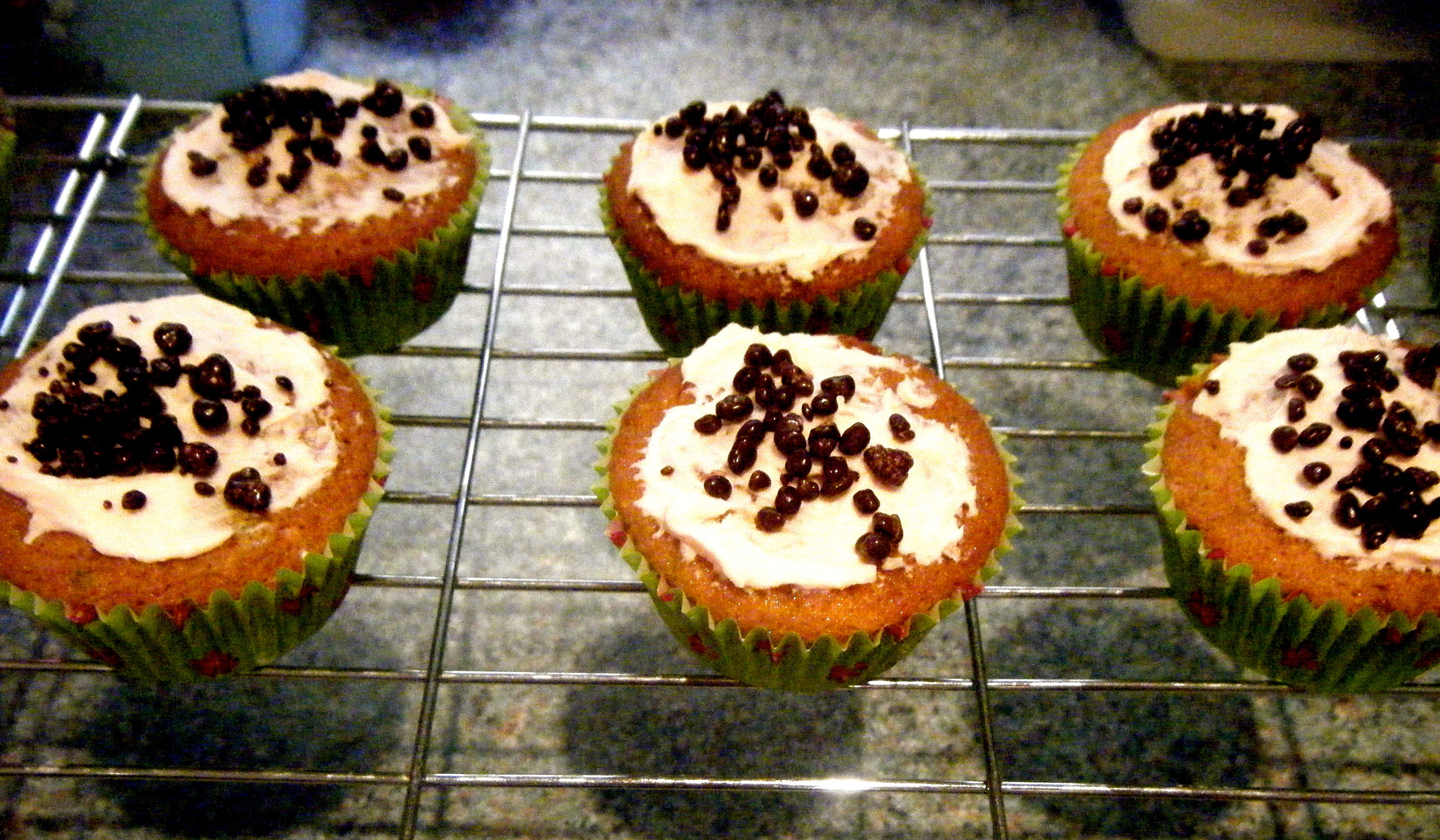
Edited - popping candy

I then put the remaining pink buttercream into a piping bag fitted with a wilton 2D nozzle and piped swirls onto the top of each one.

My brother wanted to help with the piping.  I let him do one and he actually did quite a good job! :)

My brother wanted to help with the piping. I let him do one and he actually did quite a good job! 🙂

Practical tip: if you missed Challenge No. 7 – when spooning mixture into a piping bag, I always find it easier to put the bag into a tall glass and turn the top down.

Edited - piping glass

I then added the green food colouring to the other half of the buttercream and repeated the above steps with the cupcakes in the pink cases.

The final stage was an extra special touch, inspired by the bakingdom blog.  I had created Honeydukes signs using cake-pop sticks, wrapped in purple ribbon and cling film and topped with homemade signs.  It was a little time consuming but the finished product for my Harry Potter loving friend was well worth it.
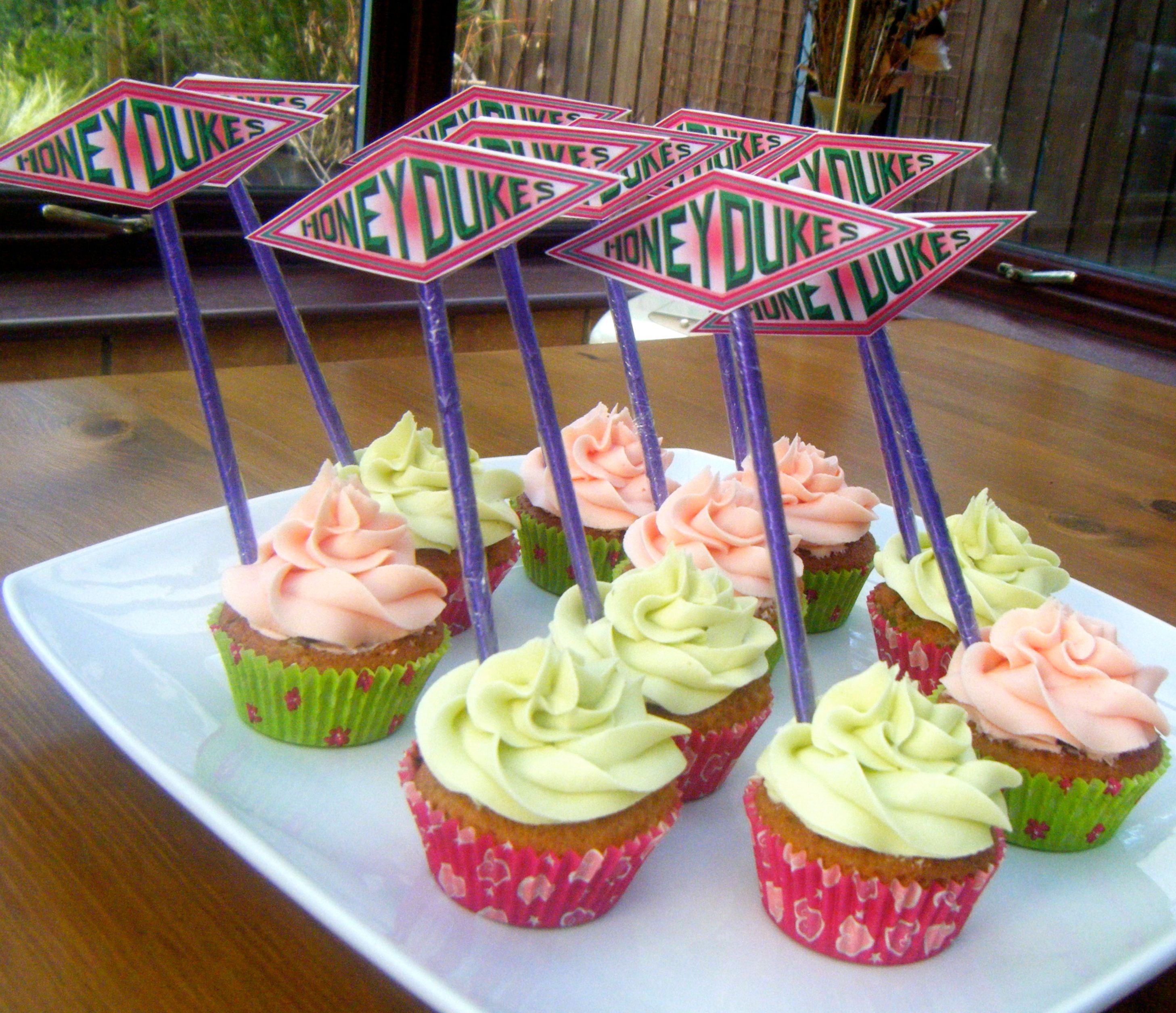
Edited - cupcakes finished

These cupcakes were a success with all who tried them.  The popping candy could have been a bit more ‘poppy’ and I was disappointed I messed up the cotton candy for the buttercream but overall I was happy with this bake.  The candy floss added a nice speckled effect to the cakes and they tasted yummy.

Edited - inside cupcakeComing up next week, Challenge No. 14 – moussaka.
Challenge No. 12 – Fish and Chips

This dish was suggested by my boyfriend, Dave.  When Dave first met my parents (more than a whooping 6 years ago!), every time we went out for dinner he ended up ordering fish and chips.  After about 6 months, my mum actually had to ask if he ate anything else! He does of course, but there is no denying he really enjoys a bit of traditional fish and chips.

I’ve only ever cooked fish by poaching smoked haddock in the oven to have with a mushroom risotto.  I don’t know why but I have always been a bit reluctant to try new things with fish.  I’m happy to try different things when someone else is cooking but I’ve been nervous about cooking it myself.  This couldn’t stop me now – the whole point of Challenge 52 is to take me out of comfort zone and so I embraced the challenge here.

I did a quick search and found a really nice looking fish recipe by The Hairy Bikers.  You can find the recipe here. For the chips, I have been trying a few new methods in recent weeks and below I have described the method I used this time.

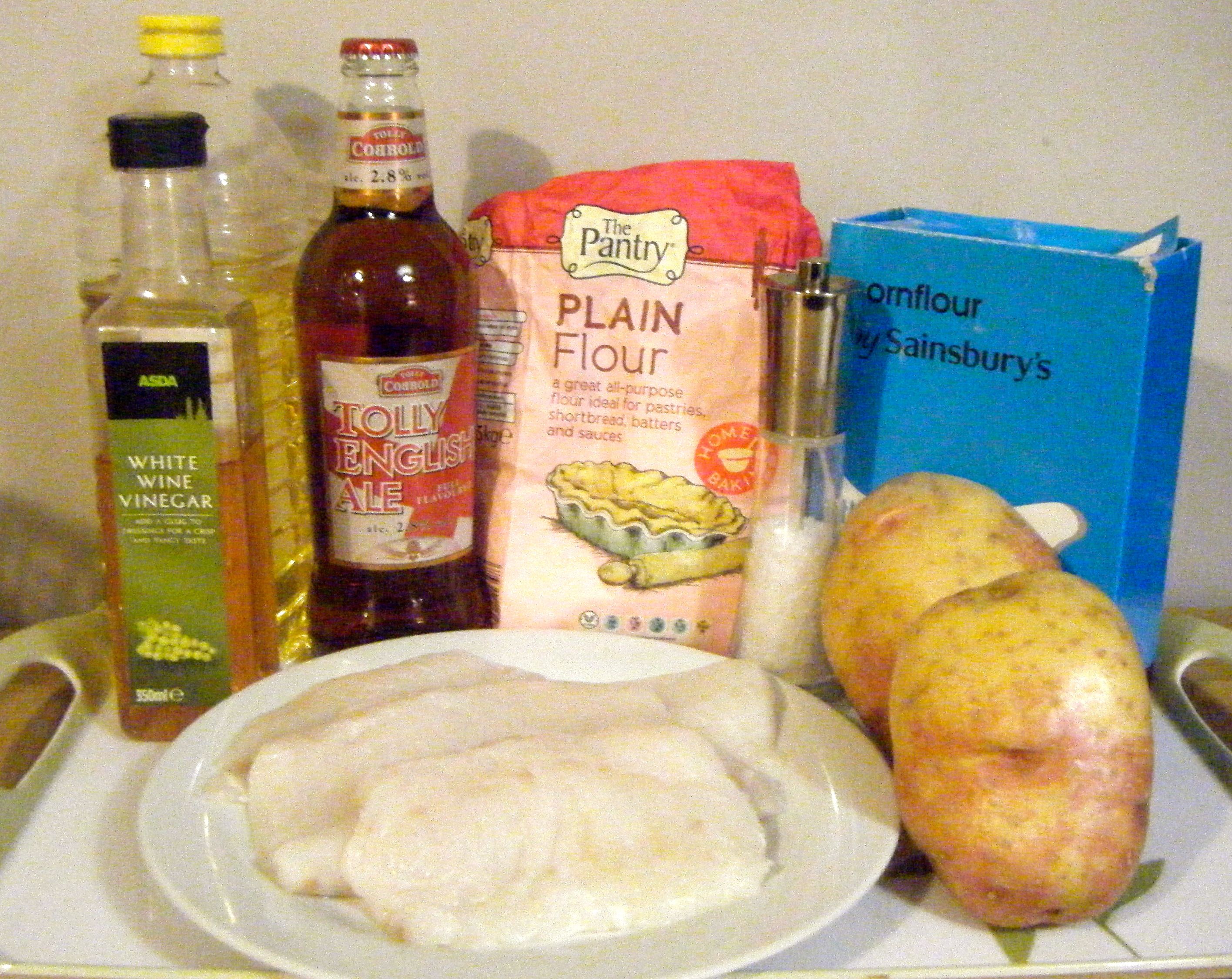
The dish requires the following ingredients:-

  • For the batter
    • 75g/2½oz cornflour
    • 200g/7¼oz plain flour
    • 1 tsp fine sea salt
    • 330ml/11½fl oz real ale
    • 2 tbsp white wine vinegar
  • For the fish
    • sunflower oil, for deep frying
    • 4 tbsp plain flour
    • ½ tsp fine sea salt
    • 4 x 200g/7¼oz thick white fish fillets, such as haddock or whiting*
  • For the chips
    • 2 medium to large potatoes
    • Salt
    • sunflower oil, for deep frying

*I let Dave decide which type of fish he wanted and there wasn’t even a contest – it had to be cod. I had tried suggesting we have a different type of fish to help with sustainability and the problem of over-fishing the more common types, but nope, Dave said it had to be cod.

Edited - ingredients

I started by preparing my chips.  I’ve recently tried using the multi-cook approach to chips and this involves blanching them in water, cooking them in the fryer on a low temperature and then once cooled finishing them off in the fryer on a high temperature.

I peeled and chopped the potatoes.  I tried my best to keep them evenly sized but I’ve not quite got the hang of this and to be honest, I think they look more rustic with a bit of variation 🙂

Edited - chips cut

Once they were chopped I washed them in cold water to remove as much of the starch as possible.  I then popped them in a pan of salted water which I bought to the boil and I cooked them until they were soft but still holding their shape, this took around 8 minutes.  I then drained and put the potatoes onto some kitchen roll to remove as much of the water as possible.

Edited - blanching Edited - blanched

I heated up my deep fat fryer to 140 degrees celsius and cooked the chips for another 8 minutes.  I then put them on a tray lined with kitchen paper to drain and cool down.

Practical tip: because of the various stages involved, you can blanch and initially fry the chips and then leave them to one side to cool whilst you get everything else done. 

Edited - chips fry 1

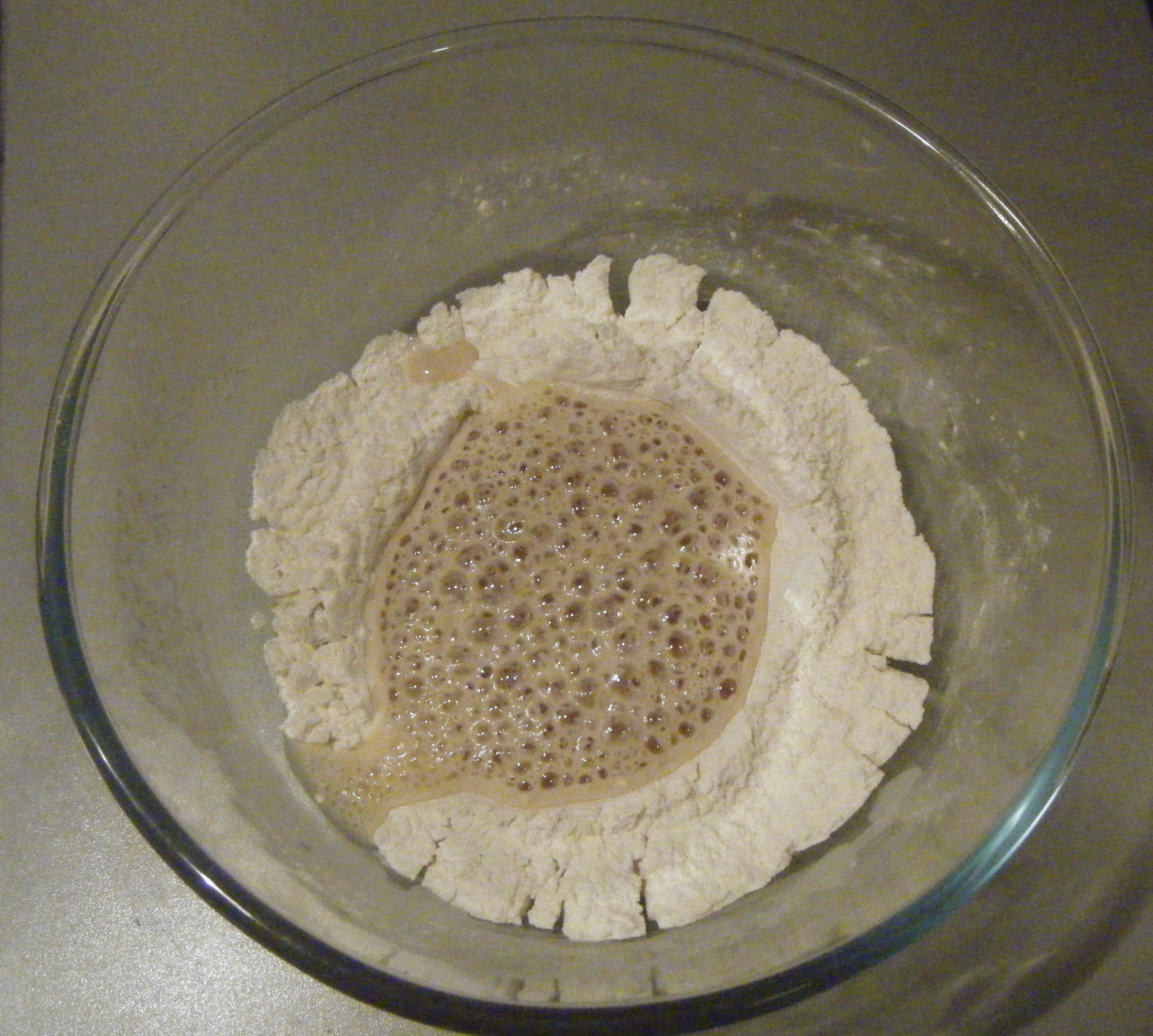
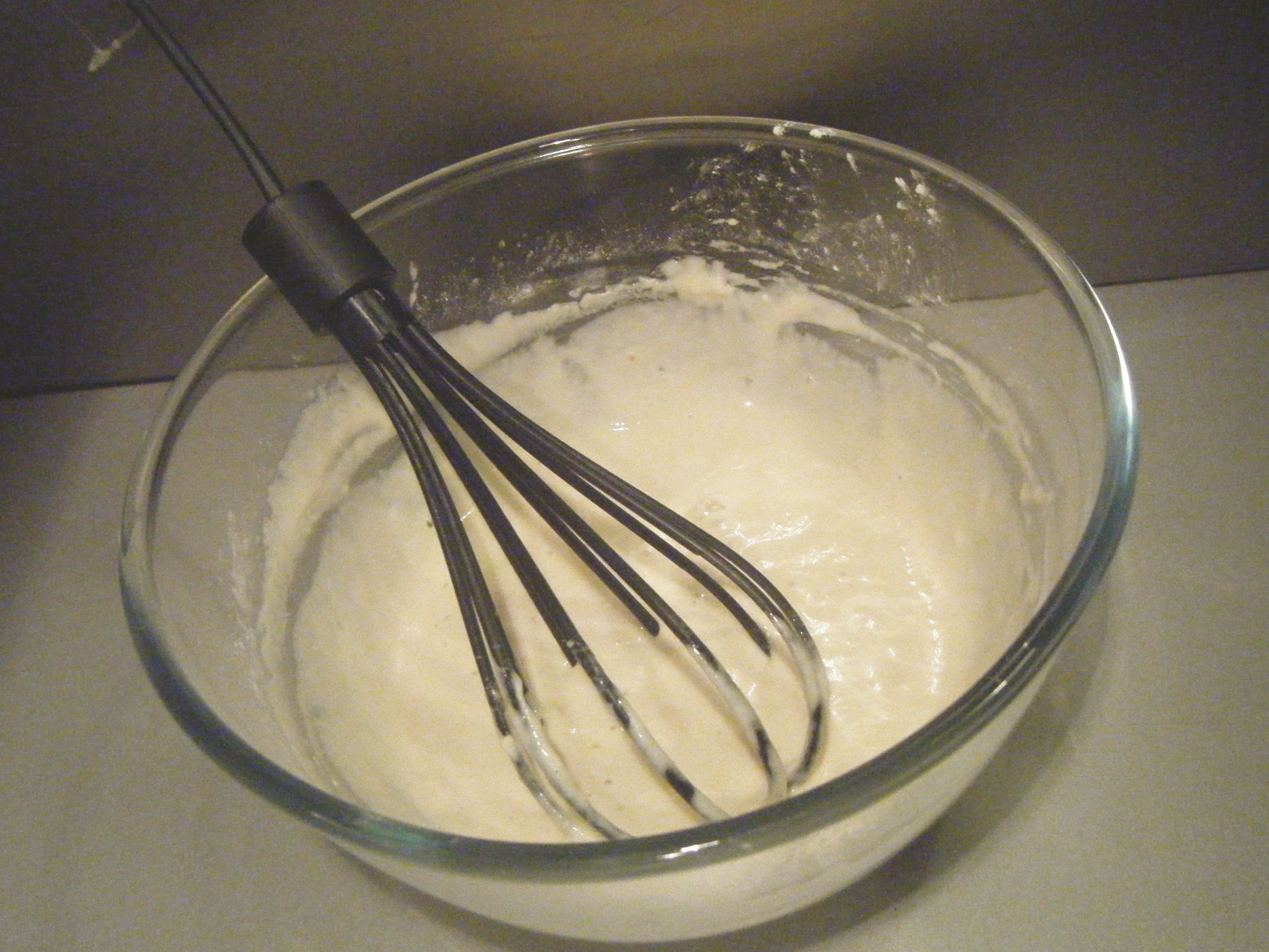
Whilst the chips were cooling I got on with the fish.  I prepared my batter by mixing the cornflour, plain flour and salt in a bowl.  I made a well and then poured in the ale and vinegar.  The recipe specially instructs to beat the mix with a large metal whisk.  I don’t know why it has to be a metal whisk but I don’t have one of these – mine is plastic! So I simply beat it with my plastic whisk until I had a smooth batter and this seemed to work well enough.

Edited - dry and wet Edited - batter

With the batter ready, I turned up the temperature on my fryer to give it time to reach the required 180 degrees celsius.  I then moved onto the next stage of the recipe – putting the flour and salt in the food bag to coat the fish.  Uh-oh, I had ran out of food bags! I’m going to blame Dave and say he used the last one without telling me 😉  Anyway, without any food bags available, I decided to use a plastic bowl and simply covered it with cling film to toss the fish.  It definitely wasn’t as good as using a food bag but it got the job done.

Edited - floured fish

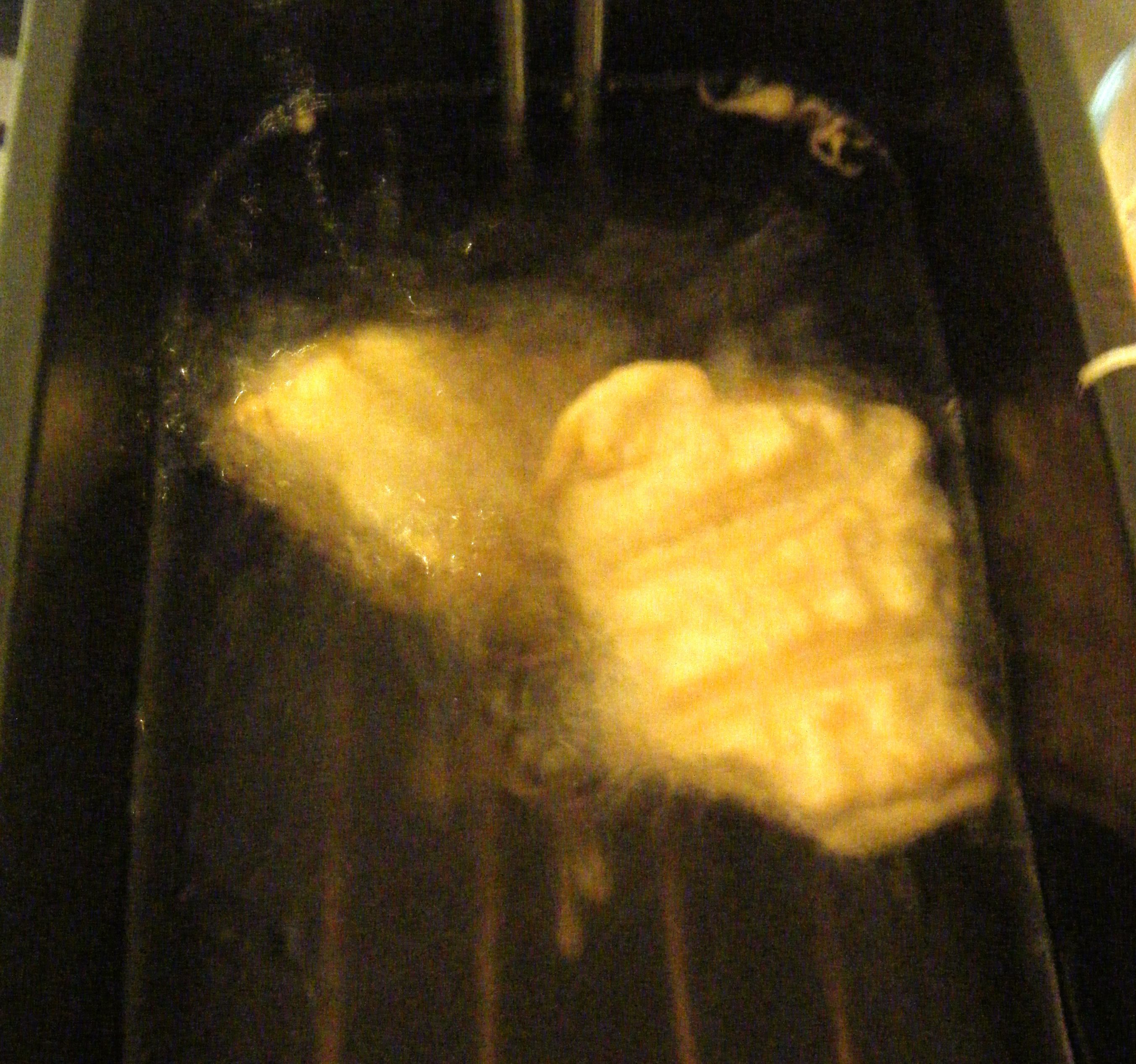
So everything was ready to go! I dipped my floured fish in the batter and popped it into the fryer.  The recipe itself says to lower the fish into the oil using tongs and Dave’s mum confirmed I shouldn’t use a basket. I therefore didn’t use the frying basket (or tongs as mine are plastic!) and just carefully dropped the fish straight into the oil.  Once in the oil, I prodded the fish with a metal spatula (borrowed from Dave’s mum as again, mine is plastic) and it floated to the top of the oil and bobbed away in the bubbling oil.  I made sure to turn the fish a couple of times and the batter was soon a lovely golden brown.   

Edited - fish cooking

I did try to take a better photo of the fish in the oil but it spat at me and the hot oil just missed my eye so this is as good as you’re going to get on the photo front!

I decided to fry my fish in two batches and just put the first lot in the oven whilst the second ones cooked.

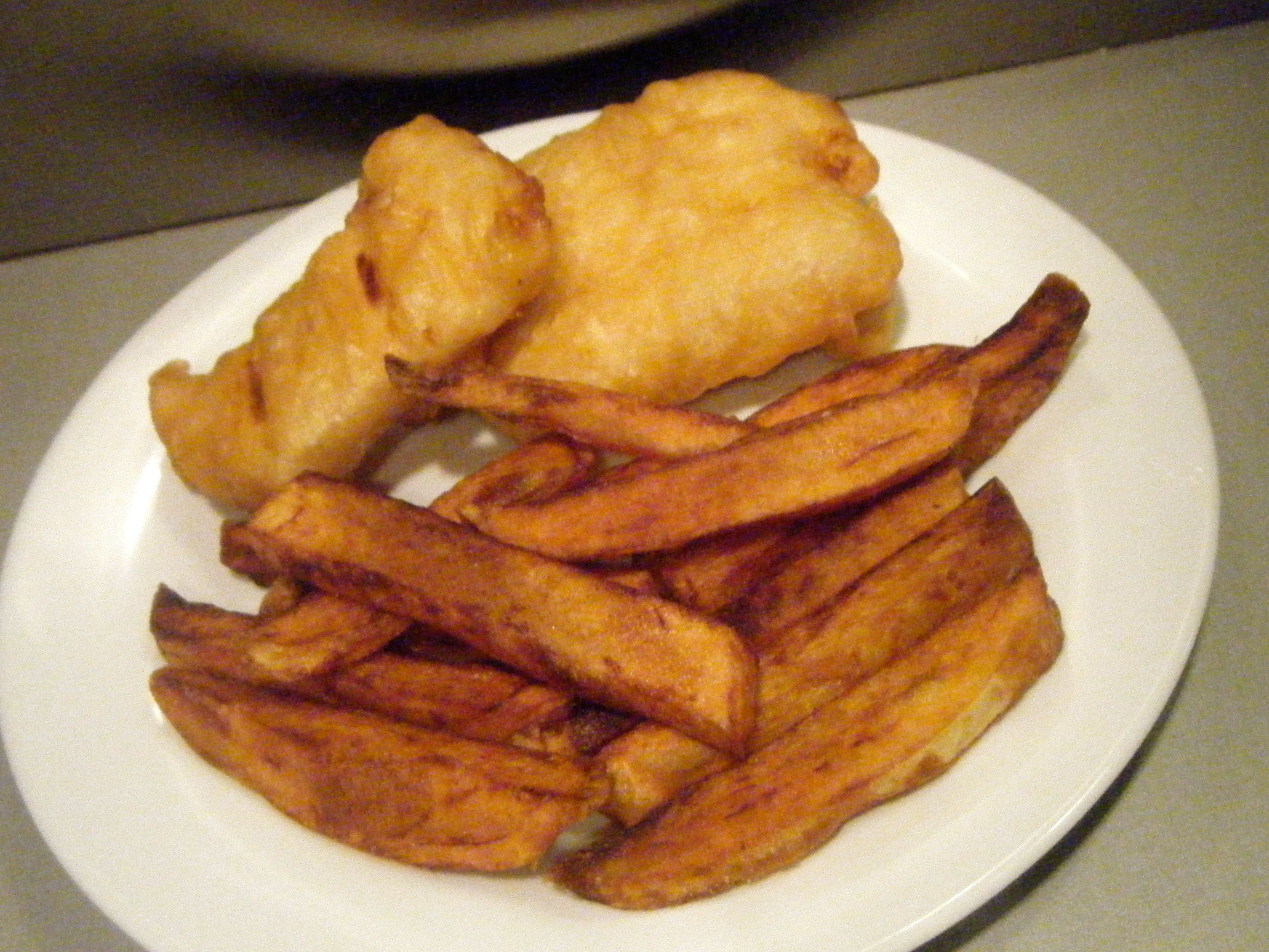
With the fish done, I turned the fryer up to 190 degrees celsius and popped my chips back into the oil for around 4 minutes.  I drained them on some kitchen roll, tossed them in salt and served up.

Edited - served up 2

The final dish was yummy, chips, fish and all.  The batter was nice a crispy and the fish was perfectly cooked. The chips were one of the best I’ve done so far, still not quite how I like them but definitely getting there. 

Overall, our fish and chips were lovely and I’m sure Dave will soon be pestering me to make it again.

Coming up next week, Challenge No. 13 – candy floss cupcakes.

Challenge No. 11 – Chocolate Ganache & Cherry Tart

This dish was suggested by an old family friend, Rachel, who has as big a love for food as me.  Rachel asked me to make dark chocolate ganache tart with black cherries.  I made this challenge with morello cherries – I’m not sure whether they are technically “black cherries” but the overall product is close enough to Rachel’s request.  I was quite happy that someone suggested something like this.  I’ve not spent much time making pastry but I did buy a tart tin last year which, thus far, has only been used to make the sponge base for a giant Jaffa cake.  Finally, I had a good excuse to have a go with pastry and to use my tin, which by the way my boyfriend thought was a wasted purchase! The tin has now been used twice in about 10 months so it is definitely a worthwhile purchase…right? 😉

Anyway, on with the recipe.  I spent quite a lot of time searching for a recipe for this challenge and still didn’t manage to find one which ticked all the boxes.  So I kind of improvised and use this recipe for the main tart but was a little creative with the cherry part.

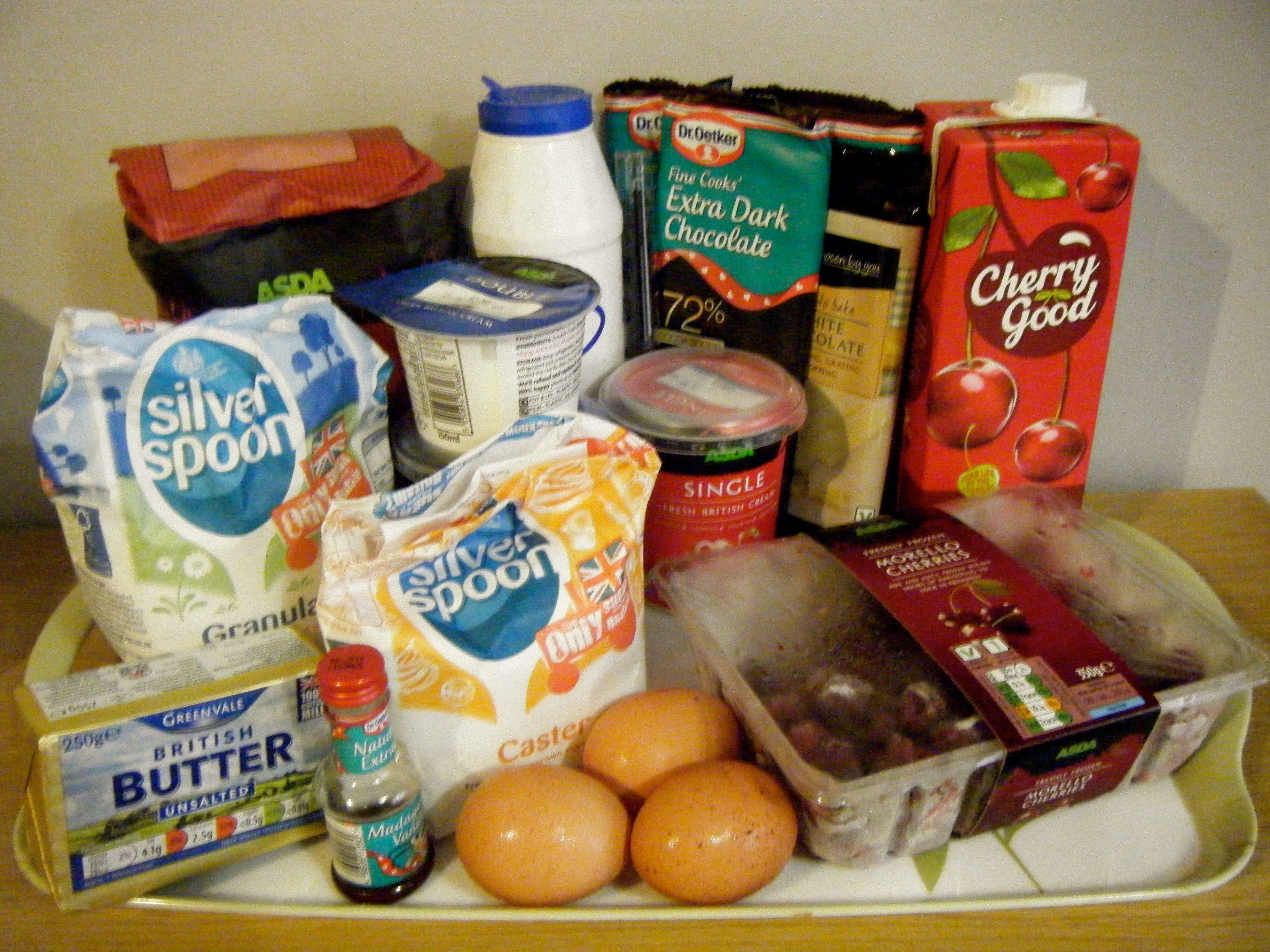
To main recipe requires the following ingredients:-

  • For the pastry
    • 250g/9oz plain flour, plus extra for dusting
    • pinch salt
    • 125g/4½oz cold butter
    • 3 free-range egg yolks
    • 125g/4½oz caster sugar
  • For the filling
    • 400ml/14fl oz double cream
    • few drops vanilla extract
    • 100g/3½oz caster sugar
    • 400g/14oz dark chocolate, approx 70 per cent cocoa solids
    • 50g/2oz butter
  • For the sauce
    • 250ml/9fl oz single cream
    • 1 vanilla pod, split lengthways
    • 100g/3½oz white chocolate, chopped
    • raspberries and fresh mint sprigs, to serve

And then you’ll also need the following:-

  • 350g frozen cherries
  • 3tbsp sugar
  • 1.5 tbsp cherry juice

Edited - ingredients

I started by preparing my cherries because I wanted these to have plenty of time to cool down.  I took out 12 of the best looking cherries and put these to one side.  I popped the rest of the cherries, the sugar and juice into my saucepan and bought it to the boil.  I let it simmer away for about 10 minutes and then removed it from the heat.  I left the cherry mix in the saucepan to cool completely.

I then got started on the pastry case.  I put the flour, salt and the chilled butter into my food processor and pulsed it until I had a breadcrumb looking result.  If you don’t have a food processor you can rub the butter and flour together by hand.

Practical tip: if doing this first stage by hand, make sure your hands are cold.  Warm hands will begin to melt the butter and the mix will become too wet.  If, like me, your hands are prone to being warm, run them under a cold tap for a while and dry them thoroughly before you get started.  Repeat this cooling process periodically to make sure your hands don’t warm up too much.

Edited - Breadcrumb

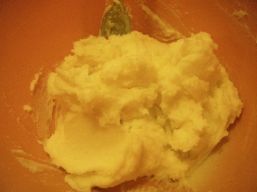
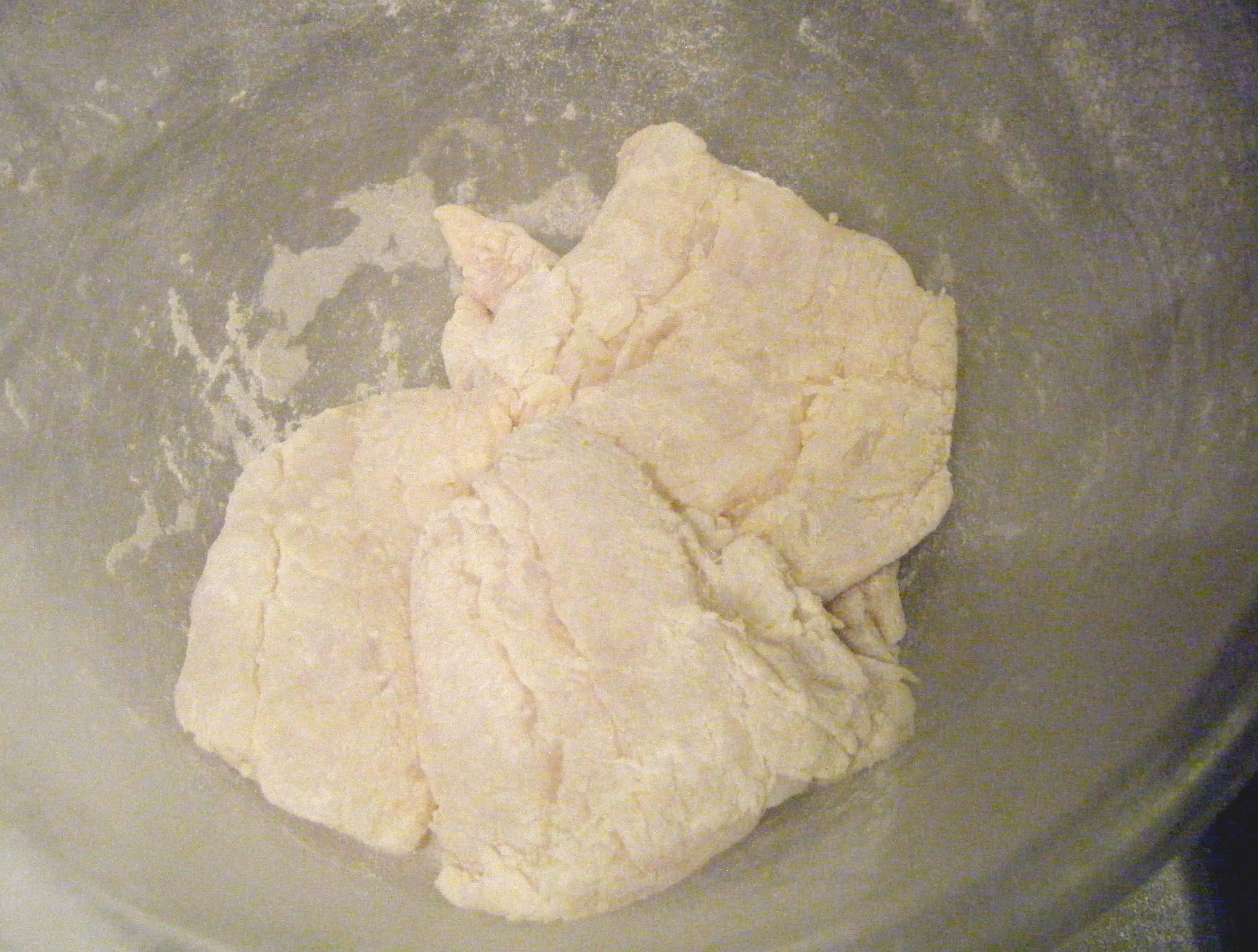
With my breadcrumb mix ready, I added the caster sugar and egg yolks to my processor.  I then tried to pulse this until a dough formed but there was too much mix for my processor.  I decided to tip it out into a bowl and bought it together by hand, being careful not to overwork the dough.  I covered it with cling film and popped it in the fridge for 30 minutes.

Edited - dough ready for the fridge

When the pastry dough was nearly ready, I prepared my tart tin. The recipe doesn’t tell you what you need to do here and I wasn’t too certain if I actually needed to do anything.  A quick google confirmed I should grease the tin.  I just used a bit of butter and my fingers to make sure the base and sides were greased properly.

Once the 30 minutes were up, I floured my worktop ready to roll out the pastry.  I used quite a lot of flour because the last time I made pastry, it got stuck! I also floured my rolling pin and got started.

Practical tip: when rolling out pastry (or fondant, or pretty much anything you want to roll), always roll from the middle up and middle down.  If you roll from top to bottom you’ll end up with a really fat bottom, whereas rolling from the middle helps to keep an even thickness all the way through.

Once my pastry was the right size, I rolled one side onto my rolling pin, picked up the pastry and laid it into my greased tin.  Turns out, I was a bit overzealous about how big I needed to roll out and I had quite a lot of offcuts! Something to practice for next time 🙂  Anyway, I trimmed away the excess, put the baking paper and rice in place and popped it into the oven for 15 minutes.

Edited - lined tin Edited - bp and rice

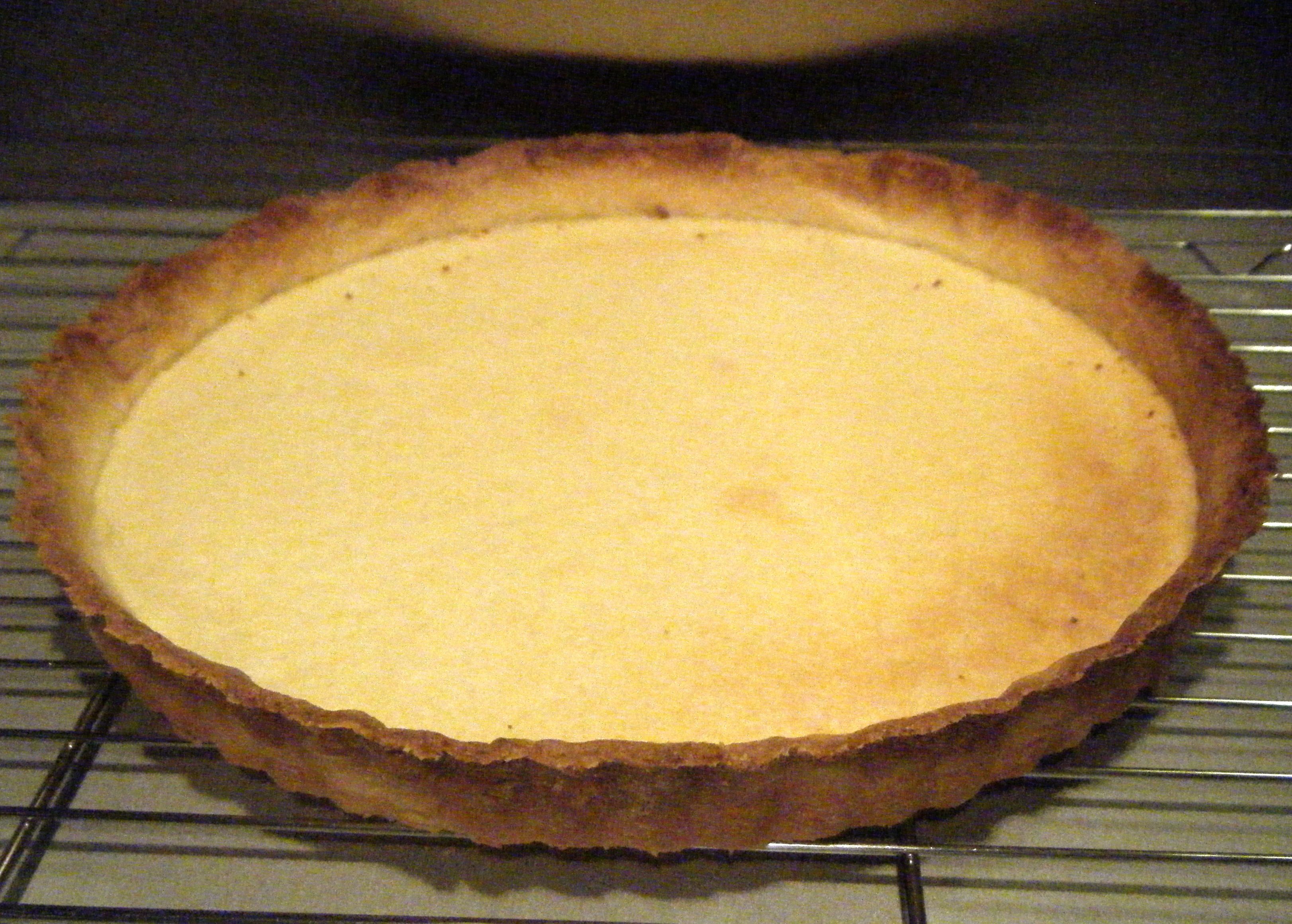
When the timer went off, I removed the rice and baking paper and returned it to the oven for 5 minutes.  My edges had browned more than the middle and I think this is because I cut the baking paper too small.  By the time I had added the chocolate filling this didn’t matter but next time, I will try avoid this by leaving the baking paper a bit bigger so the edges aren’t as exposed.

After the final bit of cooking time was over, I took the pastry out of the oven and left it in the tin for 5 minutes to cool.  I removed the pastry from the tin and put it onto a rack to cool completely.

Edited - cooked base

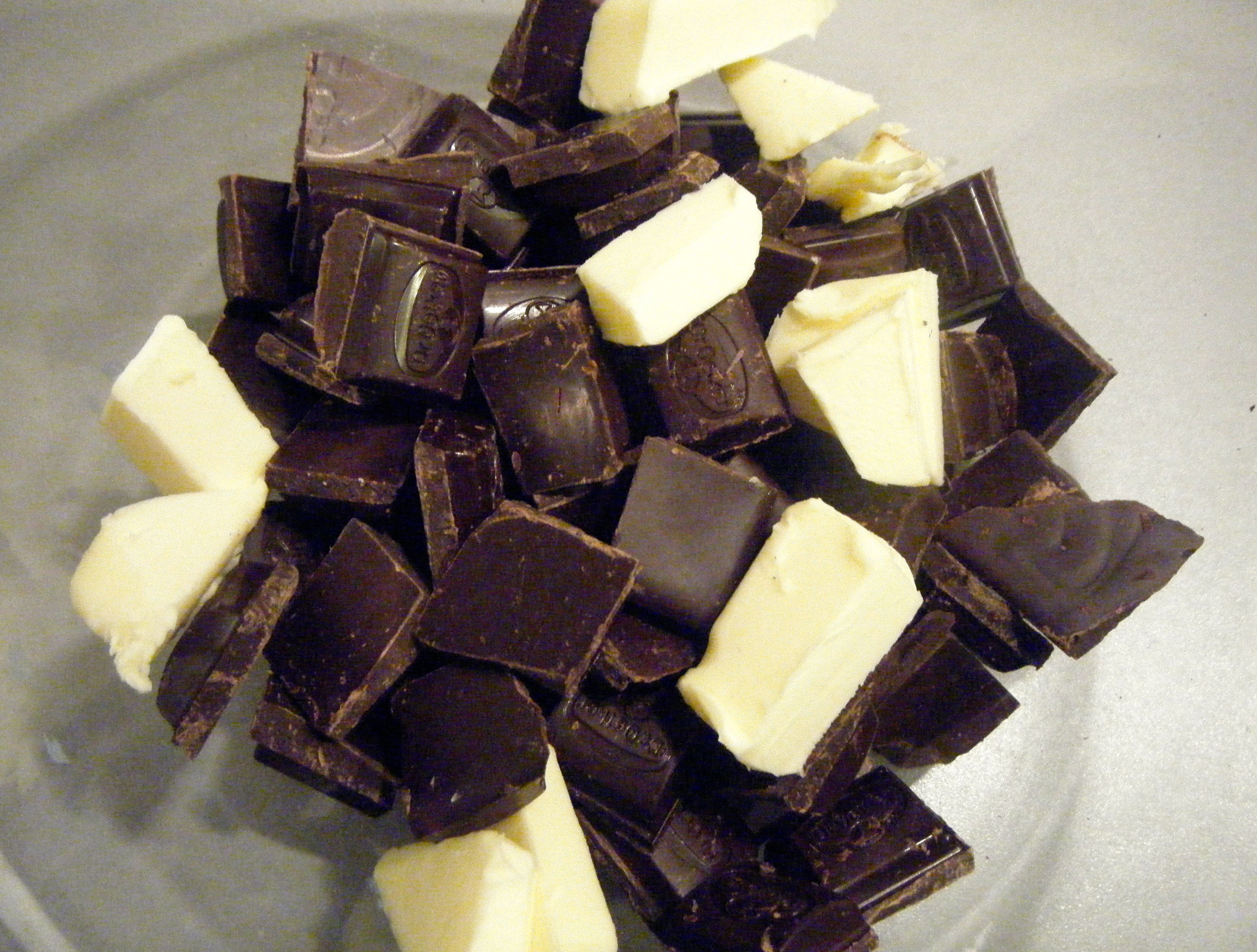
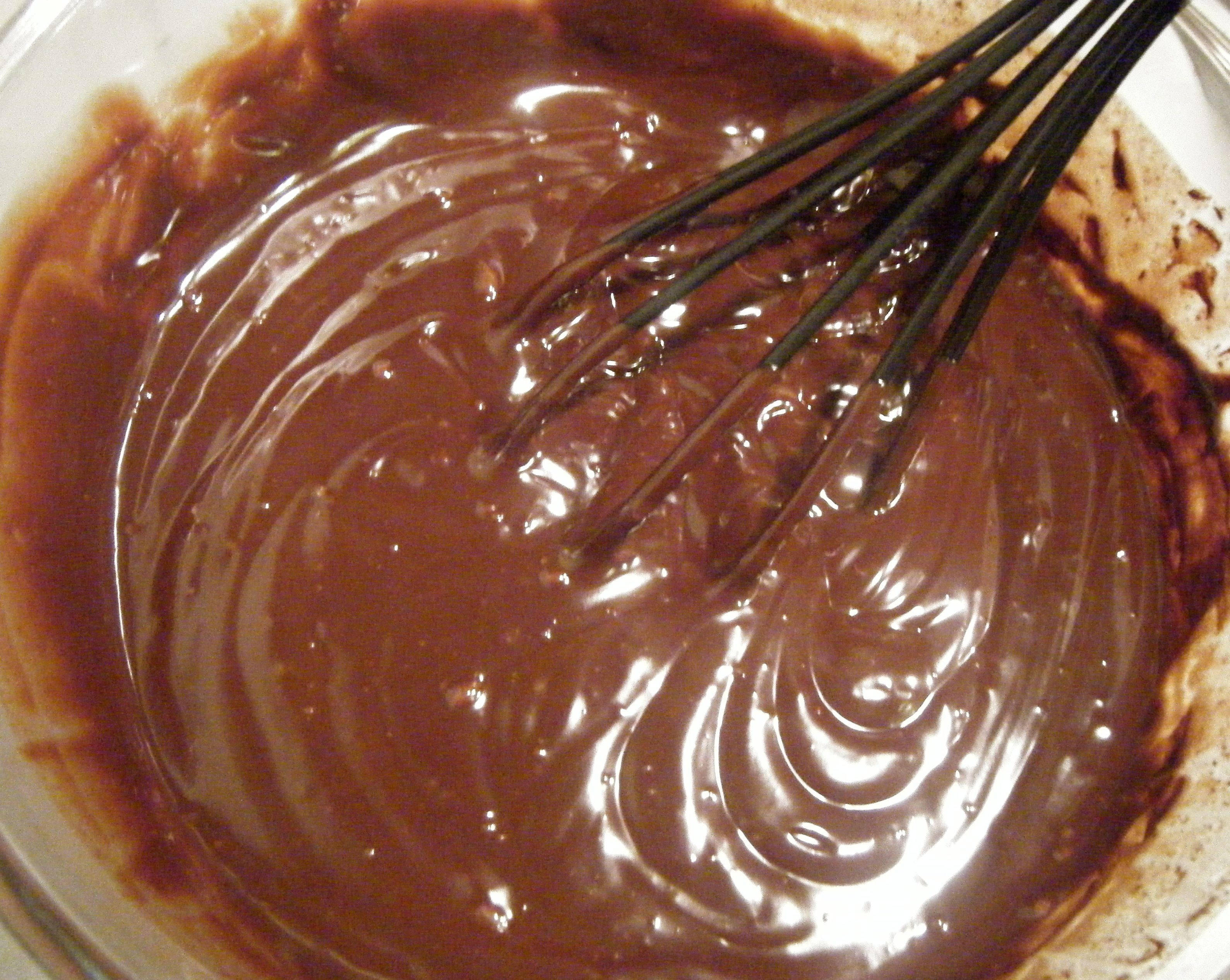
I then got started on the chocolate mix.  I added the double cream, sugar and vanilla extract to a pan and bought this to the boil.  Whilst it was heating, I put the dark chocolate and butter into a large bowl.  When the cream was nice and hot (be carefully not to burn it!), I poured it over the chocolate and butter.  It only took a few seconds to start melting and after a little use of my hand-held whisk I had a lovely smooth rich looking ganache.

Edited - butter and chocEdited - Chocolate genache

At this point, we come back to the improvisation and the, by now, forgotten cherries.  I drained the cherries from the liquid and placed them into the base of my tart. I then poured my chocolate ganache over the top and levelled it off with a spatula.  I also did a little fancy pattern work with a fork, just because I could 🙂 Finally, I placed my 12 reserved cherries around the outside (this is a neat little way to control portion sizes, 1 cherry per slice).

Edited - cherry lined base Edited - top

I let the ganache cool for around 15 minutes and then put the tart into the fridge for 2 hours. 

With the chocolate set, I got started on the final element – the white chocolate cream sauce.  I put half the single cream into a pan with the vanilla pod to warm through.  Once warm (but not hot) I removed it from the heat, took out the vanilla pod and added the white chocolate.  When the chocolate had melted completed, I added the remaining cream.

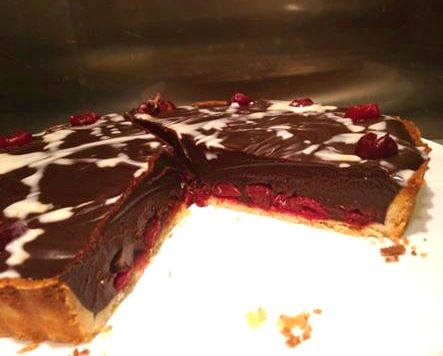
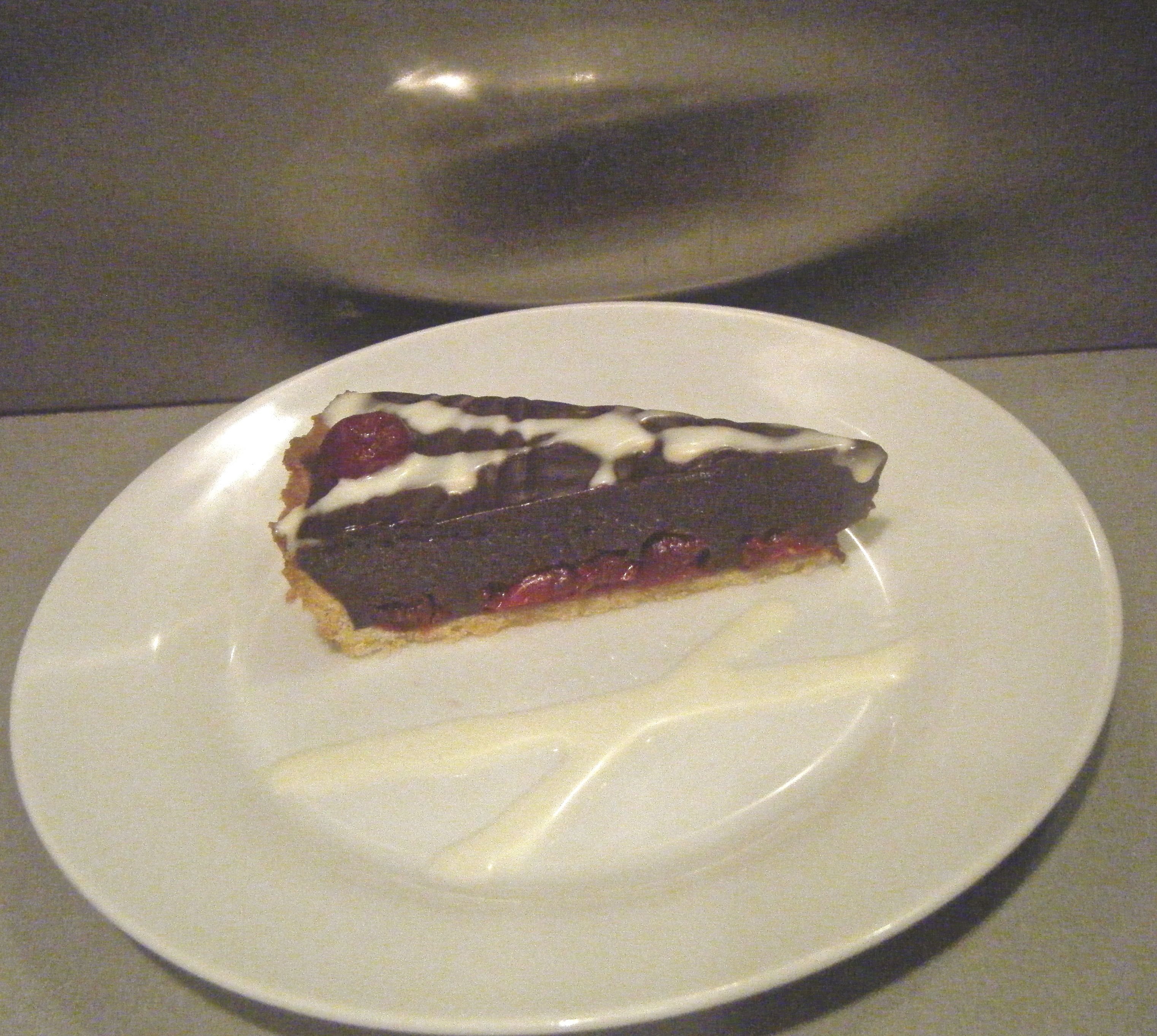
I drizzled a bit of the white chocolate cream over my tart and served up.

Edited - sliced Edited - slice

Two words to describe this dish – chocolatey goodness!!  It was very rich which meant you didn’t need a big portion but it was oh so good (meaning I wanted a big portion!). 

Personally I thought the white chocolate cream, whilst yummy, was a little unnecessary.  Perhaps this is because I wasn’t serving the tart as a dessert but more of a sweet snack.  It also ended up running into the chocolate and not looking as pretty I had hoped.  Next time, I think I will just melt some white chocolate to drizzle over the top and, if served as a dessert, I’ll have it with some normal cream.    

Just one final thought on this challenge.  More cherries!  I love cherries and I think this could have done with a few more so when I make it again, I’ll probably double the amount.

Coming up next week, Challenge No. 12 – fish and chips.