Challenge No. 17 – Profiteroles

This challenge was suggested by my friend Danny and it is a fond favourite of mine.  I’ve made profiteroles before so I thought I’d experiment with a new flavour to make it more of a challenge.  I decided to try passion fruit cream profiteroles with a homemade hot chocolate fudge sauce.

Danny and his girlfriend Kate joined me and Dave for dinner a couple of weeks ago where we enjoyed Kate’s suggestion of moussaka for Challenge No. 14.  I used this opportunity to also make the profiteroles for our pudding and so Kate and Danny got a full evening of My Gastro Adventure eating 🙂

I’ve used a couple of different recipes for this challenge; one for the profiteroles and one for the hot chocolate fudge sauce

I tweaked the cream filling to build in the passion fruit and so to make my version of the recipes you will need the following ingredients:-

  • For the choux pastry
    • 200ml/7fl oz cold water
    • 4 tsp caster sugar
    • 85g/3oz unsalted butter, plus extra for greasing
    • 115g/4oz plain flour
    • pinch salt
    • 3 medium free-range eggs, beaten
  • For the cream filling
    • 600ml/1 pint double cream
    • 3 passion fruits
  • For the chocolate sauce
    • 340g/12oz granulated sugar
    • 85g/3oz brown sugar
    • 100g/3½oz cocoa powder
    • 30g/1oz plain flour
    • ½ tsp salt
    • 1 x 400g/14oz can evaporated milk
    • 250ml/9fl oz water
    • 2 tbsp butter
    • 2 tsp vanilla extract

Edited - ingredients

I started by making the choux pastry and pre-heated my oven to 200 degrees celsius with a roasting tray placed in the bottom.  I put the water, sugar and butter into my saucepan and heated it over a low heat until the butter was melting.

Edited - butter in pan

Whilst the wet ingredients were warming through, I prepared the flour and salt.  I measured out the amount I needed and placed it onto a square of baking paper.  Doing this makes it easier to add the flour smoothly and quickly in one go. 
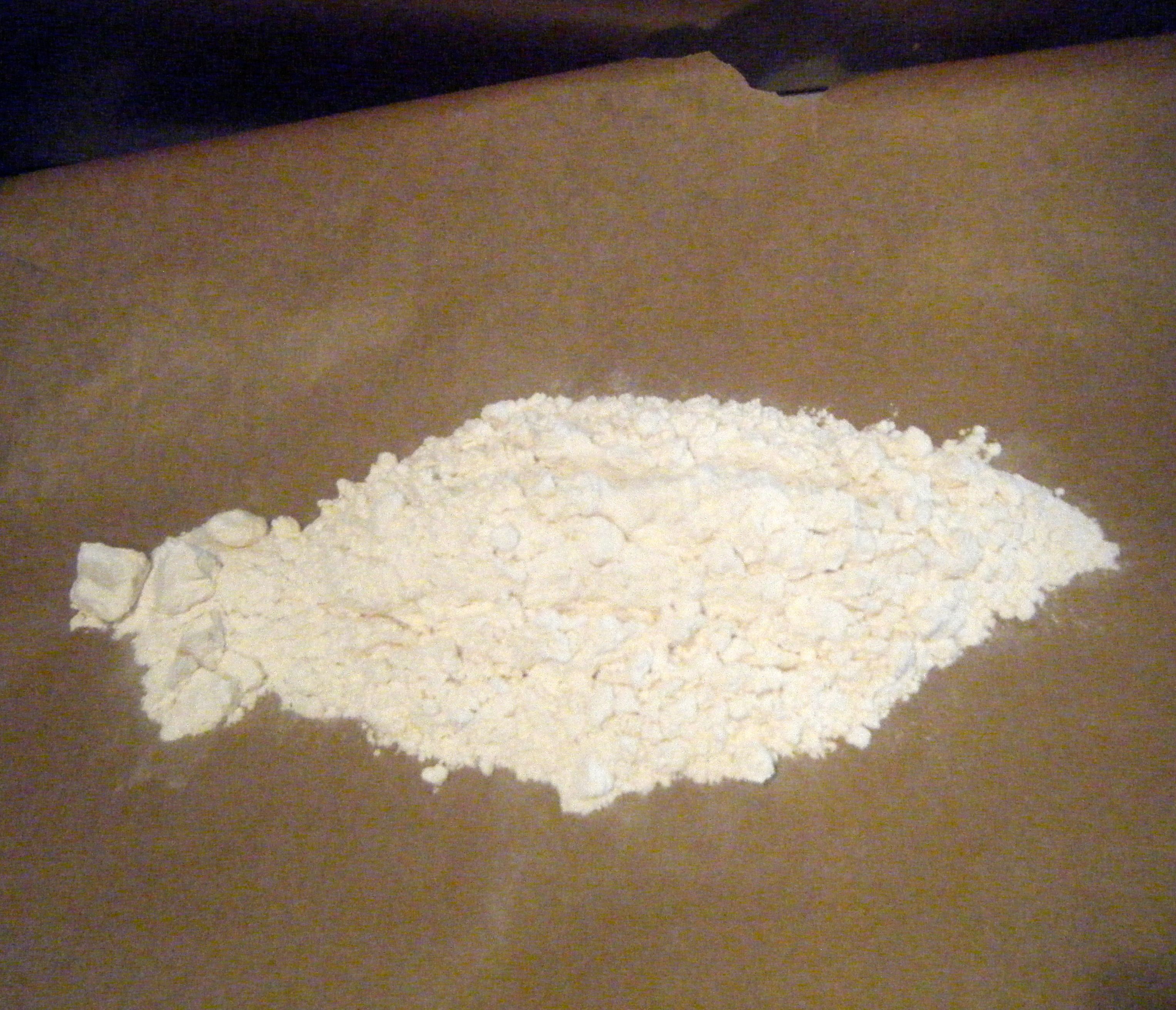
Edited - flour

Once the butter was melting, I turned the heat up and bought the mixture quickly to a boil.  Once boiling, I tipped in the flour/salt, removed the pan from the heat and beat vigorously with a wooden spoon until it came away from the sides to form a heavy dough. 

Practical tip: make sure you bring the wet ingredients to a boil.  The first time I tried to make profiteroles, the recipe didn’t mention this and I just added the flour once the butter was melted.  I ended up with a very wet mixture which just would not work, no matter how much I beat it.  I looked back at a recipe I had previously used for eclairs (which are also made with choux pastry) and this clearly stated that the wet ingredients should be brought to a boil before the flour is added.  I have followed this bit of advice every time since and it always works 🙂

Edited - dough

Once my dough formed, I put it in a bowl and left it to cool for 15 minutes.  I waited until it was cool enough to touch and then beat in my eggs a little at a time, until I achieved the so called ‘dropping consistency’.  It needs to be runny enough so that it doesn’t clog up the piping bag but not so runny that it will just slip straight out the end.  Ideally, the dough should fall from a spoon when lightly shaken.  Mine was a little runny this time and I’m clearly still perfecting my assessment of the optimum ‘dropping’ point 🙂

Edited - eggs added

I lined two baking trays with baking parchment, using a bit of the choux mixture to stick the parchment to the tray.  I filled my piping bag and piped small balls (a bit randomly) onto my tray.  I then rubbed the top of each ball with a wet finger.
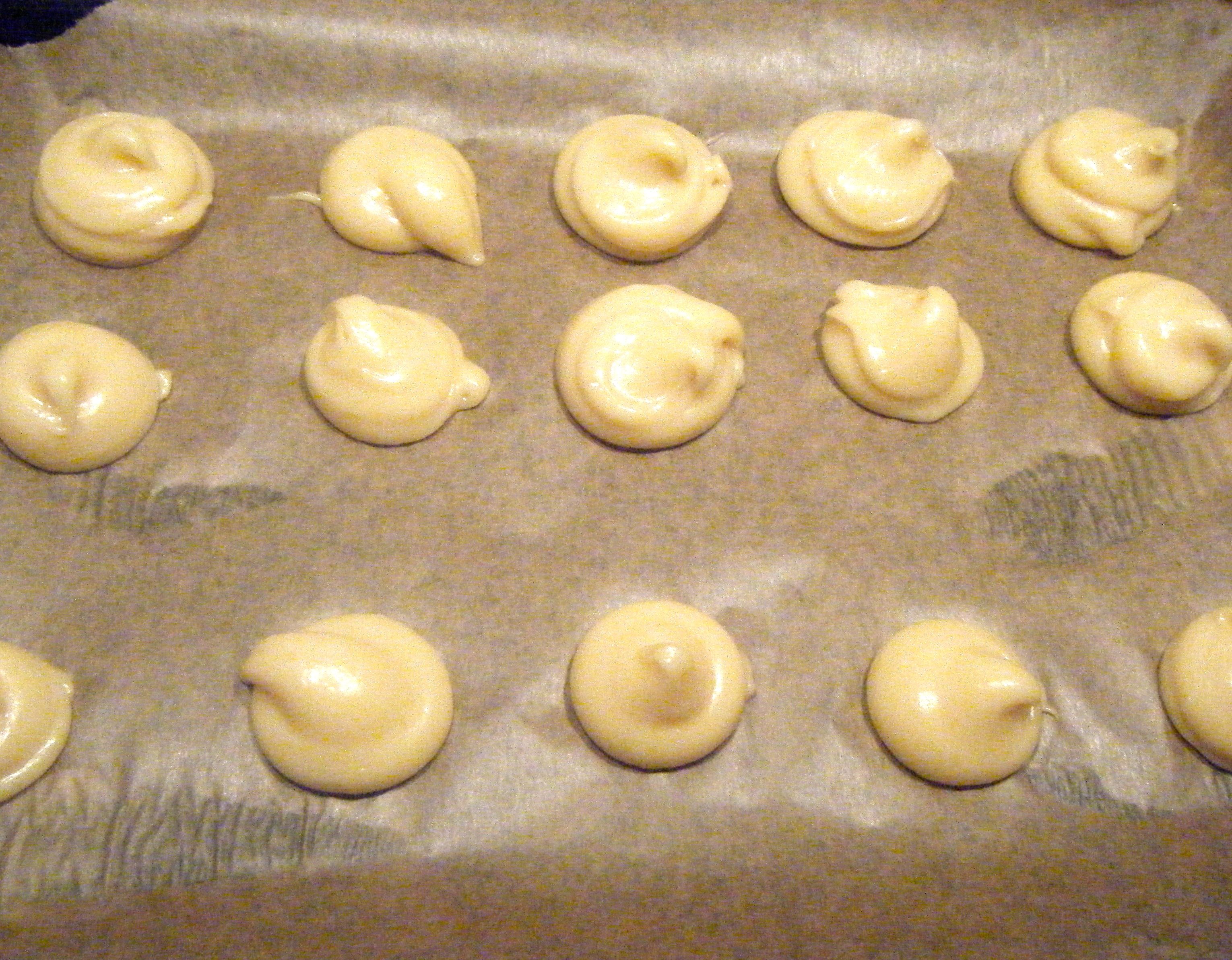
Edited - pipped

I put the trays in the oven and added the water to the roasting tray before shutting the door. I set the timer for 20 minutes and watched the little golden balls rise like the air filled wonders they are.  When the timer went off, I re-set it for another 7 minutes and when golden-brown, I took them out the oven.

I use a skewer to prick the base of each profiterole making a hole for the steam to be released.  I put them back on the baking trays with the holes facing upwards and popped the tray back into the now turned off oven for 5 minutes to dry out.
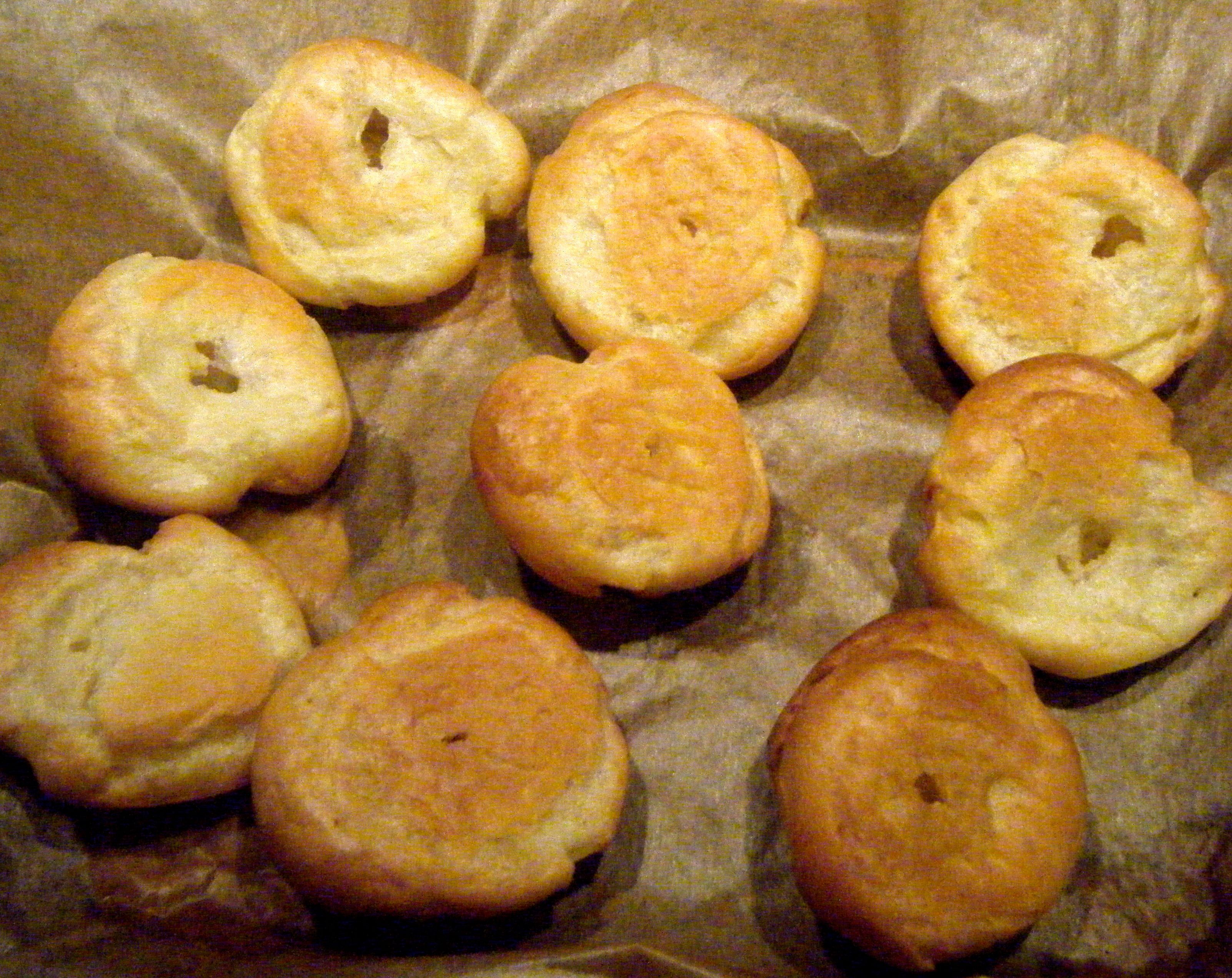
Edited - bottoms

I then got my flavouring ready.  I pushed the passion fruit filling through a sieve to leave just the juice.  I was amazed at how much juice you actually get out of this fruit.  They don’t seem that juicy when you eat them but there was absolutely loads!

Edited - juicing

I decided I didn’t want to fill the profiteroles too early as I thought the cream would make the pastry go soft.   So at this point I put the profiterole cases and the remaining ingredients to one side whilst our guests arrived and we enjoyed our Greek inspired dinner.

When we were all well fed and watered, I set out to finish this yummy dessert.  I whipped the cream with a balloon whisk until stiff – Kate helped with this as my arm started to ache and she was supper quick!  I then added the passion fruit juice and stirred it through until well combined.

I then put all the chocolate sauce ingredients (except the vanilla extract) into a big pan and popped this over a medium heat to bring slowly to the boil. 

Edited - sauce ingredients

Once it reached boiling point, I set the timer for 5 minutes and whilst the chocolate sauce finished cooking, I piped the passion fruit cream filling into the profiteroles.  I let the sauce cool slightly and then added the vanilla extract. 

Edited - filled profiteroles

Then we reached my favourite bit – time to tuck in! 

Edited - served up

We all agreed that the passion fruit cream profiteroles were delicious and the chocolate sauce was delicious however together they kind of battled each other for centre stage.  What would this adventure be without a little experimenting and I’m glad I tried the different flavour in the cream but it just didn’t quick work with the chocolate sauce. 

The passion fruit cream profiteroles would have been lovely on their own but for me, profiteroles just aren’t quite complete without a lovely hot chocolate sauce!!  Next time I’ll stick to simple vanilla cream profiteroles which this lovely rich sauce 🙂

The chocolate sauce recipe made a HUGE batch for just the four of us and I ended up with loads left over.  Before leaving, Danny suggested I turn the leftover sauce into brownies.  So the next day, I put some of the sauce into a small pot to put to one side and then added some flour (about 65g) and 3 eggs to the rest.  I mixed it up and poured it into a lined tin.  I popped it into the oven for about 15 minutes at 180 degrees celsius.  This definitely was not long enough as it was still wobbly! I left it in the oven for a while longer (I lost track of how much longer) and when it was firm and a skewer came out clean, I took it out the oven.  After 5 minutes cooling in the tin, I turned it out onto a cooking rack.  I’ll be honest, this didn’t really work as a brownie but what I had created was possibly one of the best chocolate fudge cakes I’ve eaten! Warmed in the microwave and served with the reserved chocolate sauce – absolute HEAVEN! 🙂

Edited - fudge cake

Coming up next week, Challenge No. 18 – Philly cheese steak.


Challenge No. 16 – Cornish Pasty

This challenge was suggested by one of my good friends from University.  My friend Laura is by all accounts a vegetarian, cake lover (amongst many other wonderful things) and I hadn’t registered that one of her suggestions was not only not cake, but a meat filled pastry! It took me by surprise when I realised what Laura had asked me to make.  So thanks for the suggestion Laura and I’m sorry you can’t get to try this one 🙂

This dish is said to be an important part of the Cornwall county culinary history.  The first references to cornish pasties appeared in the 13th century and during the 18th/19th century, it was a staple part of the diet of working men in Cornwall.  The wonderful thing about a Cornish pasty; it contains a meal within its golden crust.  When handled by miners/farmers, the thick crust could be held with dirty fingers and thrown away at the end. Today, it is enjoyed by many people (not just the miners/farmers) and we don’t throw the crust away – I mean come on, its one of the best bits!

I did a quick search and found a recipe by one of my favourites, Paul Hollywood.  You can find the recipe here.

For this recipe you will need:-

  • For the pastry
    • 500g/1lb 1oz strong bread flour
    • 120g/4oz vegetable shortening or suet
    • 1 tsp salt
    • 25g/1oz margarine or butter
    • 175ml/6fl oz cold water
    • 1 free-range egg, beaten with a little salt (for glazing)
  • For the filling
    • 350g/12oz good-quality beef skirt, rump steak or braising steak
    • 350g/12oz waxy potatoes
    • 200g/7oz swede
    • 175g/6oz onions
    • salt and freshly ground black pepper
    • knob of butter or margarine

Edited - test

I started by putting all the pastry ingredients (except the egg) into my bowl and used a wooden spoon to combine the ingredients.  I then used my hands to crush everything together to form a dough.  It didn’t really form into a ball very well (it was so dry) but I tipped it out onto the worktop and started kneading to bring it together properly. 

Edited - dry ingredients

Oh my gosh, this was such hard work! I watched the video included on the recipe link and Paul Hollywood makes it look so easy.  I however was literally have to put my full body weight into the kneading and it was a real work out.  Dave even had a little go but he didn’t quite get the technique right and was just kind of squashing the dough.  Anyway, after I took over again and gave the dough a last few bits of vigorous kneading, I had my smooth and glossy ball. 

Edited- dough ball

Practical tip: develop your own method of kneading.  This may sound silly but when I first starting making bread, I tried to replicate other people’s kneading styles.  Unfortunately, I have bad joints, particularly bad in my hands and I found it painful to use some of the methods I’d seen on TV.  Instead I found I rolled and stretched the dough between my two hands, using more of the heel of my hand than my fingers.  It takes a little longer for me to knead like this but I always get there in the end and it is less painful 🙂 So find a method that works for you and just go with that.

With the kneading done, I wrapped the dough in cling film and popped it into the fridge for 60 minutes. 

I then got started on the filling ingredients. I chopped the potato, swede and onion into what I thought were reasonable sized cubes.  I knew Dave was going to be a bit funny about eating this dish (he likes Cornish pasties but he hates chunky vegetables) and to try and keep him happy, I asked him to ‘approve’ the size on my cubed vegetables. He said they looked too big and was concerned they wouldn’t cook properly.  I re-read the recipe and sure enough, I’d cut them to about double the size suggested.  So I re-chopped to make them smaller.

I cut my braising steak to similar size cubes and put all the ingredients into a bowl, mixed and seasoned with salt and pepper. 

 Edited - vegEdited - beef

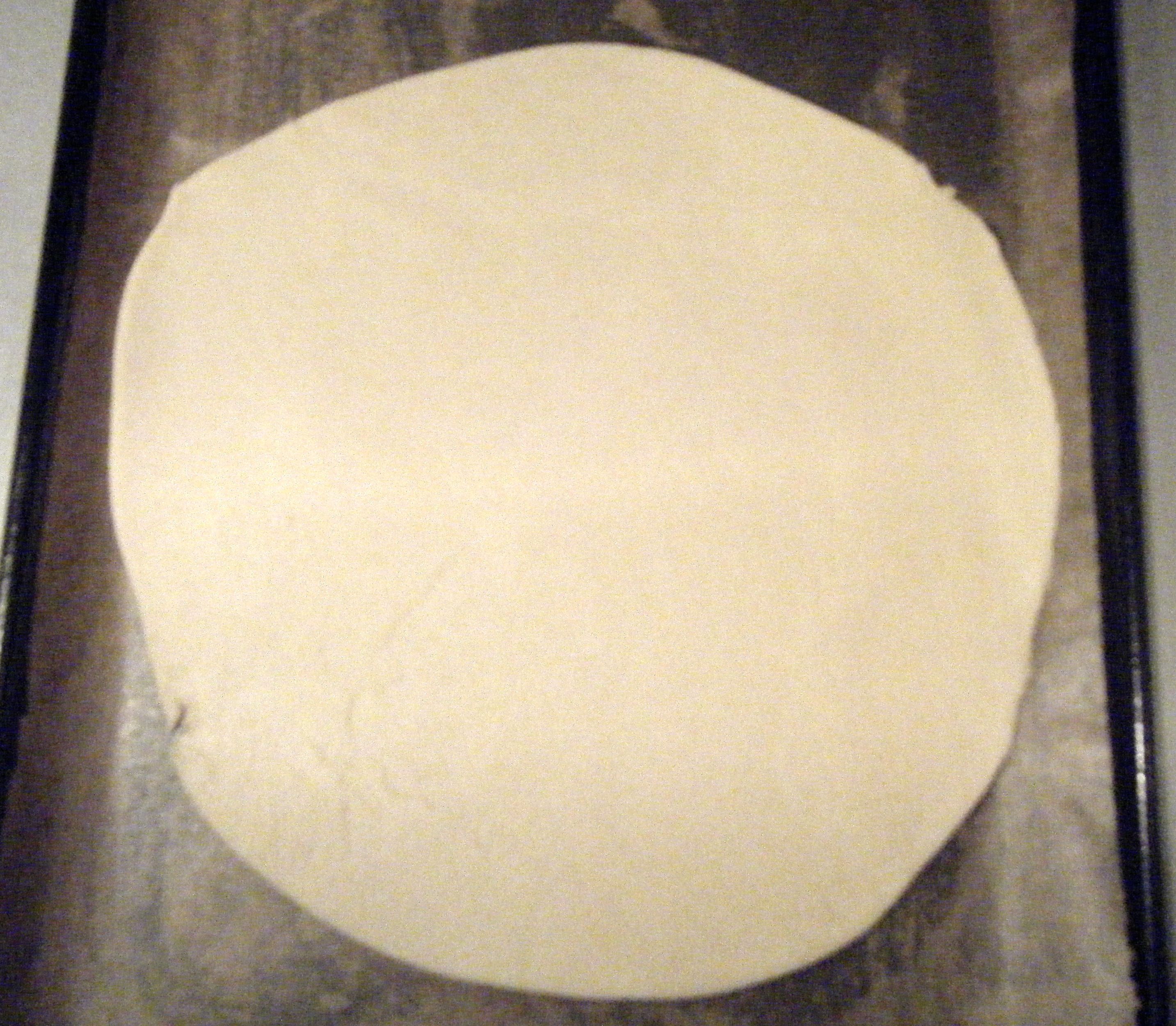
I divided my dough into 4 pieces and took the first piece to roll into a disc of approximately 25 cm.

Practical tip: in case you missed Challenge No. 11, when rolling out pastry (or fondant, or pretty much anything you want to roll), always roll from the middle up and middle down.  If you roll from top to bottom you’ll end up with a really fat bottom, whereas rolling from the middle helps to keep an even thickness all the way through.

Edited - rolled out

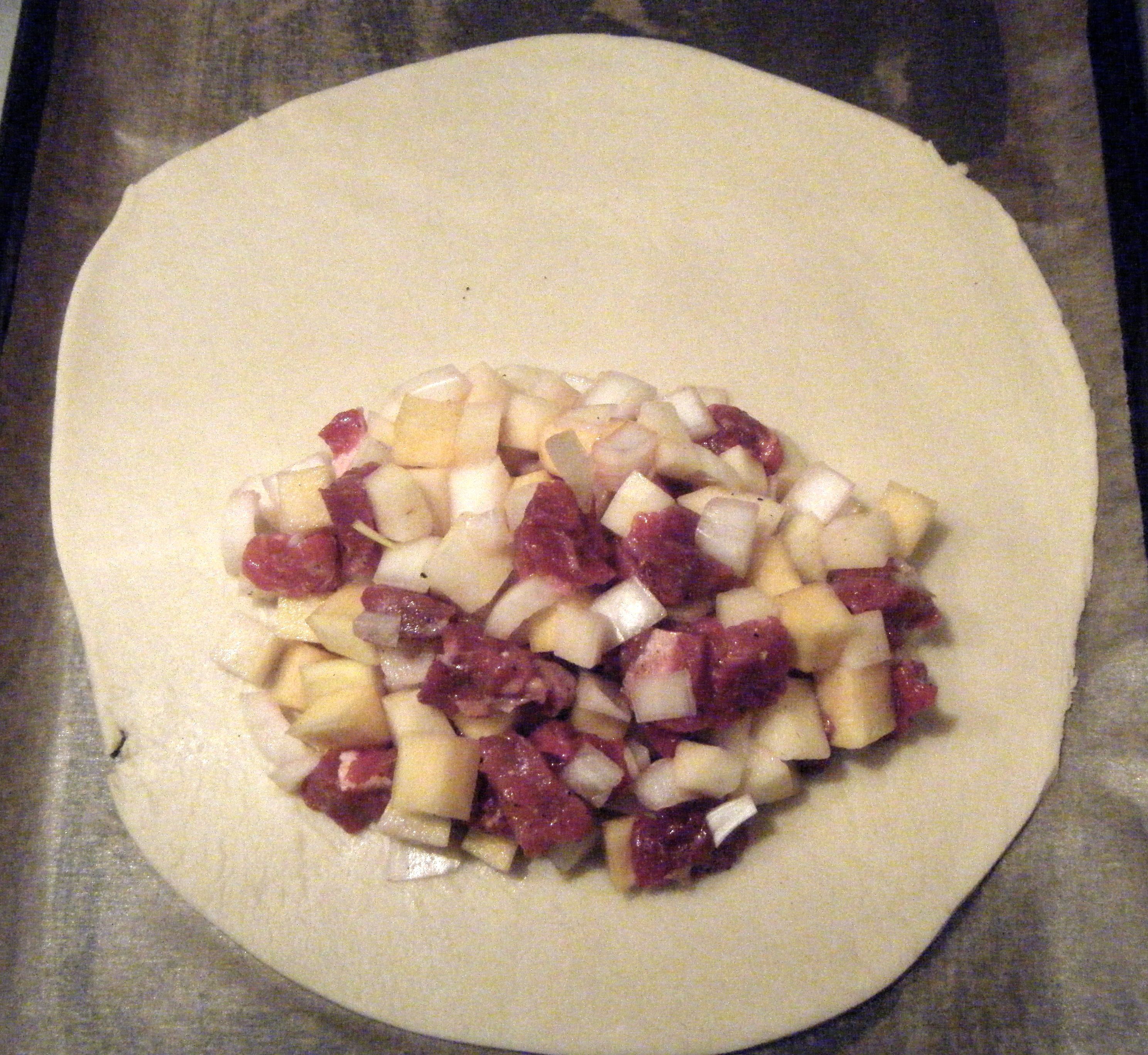
I then spooned a quarter of the seasoned mixture onto one half of my pastry circle.  The recipe says to add a knob of butter/margarine before folding over the pastry but I accidentally missed this bit.  Paul doesn’t add any butter/margarine in the video so I decided it wasn’t a problem that I missed this stage. 

Edited - filling

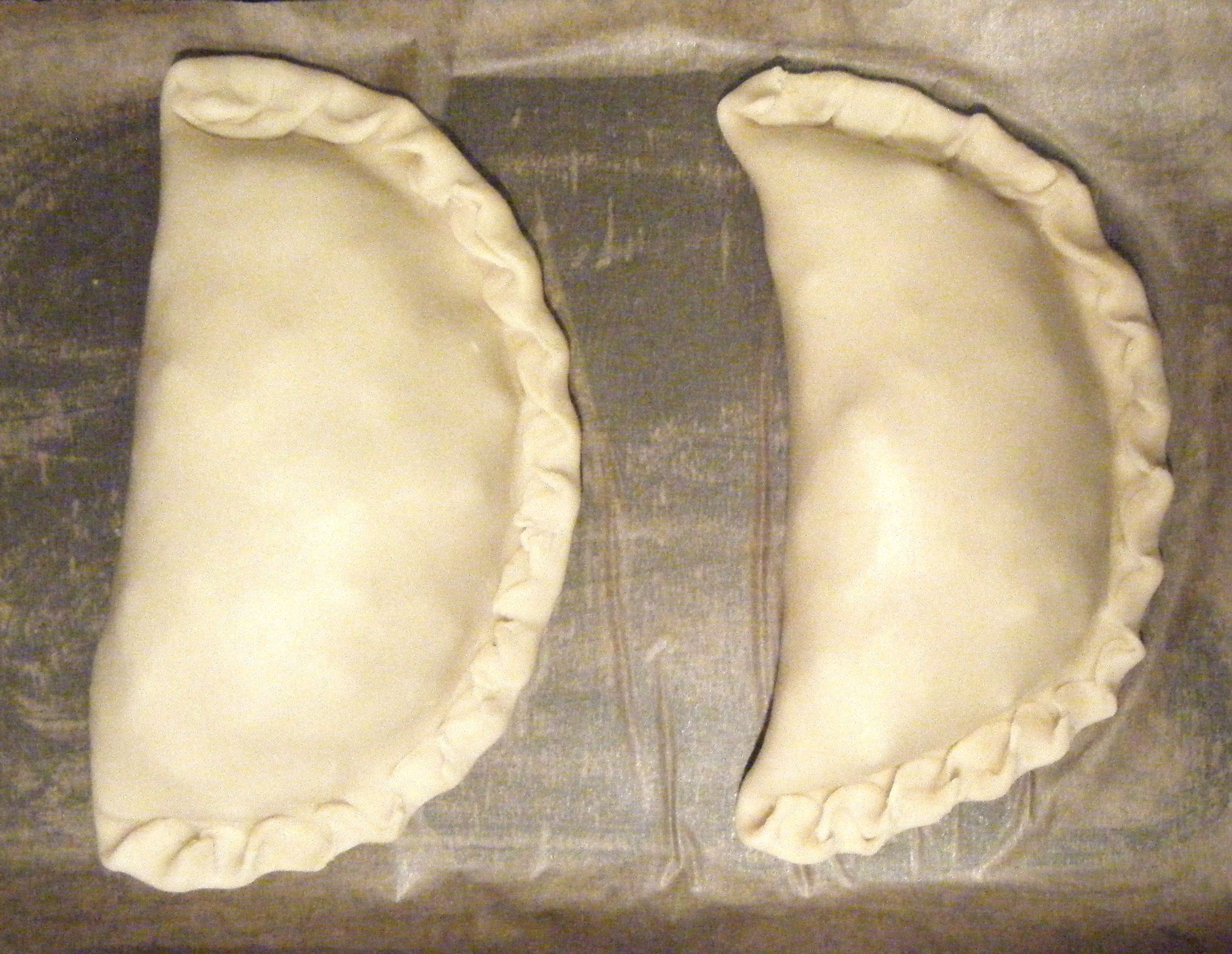
Next, I set about crimping; I used my fingers to make twists all the way along the round edge.  I put the pasty on my lined tin and made the remaining three pasties.  I put one more on the baking tray and then wrapped the remaining two in baking paper and cling film before putting them in the freezer for another day.  I’ve read mixed reviews about freezing cornish pasties before cooking them, so I’ll give a little update in the future to let you know if it worked 🙂

Edited - crimped

With two pasties in the freezer, I brushed the remaining two with the egg and salt mixture before putting them in the oven for 45 minutes.

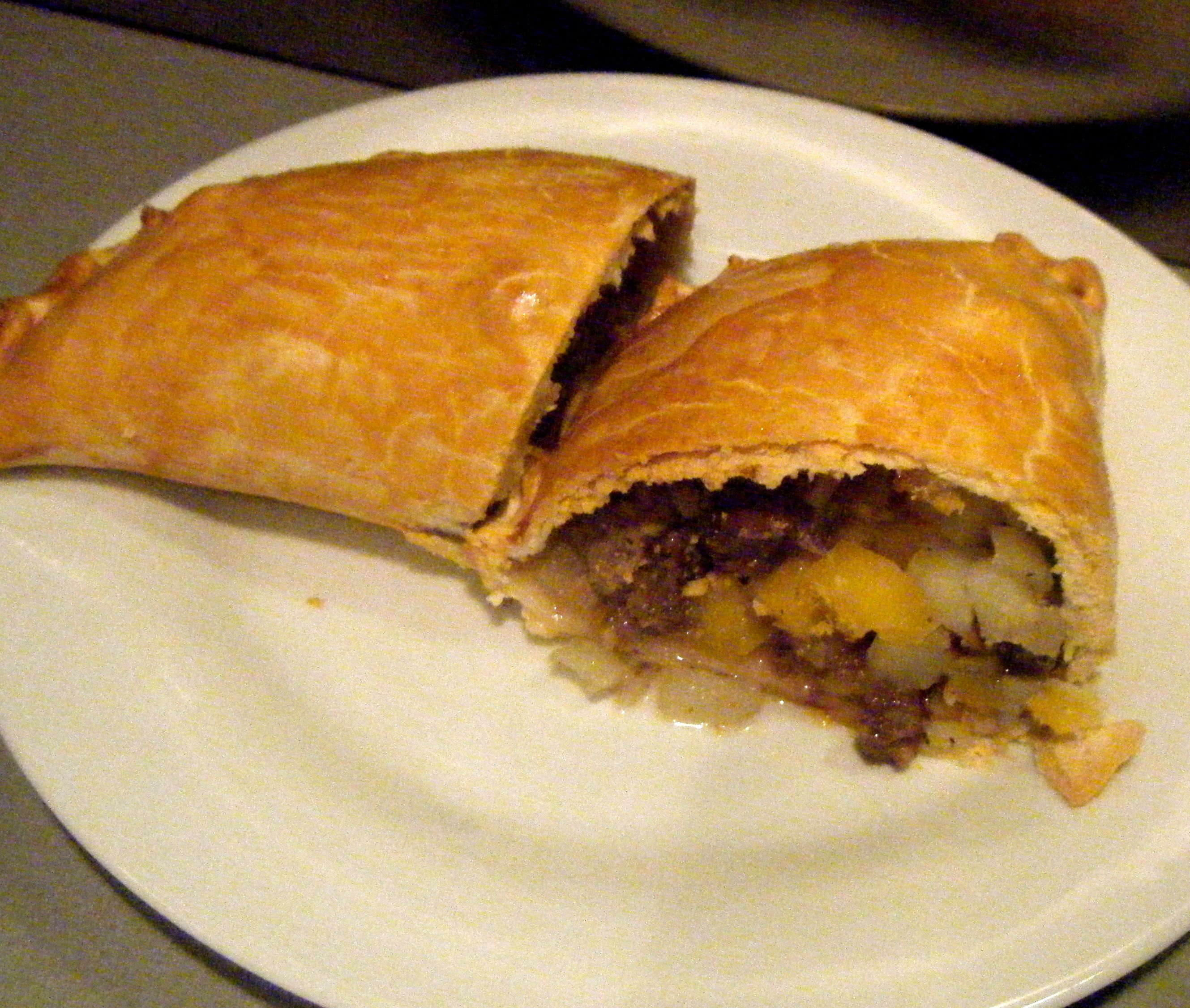
When the timer went off, Dave and I tucked into these glorious looking little (okay huge!) parcels of goodness. 

Edited - golden brown Edited - centre

We both really enjoyed them, strangely Dave a little more so than me.  I have to admit the first few mouthfuls left me a little disappointed but the flavour soon developed and I started to appreciate it more.  To improve it, I think it could have done with more seasoning – I was probably a little too cautious with this.  Also, I thought it was a little dry in the middle and I wonder whether putting the knob of butter in with the filling would have helped with this. 

Whilst the filling definitely had room for improvement, Dave and I thought the pastry itself was great and overall it was a very tasty dinner.

Coming up next week, Challenge No. 17 – passion fruit cream profiteroles and hot chocolate fudge sauce 

Challenge No. 15 – Simnel Cake

Can you believe Easter has been and gone already! I don’t know where 2015 is going but it sure is flying past.  This recipe was suggested by my mum and I remember thinking I’ll make it for Easter and how far away that seemed!

I’d never heard of simnel cake before and I had to look up what it was.  For those of you who share my lack of knowledge it is basically a fruit cake with marzipan cooked into the middle. It then has a circle of marzipan placed on top, traditionally decorated with 11 balls of marzipan to represent the 11 disciples (excluding Judas).

Once I had found out what a simnel cake was, I asked my mum whether she wanted me to make the marzipan from scratch and the response was “well if you’re going to do this blog properly, then yes”.  Thanks for the challenge mum! I had a bit of warning for this dish and so I decided to give the marzipan aspect a trial run by making it for my Christmas cake last year.  I realised it is actually not very difficult and the fear for this challenge was eased slightly.

A few weeks ago I started looking for a recipe and found this one by The Hairy Bikers.

For the recipe, you will need the following:-

  • For the marzipan decoration
    • 225g/8oz icing sugar, plus at least 3 tbsp for rolling
    • 175g/6oz caster sugar
    • 350g/12oz ground almonds
    • 2 large free-range eggs
    • ½ tsp almond extract
    • 1 tsp freshly squeezed lemon juice
    • 2 tbsp apricot jam
  • For the fruit cake
    • 1 well-scrubbed orange, freshly squeezed juice and finely grated zest
    • 1 unwaxed lemon, freshly squeezed juice and finely grated zest
    • 500g/1lb 2oz mixed dried fruit
    • 100g/3½oz glacé cherries, halved
    • 225g/8oz self-raising flour
    • 2 tsp ground mixed spice
    • 3 large free-range eggs
    • 175g/6oz butter, softened, plus extra for greasing
    • 175g/6oz light muscovado sugar

Edited - ingredients

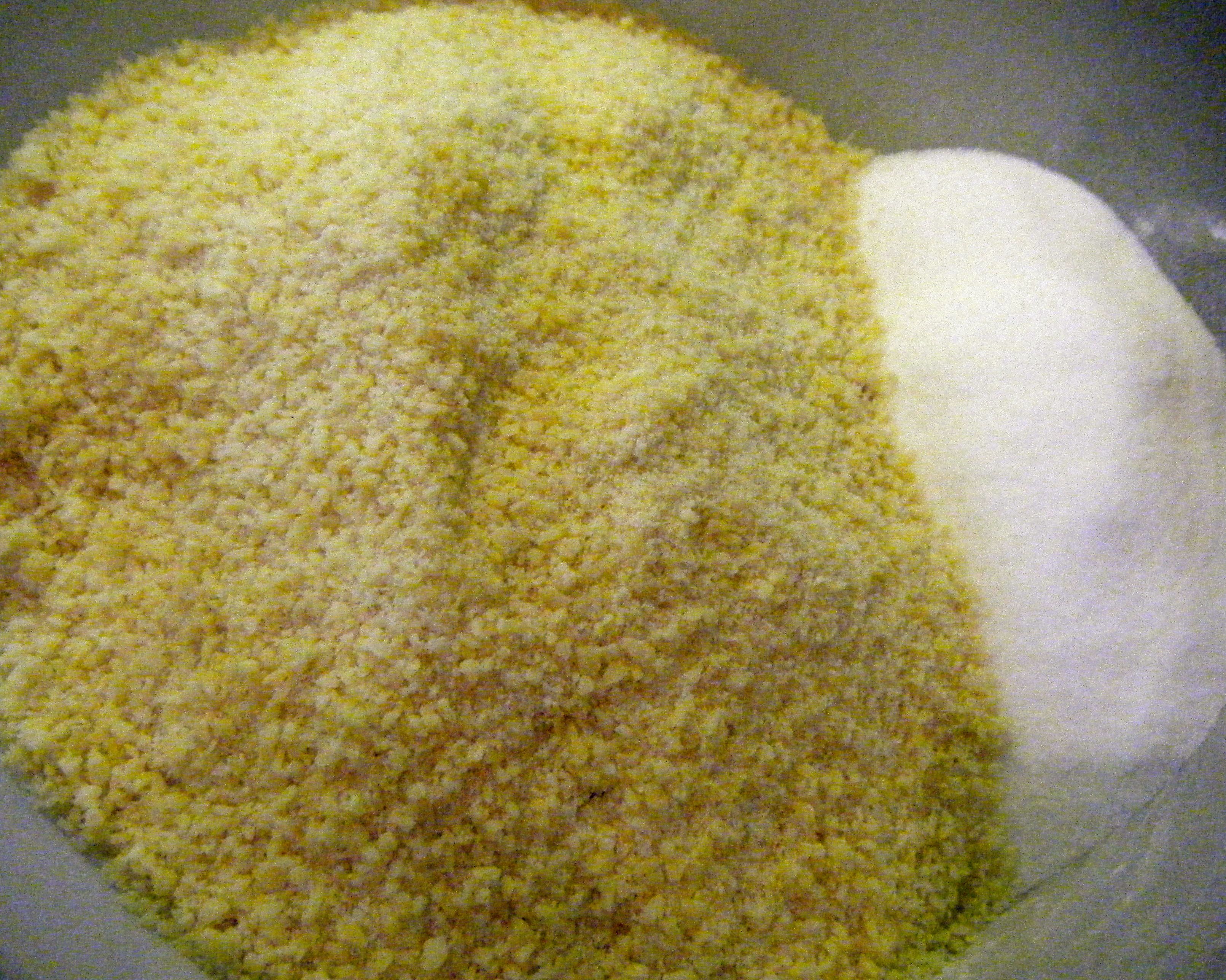
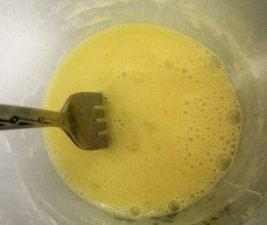
I started out on Good Friday morning with the marzipan.  I sifted the icing sugar into my bowl and stirred in the caster sugar and almonds. Next, I beat the eggs in a small jug and added the lemon juice and almond extract. 

Edited - dry ingredientsEdited - egg,lemon,extract

Practical tip: when juicing a lemon (or orange), pop it in the microwave for around 30 seconds to warm it slightly.  The fruit will release more juice if it has been heated.

I was visiting my parent’s for Easter and was back baking in their kitchen.  To avoid a repeat of the problem with the pictures in Challenge No. 13, this time, I took my own plastic bowl with me.  However, when I came to measure my 1/2 teaspoon of almond extract, I noticed my mum’s measuring spoons only refer to the millilitre measurement; mine at home helpfully have this and a guide as to what is a quarter, half and full teaspoon etc.  I therefore had to ask mum which one I should use for the teaspoon (5ml for those wondering) and instead of using the half measure as instructed by the recipe, I accidently put the full teaspoon in! I love almond and considering that marzipan is almond flavoured, I decided it would only improve the taste and it did 🙂

I then added the wet ingredients to the dry ingredients and combined until I had a paste. 

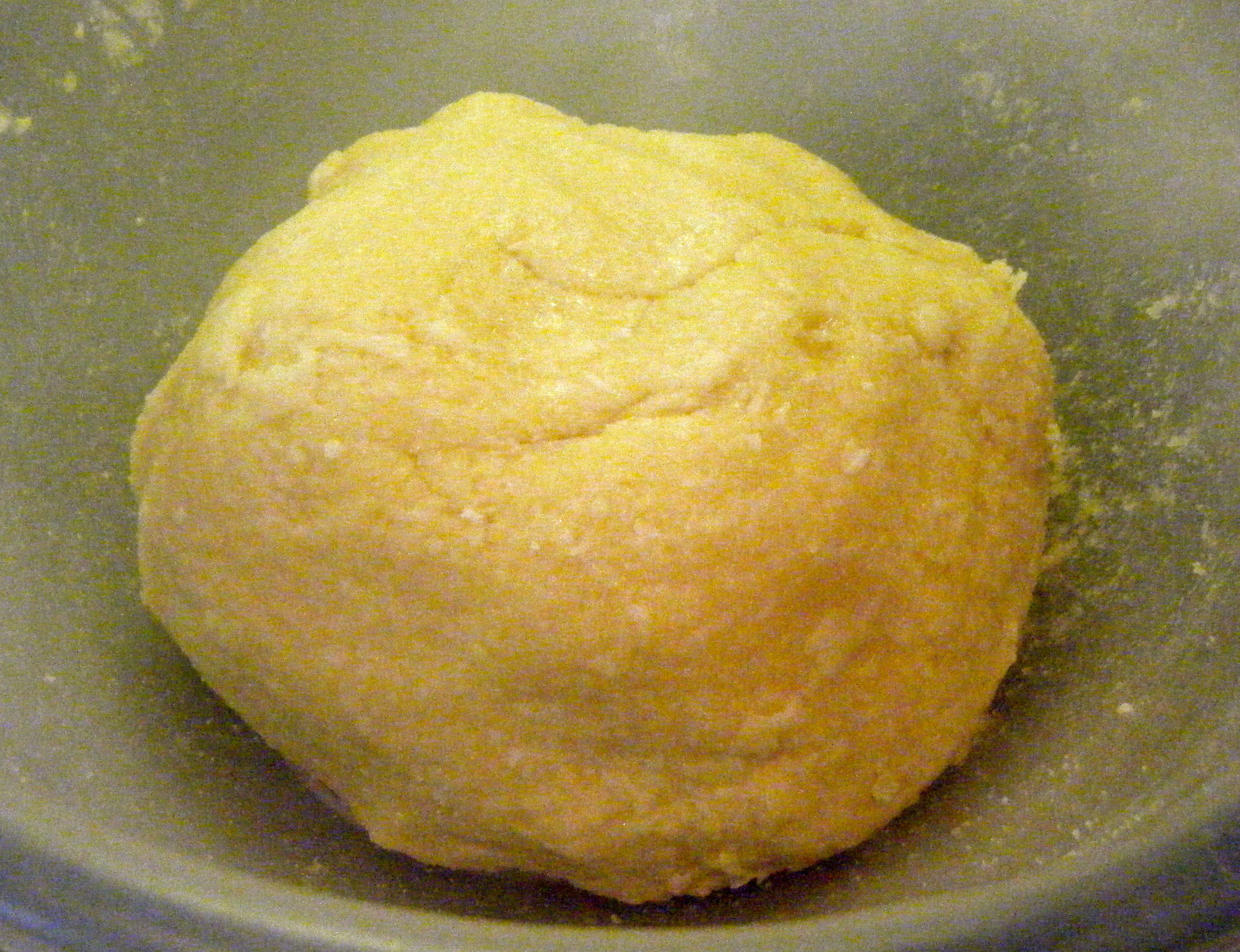
I dusted the worktop surface and tipped the marzipan out to knead by hand until smooth.  The marzipan kept sticking to the worktop but I persevered and eventually had a smooth(ish) ball which I popped back into the bowl and covered with cling film to rest for 2 hours.

Edited - pre kneadingEdited - kneaded marzipan

After about an hour, I got started on the next bit of the recipe.  I zested the orange and lemon into a small pot, put this to one side and then juiced the fruits into a saucepan.  I added the dried fruit and my halved cherries to the pan and I turned the hob on.

Edited - fruit in the pan

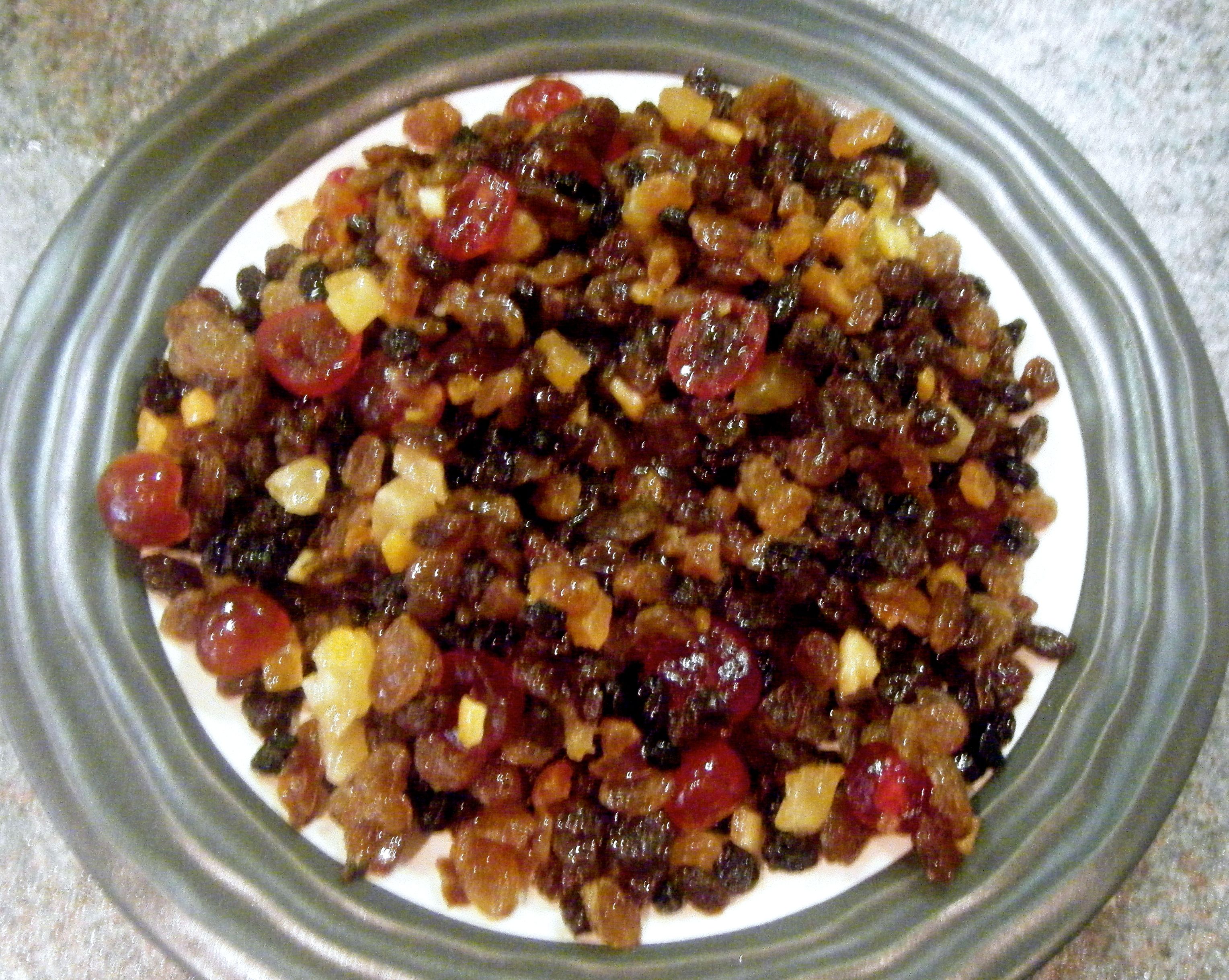
The recipe says to simmer over a medium heat until the liquid disappears.  Now, I couldn’t actually see the liquid with the fruit in the pan but I just made a small gap by pushing the fruit to one side and soon enough the liquid started to bubble.  Then within a couple of minutes it was gone! I tipped out the fruit onto a plate and left it to cool.

Edited - fruit

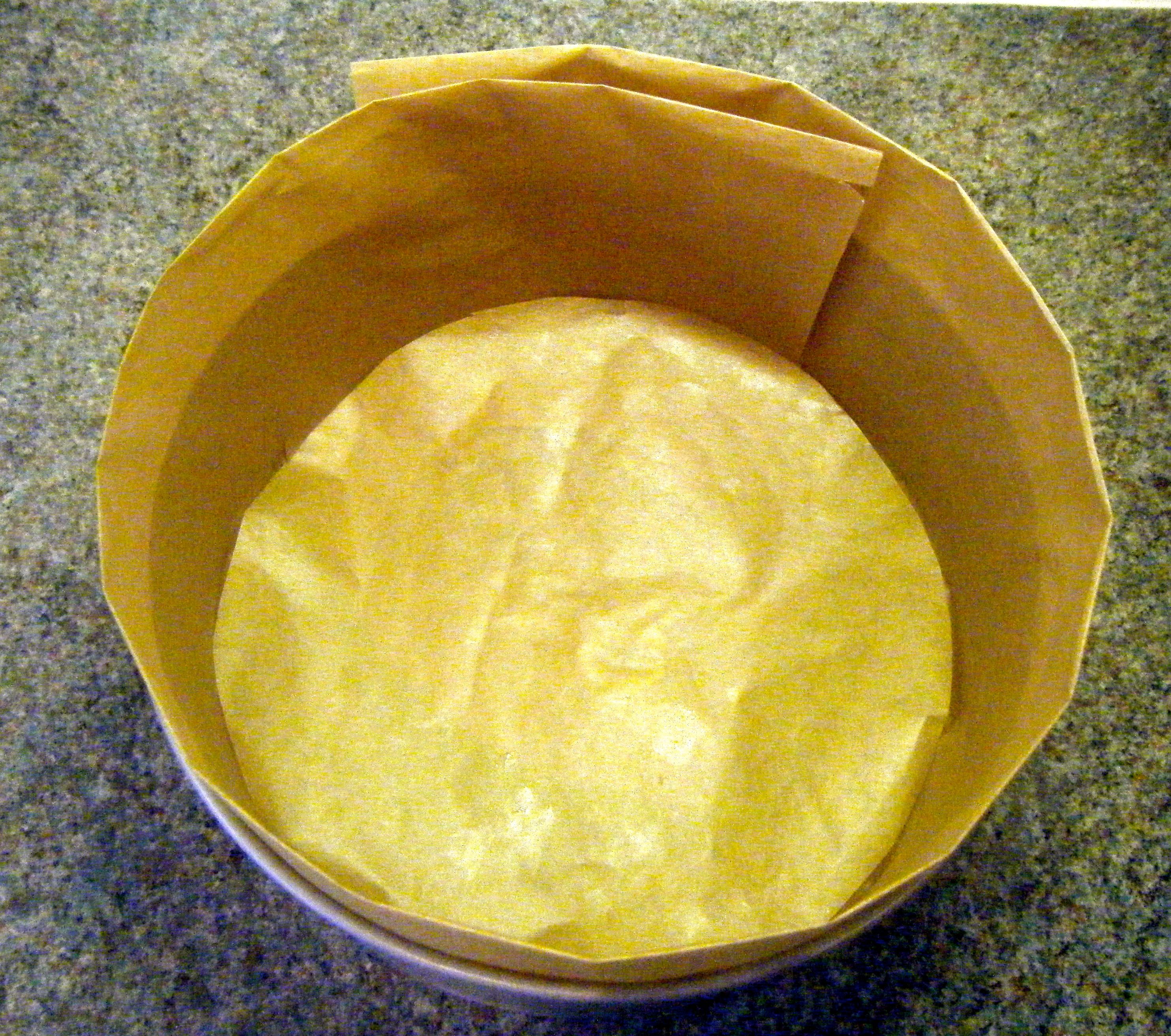
Next up, I buttered and double lined the base of my cake with baking parchment. This was something I had to do for the first time when I made my Christmas cake last year – for my sponges, I normally just butter and flour my tin.  If you’ve not double lined a tin yourself, I found a really useful guide here which I think explains it perfectly.  I didn’t follow this exactly for my simnel cake but I used the techniques I had learnt last year.

Edited - lined tin

With the tin and fruit ready, the recipe instructs to mix the flour and mixed spice in a large bowl.  I don’t know why it calls for a “large bowl” as you then add it to another bowl later on.  So I just put the ingredients into a jug.  I whisked the eggs in a dish with a fork and then set out softening my butter in the bowl.  I used a handheld electric mixer to do this and then added the sugar, beating the two together until light and fluffy. 

I then beat in the eggs a little at a time and included a teaspoon of the flour with each addition to stop the mixture curdling.  Once all the eggs were incorporated, I added half the flour/spice and mixed it with a spatula – I didn’t use the electric mixer because it is quite vigorous and I prefer a more gentle approach.   I then added the second half of the flour/spice and continued to mix until it was well combined.

Edited - sponge

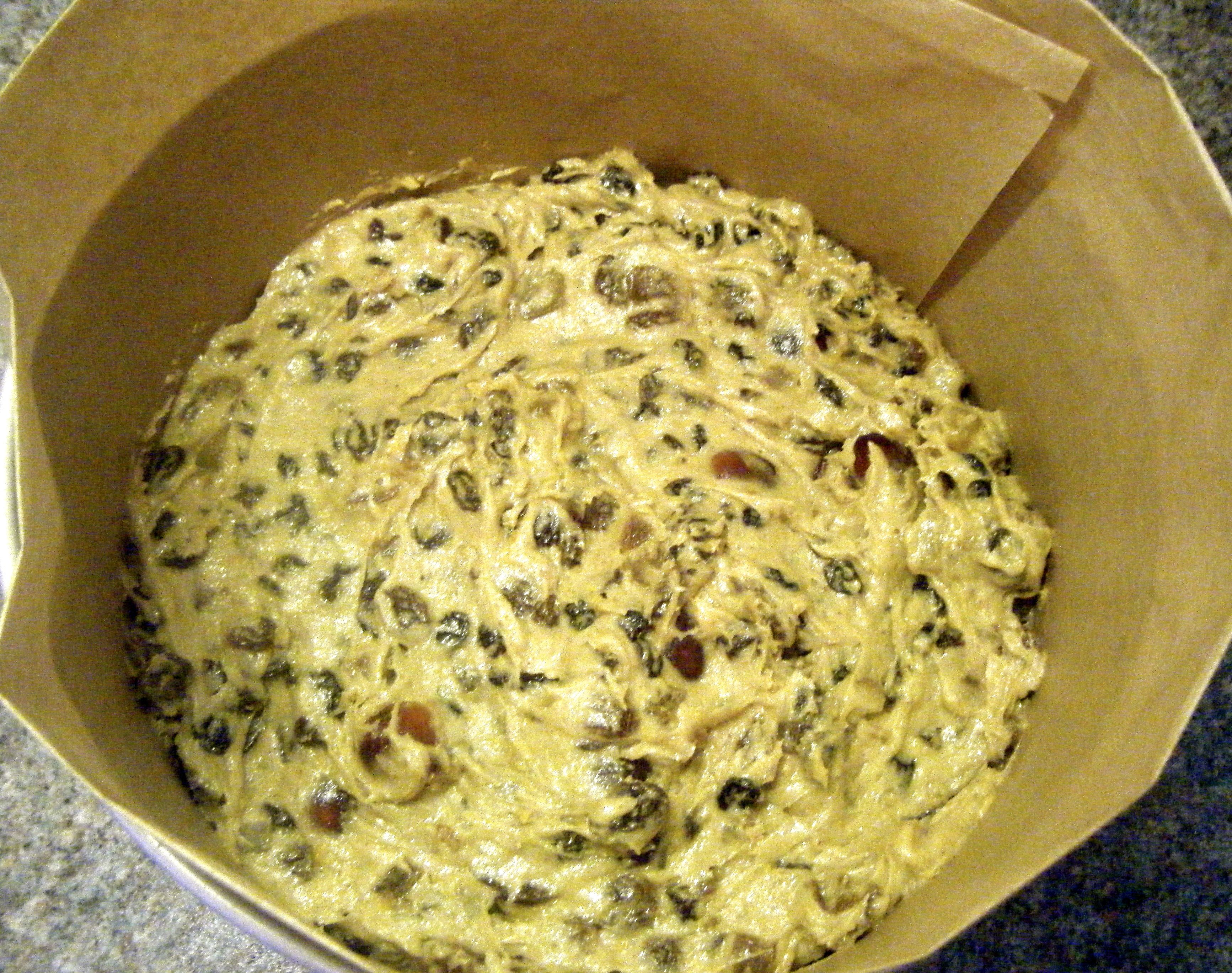
Finally, I stirred in the fruit and zest and added half the mixture to my lined tin. 

Edited - adding zestEdited - half mix

Time to roll out the rested marzipan.  I got the ball and split it into 3 equal parts.  I measured them to make sure they were equal and ended up with quite a bit leftover, especially from the last bit which was used for the ball toppings.  To avoid this, I would recommend measuring one part out to be 220g (which will give you 11 balls of 20g for the topping) and then dividing the left over marzipan equally into two.

Edited - ready to roll

I put out a big bit of baking paper and covered it with icing sugar.  I then started rolling out one of the marzipan balls.  The paper kept moving and I ended up using bags of flour, sugar etc to weigh down each corner of the paper – this worked well 🙂 

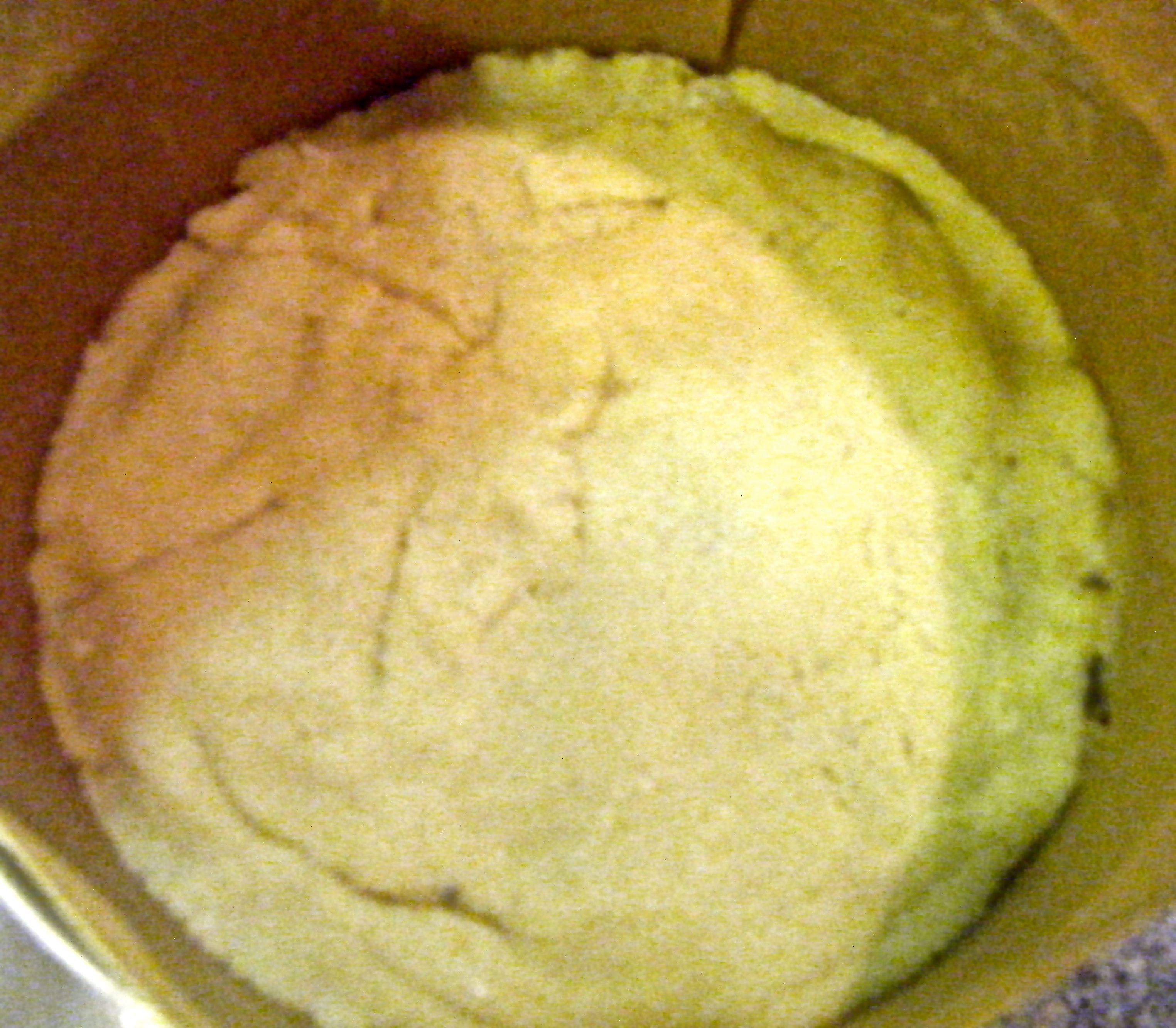
With my marzipan rolled out, I used the cake tin to imprint a slight circle and used a knife to cut out a circle slightly larger.  I then used a rolling pin to pick up the round and put it in my tin.  This didn’t really work and the circle broke but I just squished it back together again, making sure it reached all sides of the tin. 

Edited - marzipan middle

I then covered the marzipan with the remaining mixture and popped the tin in the oven, setting the timer for 1 hour.  When the hour was up, I reset the timer for 10 minutes.  Then without taking the cake out of the oven, I covered the top with a bit of foil to stop it catching.  After a final 5 minutes, I used a tester to make sure the cake was done.  I then let it cool on the side for around 15 minutes.

Edited - cooked

Once the 15 minutes were up, I released the cake from the tin and took off the lining.  I then went and did some retail therapy for a couple of hours whilst the cake cooled completely on the wire rack. 

When I got back, I put the cake on the grill pan and started heating some homemade apricot jam on the hob (see here for a homemade jam recipe).  Next, I rolled out my second ball of marzipan and used the clean cake tin base to measure the right size.

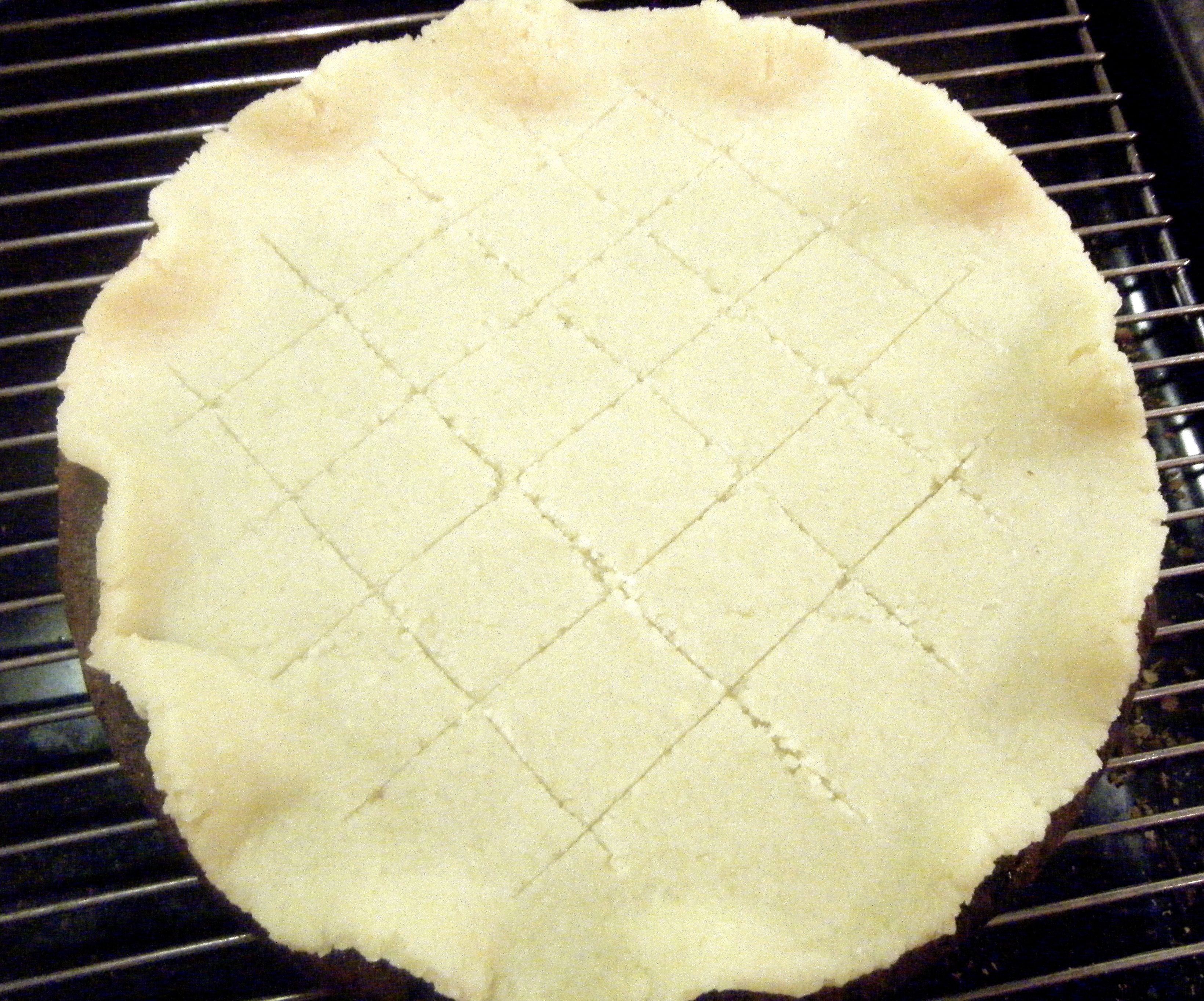
I brushed the top of my cake with the jam and put the marzipan on top (it stayed in one piece this time!).  I then fluted the edges and scored the criss-cross pattern.

Edited - round on top

Practical tip: take a small amount of the discarded marzipan and roll it into a small circle to practice your pattern before scoring it onto the circle on the cake.

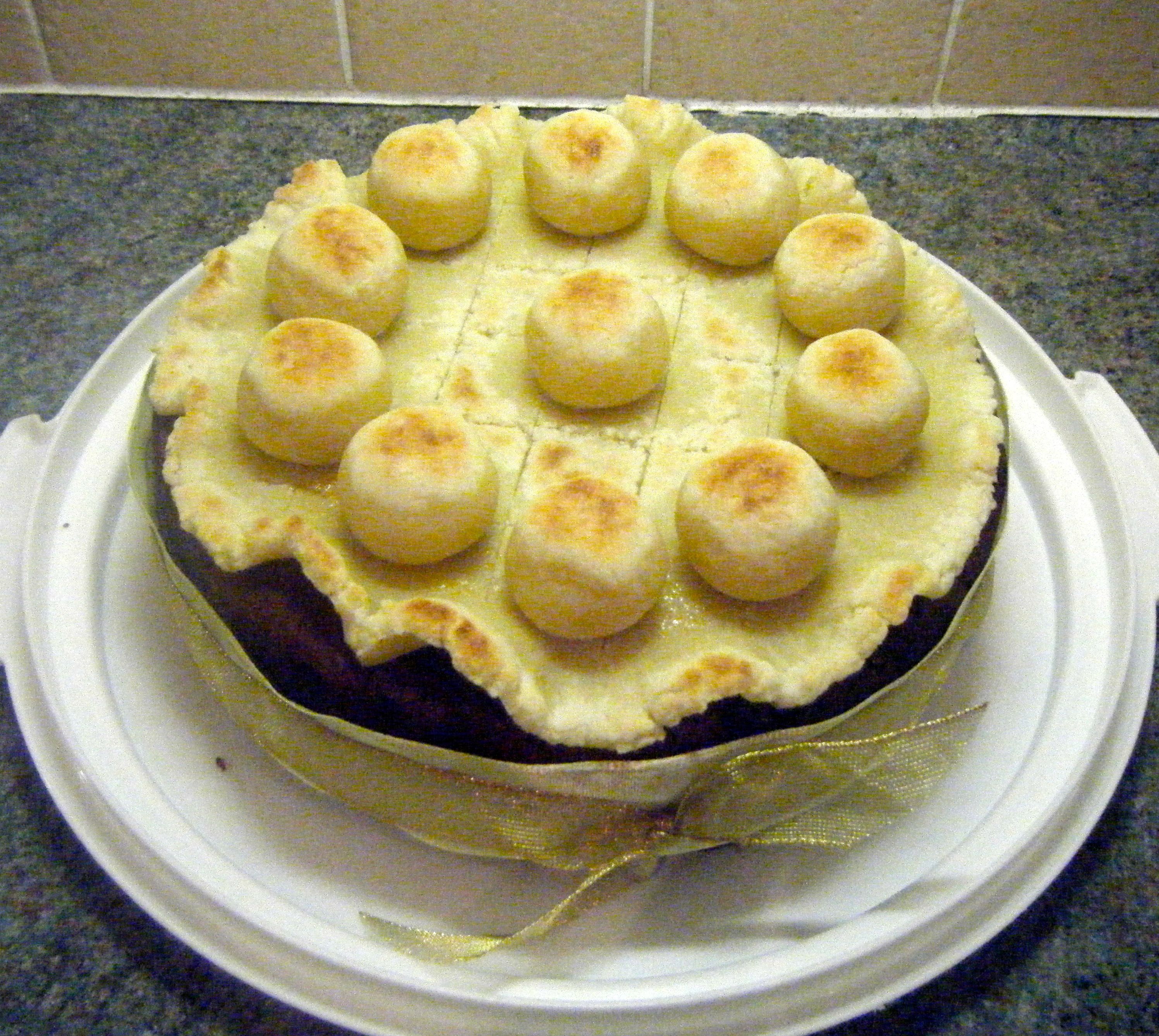
I made my 11 balls which all weighed 20g and I positioned them on top of my cake tin base to get an idea of the approximate positions to fit all 11 onto the cake.  I put a blob of jam onto the bottom of each ball and placed them onto the cake.  I still got the positioning slightly wrong and ended up with 10 in a circle and the eleventh sat nicely in the middle 🙂 

 Edited - balls in placeEdited - topped

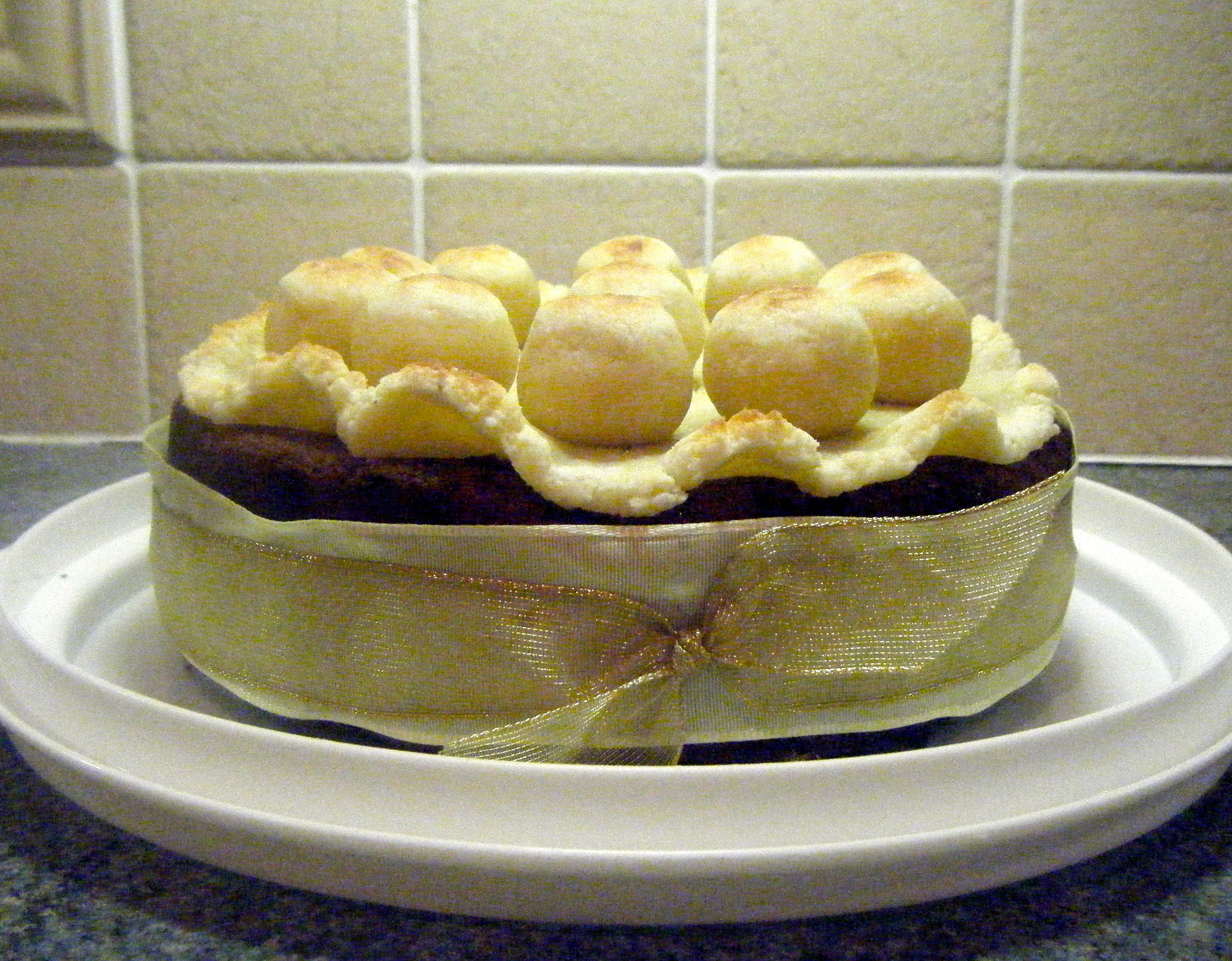
With all the balls in place, I put the cake under the grill to brown the marzipan.  I stood and watched the oven like a hawk because I thought it would catch really quickly.  I was right! Once the marzipan had started to brown, I quickly took the cake out the oven and left it to cool before applying the yellow ribbon.

Edited - finished cake Edited - finished tope

The cake was then taken down to Surrey on Saturday to enjoy with my extended family at a long-overdue catch up.

The verdict – DELICIOUS!  The cake was very light for a fruit cake but packed full of flavour.  As for the marzipan, perfect almond flavour and a beautiful texture.

Edited - slice

Overall, this cake was a huge success and all the family loved it.  This is especially true of my mum and uncle who are huge marzipan fans.  I actually thought there was going to be a fight over the last few slices. 

There you have it then; my first ever attempt at simnel cake went well.  I’m actually craving some as I write this up and I am a little sad that I left the final slice with my mum to enjoy.

Coming up next week, Challenge No. 16 – cornish pasty.